
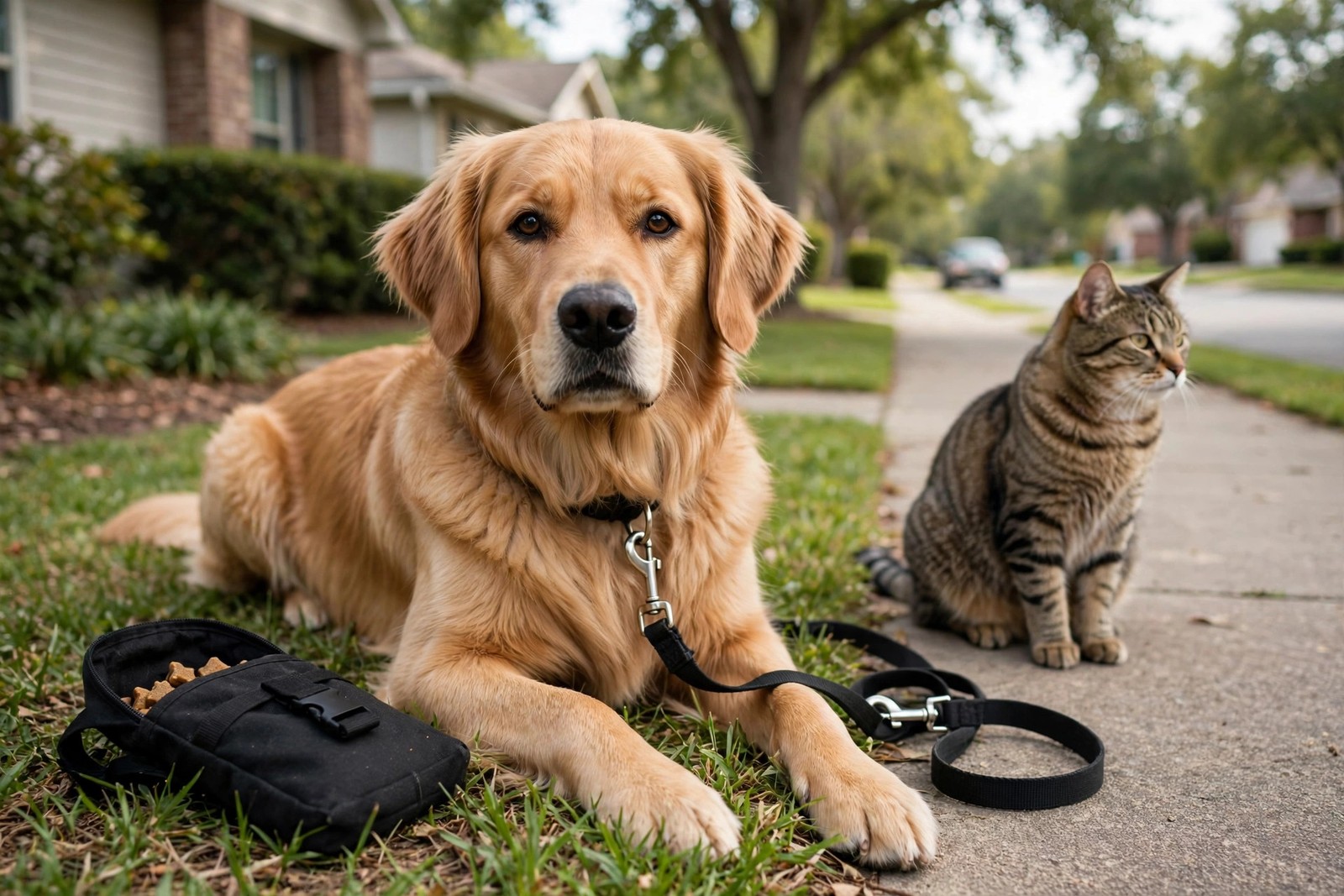
A dog does not need to dislike a cat to chase her. Movement is the trigger: the quick dart across a room or up the stairs switches on prey drive, the inborn sequence of orienting, staring, stalking, and chasing that helped dogs' ancestors catch food. Chasing is self-rewarding, so each rehearsal makes the next chase more likely, and a cat who runs, as any sensible cat will, pours fuel on it. Breed and individual history matter too. Sighthounds, terriers, and herding dogs often react faster to movement, but any young, under-exercised dog can discover that a fleeing cat is the most exciting thing in the house.
Can They Learn to Live Together?
Often, yes, and many households prove it, but the honest answer has a condition. A dog who can look at the cat, look away, and take a treat can usually be taught that the cat is background, not a game. A dog who fixates with a stiff body, crouches silently, trembles, or cannot respond to any cue near the cat needs professional help and may never be safe unsupervised, however much progress is made on a lead. Safety, not friendship, is the goal: calm indifference is a complete success.
The Gradual Introduction Plan
Keep the animals fully separated at first, with the cat given a dog-free room holding litter, food, water, and high resting places. Then work through the stages slowly:
- Swap scent before sight. Rub a cloth on each animal's cheeks and place it under the other's food bowl, and swap bedding, so each scent starts predicting meals.
- Feed on opposite sides of the closed door between them, moving bowls closer only while both eat calmly.
- Allow sight through a sturdy baby gate or a cracked door secured so neither can slip through, and reward the dog for glancing at the cat and then back at you.
- Move to short meetings with the dog on a lead and harness, at a distance, letting the cat approach, retreat, or leave freely at all times.
- Increase time together only after several calm sessions in a row, and keep sessions short enough to end on a success.
Throughout the house, give the cat escape routes a dog cannot follow: gates with cat-sized gaps, high shelves, and rooms that stay dog-free. Keep litter trays and the cat's food where the dog cannot reach them, because guarding pressure around those resources creates its own friction.
Rules That Protect the Progress
Never let the dog rehearse a chase, indoors or in the garden, because one long chase can undo weeks of calm work and can end in injury even without intent. Never carry the cat to the dog or hold either animal in place for a meeting. End any session where the dog locks into a hard, silent stare, and go back a stage next time. If chasing, fixation, or aggression does not ease with this plan, bring in a qualified trainer or behaviour professional promptly rather than pushing on alone, and KinsLe Care Teams supports the whole process by letting you roster the door feedings, scent swaps, and supervised sessions across the household so the plan stays gradual and consistent.