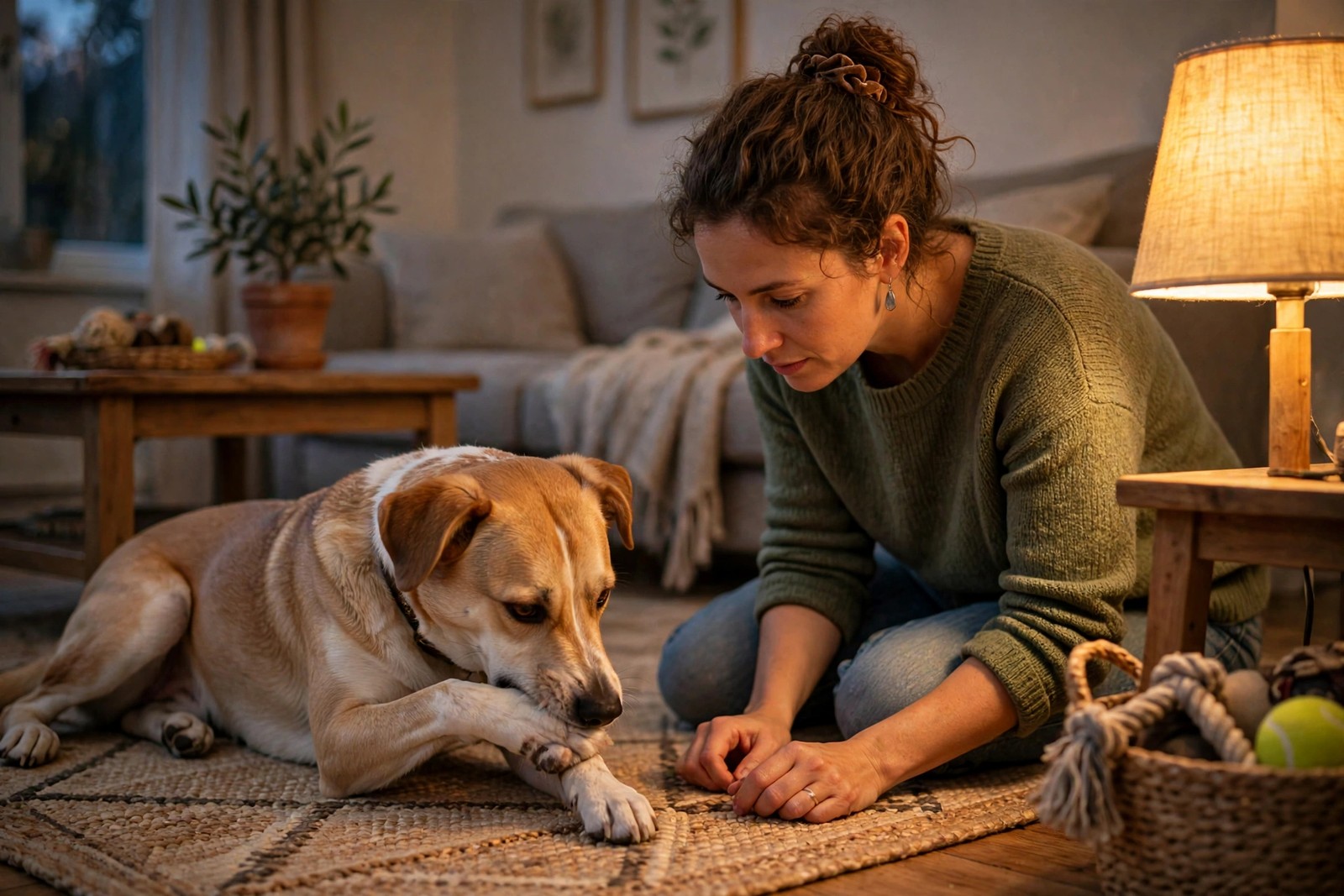
The evening timing is your first clue, but it does not settle the question on its own. Feet get chewed in the evening for two quite different reasons, and the way to separate them is to read the chewing style, the state of the skin, and what else was happening in her day. Get all three right and you will know whether you are managing a habit or booking a vet appointment.
The Boredom and Habit Picture
A habit chewer is relaxed about it. She flops down after her evening meal or during the family's settled hours, takes a foot in a loose, rhythmic way, and sighs around the chewing rather than attacking the skin. The feet themselves look normal: no redness, no staining, no scabs, no smell beyond ordinary dog. Crucially, she is easy to interrupt — call her name, offer a toy or a stroke, and the foot is forgotten without frustration. Habit chewing often fills the wind-down slot in a dog whose day was busy in the morning and empty in the evening, and it can become a self-soothing ritual she performs the way a person might bite a nail while watching television.
The Itch Picture
An itchy dog chews differently. The work is focused and urgent: she crunches at one spot, gnaws between particular toes, licks until the fur is wet, and returns to the same foot after every interruption. The evidence is written on the feet. Look for redness or raw patches, saliva staining that turns pale fur pink-brown, thinning hair, darkened thickened skin, a sweet yeasty smell, and sores or moisture between the toes. She will also chew outside the evening slot — after walks, in the night, first thing in the morning — even if evenings are when you notice it. Feet are where skin allergies commonly announce themselves, and grass, pollen, house dust, and food sensitivities all land there, so an itch pattern deserves a vet's examination rather than another week of watching.
Two Evening-Specific Suspects
Evening-only chewing has two triggers worth isolating before you decide. The first is contact: if she walks in the early evening and chews within the hour afterwards, something on the route — freshly cut grass, a treated lawn, grit, or wet pavements — may be irritating her feet, and a rinse or wipe of all four feet straight after walks is a simple test. The second is the unspent day: a dog whose exercise and company ended at lunchtime may chew from sheer understimulation by nine o'clock, and an evening sniff walk or food puzzle that removes the chewing points the same way. Track which evenings produce chewing against walks, rinsing, and activity for a week; the pattern usually names its own cause.
What To Do With Each Answer
For a habit, do not scold or wrestle the foot away — attention is payment. Instead, pre-empt the ritual: offer a lick mat, a chew toy, or a short training game at the hour she usually starts, and reward her for choosing it. For anything with skin change, smell, hair loss, or urgency, the vet goes first and the habit work waits; photograph the feet in daylight, note when the chewing happens and what she walked on, and bring that record with you, because feet that look mild in the consulting room tell only half the story. Keeping the dated photos, the week of timing notes, and each vet finding together in KinsLe's Pet Passport turns that half-story into a full timeline your vet can actually judge change against.