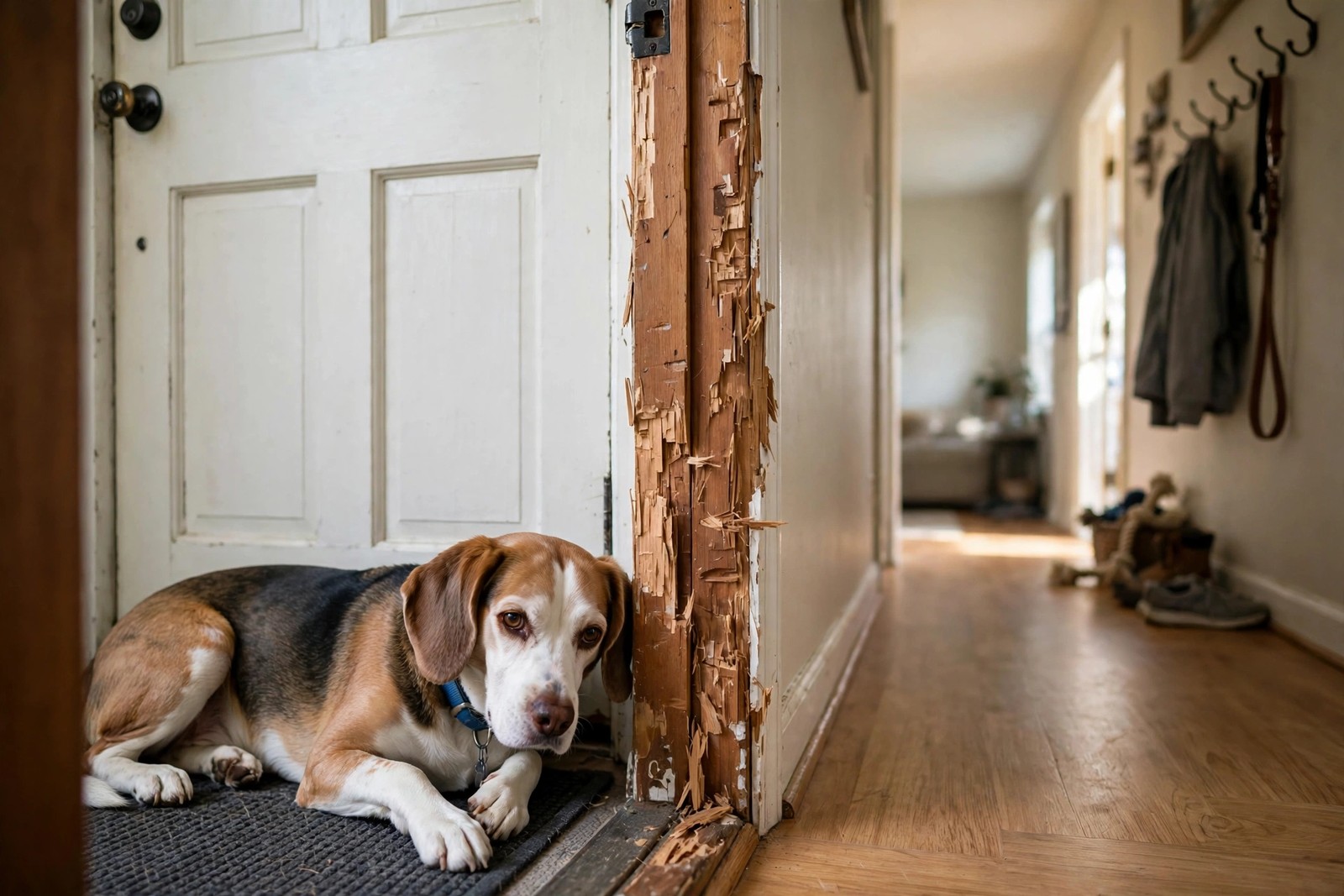
The two facts in this question do the diagnostic work between them: the target is the door frame, and the timing is exclusively when your dog is alone. The door frame is the edge of the exit — the place where the barrier between your dog and you is thinnest, where your scent lingers on the handle side, and where sound and light leak through. A dog working at that spot is not redecorating; the dog is trying, in the only way available, to follow you or to get the barrier open.
How This Differs From Other Chewing
A teething puppy chews in company and alone alike, on anything that fits the mouth, and trades the item happily for a toy. A bored adult chews opportunistically — shoes, remotes, the corner of a rug — usually after settling, and often in view of the family. Separation chewing is narrower and more urgent: one exit-focused target, damage that begins soon after you leave, and frequently other distress signs around it, such as scratched paint beside the frame, drool on the floor by the door, or a dog who is waiting pressed against the door when you return. If your dog has chewed the frame for months, the habit may also have worn a groove in the routine itself — the frame is simply where alone-time anxiety now lives.
Confirm It Before You Treat It
Film a departure. A phone propped facing the door for the first half hour tells you when the chewing starts, what comes with it, and how long your dog stays calm before it begins. That calm interval is the key number in the whole problem, because it is the foundation the training stands on. Also check the rest of the picture: a dog who follows you room to room, shadows you before departures, and greets your return as if rescued is showing the same attachment strain from the other side. A vet check is worthwhile for any dog whose behaviour has changed suddenly, because pain and illness lower the threshold for anxiety.
The Rebuilding Plan
- Work below threshold. Step out for less time than your dog can handle calmly — at first that may be under a minute — return without ceremony, and repeat, lengthening absences gradually over days and weeks rather than minutes by the hour.
- Decouple the departure cues. Handle keys, bags, and coats at random times without leaving, so the whole sequence stops meaning abandonment.
- Make leaving and returning boring. No long goodbyes, no ecstatic reunions; calm is the lesson in both directions.
- Protect the frame meanwhile with a guard or deterrent if you need to, understanding that this saves woodwork, not feelings.
- Arrange cover for absences your dog cannot yet handle — family, a sitter, or day care — because one long panic rehearsal a week erases several short calm ones.
What Not To Do, and When To Get Help
Never punish damage you find on returning. Your dog cannot link your anger to chewing done earlier, and a dog who dreads returns gets more anxious about the whole cycle, not less. Get professional help promptly if the distress is severe — frantic sustained efforts, broken teeth or nails, drooling, toileting from a housetrained dog, or escape attempts that risk injury. Your vet can rule out medical contributors and, where appropriate, discuss support alongside a behaviour plan from a qualified behaviourist; mild cases often progress well with the graded plan alone. Sharing that plan through a KinsLe Care Pass, the temporary care link you send a sitter, means anyone covering an absence follows the same short-absence steps and dull departures, instead of accidentally staging a long, loving goodbye that resets the work.