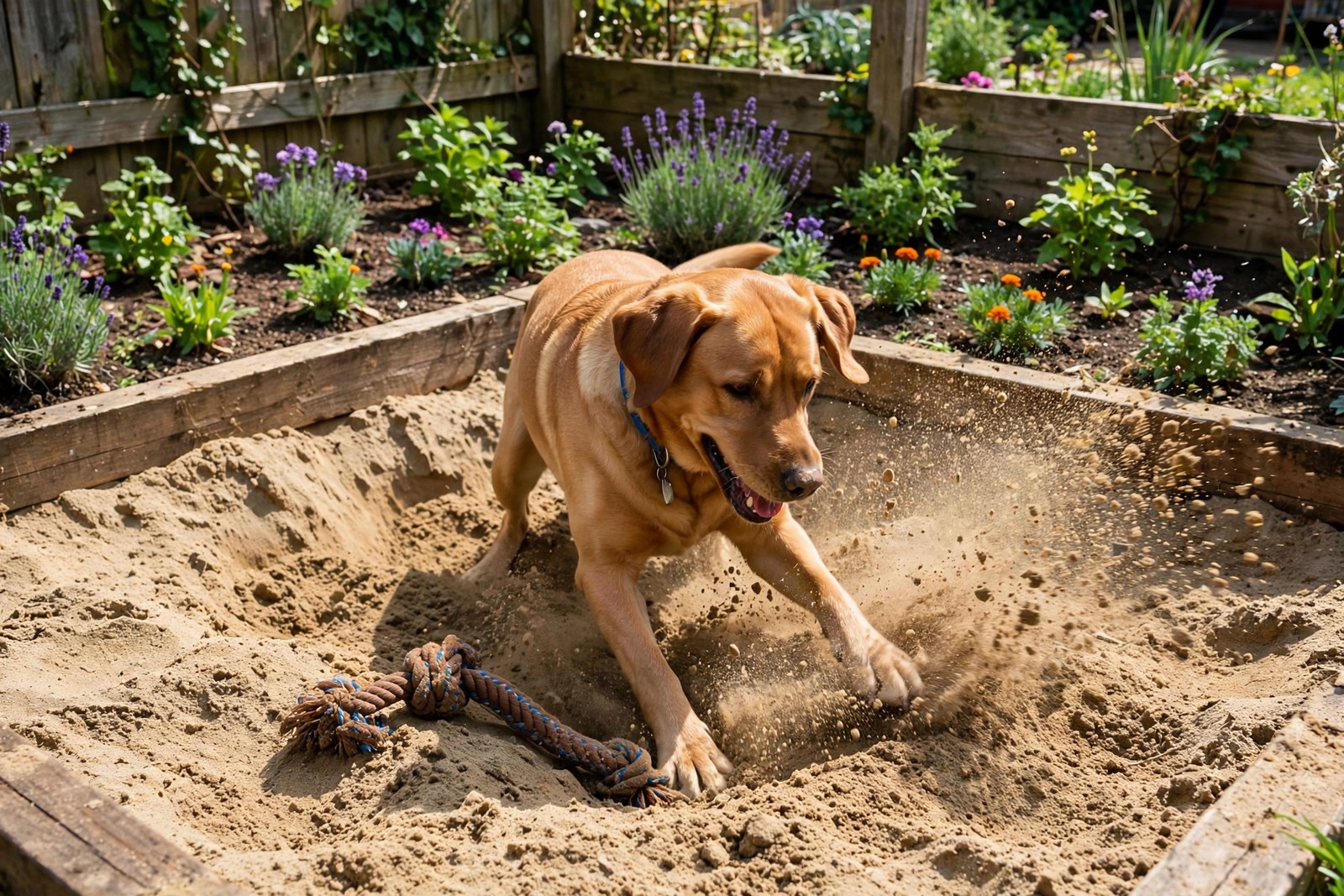
A dog digging in a new place is exploring; a dog digging in the same place every day is harvesting. Particular spots in a garden hold value that survives each filling-in, and until you understand what a given spot pays out, filling it is just resetting the game for tomorrow. Work through the likely rewards, because each one has a different counter-move.
What a Favourite Spot Usually Offers
Scent is the usual currency. Soil a dog has dug before carries the smell of everything the digging exposed — roots, insects, worms, the traces of a previous find — and turned earth smells richer than undisturbed ground, so yesterday's hole advertises itself. Other spots sit over traffic: an animal run along a fence line, a mole's workings, a hedgehog's route, or the place a cat habitually crosses, all re-scented nightly. Temperature pays too. In warm weather, dogs dig down to the cool, damp layer and lie in the scrape, so a shaded corner that gets re-dug each afternoon is often a cooling bed rather than a treasure hunt. And some spots hold an actual memory: a toy, bone, or treat buried there weeks ago, retrieved or not, teaches a dog that this soil, specifically, produces goods.
Read the Holes Before You Fill Them
Look at when each spot gets dug and what the hole is for. A shallow, wide scrape in shade, dug in the heat of the day and then lain in, is a bed. A narrow, deep shaft at a fence line, dug at dawn or dusk, is pursuit. A crater in the middle of the lawn, dug when the dog is alone in the garden and full of energy, is entertainment — the garden equivalent of a bored teenager. A puppy or young dog may also simply be practising an adult skill; digging is normal development, and the question is location, not existence.
The Redirect That Actually Works: A Legal Pit
Banning digging outright leaves the drive with nowhere to go; giving it an address works far better. Build a digging pit — a defined patch, a child's sandpit, or a corner of a bed you sacrifice — fill it with loose soil or sand, and bury toys, chews, and treats in it while your dog watches at first. Praise and join in when the digging happens there, rebury fresh treasure regularly so the pit keeps out-paying the lawn, and make the first weeks easy with shallow burials. Meanwhile, protect the forbidden spots in ways that do not rely on your presence: plant them out densely, cover them with mesh or stone until the habit fades, or fence a bed off for a season. Supervise early garden time during the changeover and interrupt lawn-digging calmly, walking your dog to the pit and celebrating the switch.
When Digging Is Telling You Something Else
New, frantic digging in a dog who never dug before — especially paired with restlessness, appetite change, or digging at doors and floors indoors — deserves a vet mention, because discomfort and anxiety both surface as ground-working. Digging that clusters at gates and fences is escape behaviour rather than gardening, and belongs to a different conversation about what is outside and how the dog feels about being left. A dog digging obsessively at one spot for very long stretches, hard to interrupt, may be showing a compulsive pattern worth professional input.
Keeping the New Arrangement Kept
A digging pit fails when it goes stale: nobody reburies anything, the soil compacts, and the lawn's forbidden corner starts paying better again. It succeeds as a household routine — treasure refreshed, early garden time supervised, and the planted-out spots left protected until the old habit is genuinely forgotten. Sharing that upkeep through KinsLe's Care Teams, with pit-refreshing and garden supervision assigned and marked complete by whoever is on dog duty, keeps the legal spot the most rewarding hole in the garden every single day, which is the whole trick.