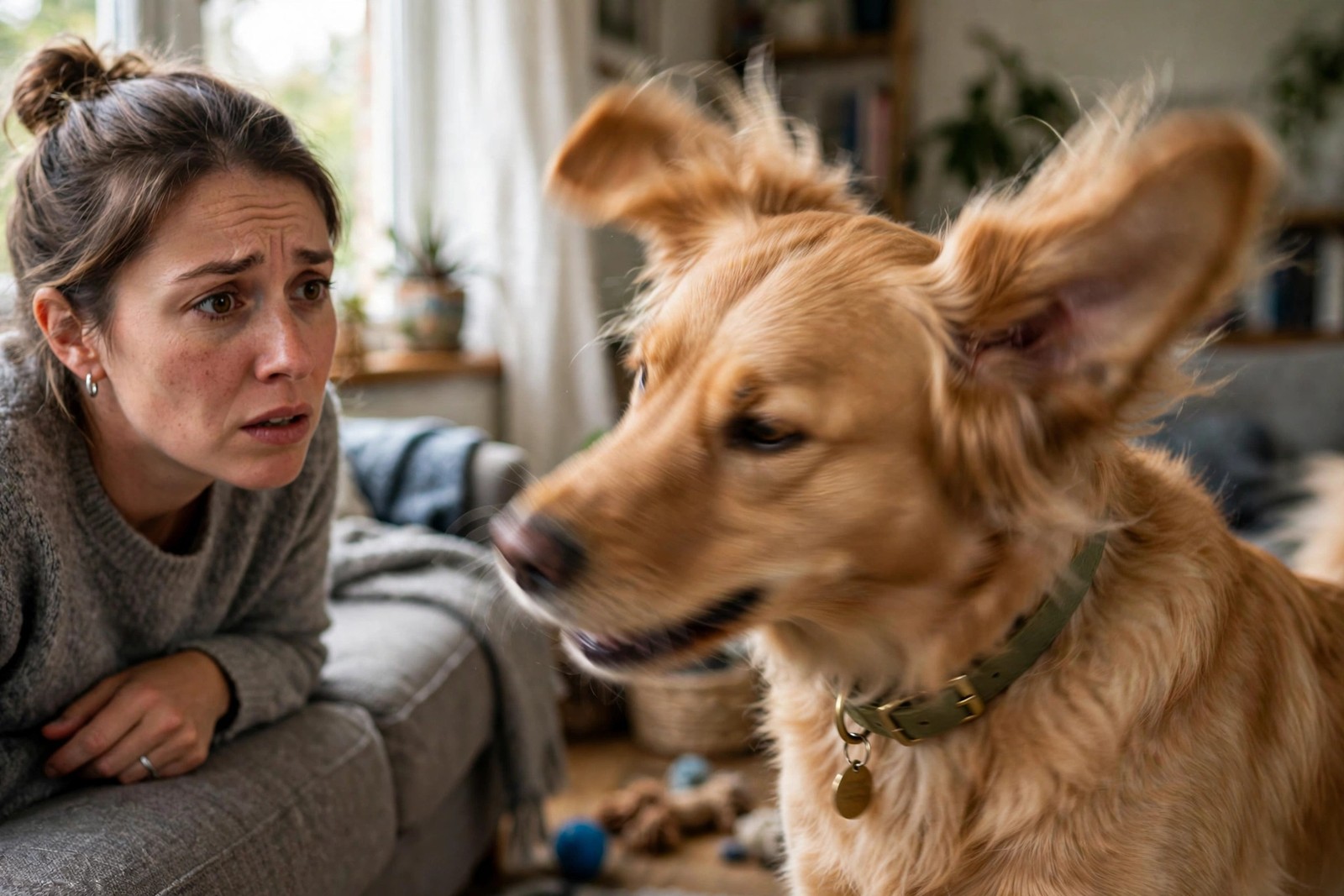
When a dog shakes her head again and again, look to the ears first. Infection with bacteria or yeast, mites in a puppy or multi-pet home, a grass seed lodged after a walk through long grass, allergy-driven itch and, less often, a growth inside the canal can all set the shaking off. Pain, not naughtiness, is the usual driver: a dog shakes to relieve an itch or a sensation deep in the ear that she cannot reach.
What to Check Before the Vet Visit
Look — do not dig — into both ears: lift the flap and check for redness, swelling, discharge, smell, or debris, and whether one ear is worse. Note when the shaking happens (after walks, after swimming), whether she scratches, cries, tilts her head, or resists having one ear touched. Do not put oils, leftover drops, or home remedies into an inflamed ear before examination — if the eardrum is damaged, some products can harm it, and medication into a dirty ear often fails anyway. Persistent shaking can burst a blood vessel in the ear flap, creating a squashy swelling (a haematoma), which is a second problem on top of the first.
Working With Your Vet
At the surgery, the vet will look into both canals with an otoscope, check the eardrum before any drops are chosen, and may take a sample to tell yeast from bacteria or spot mites. Arrive able to say when the shaking began, whether one ear looks worse, and what came just before it — a swim, a grassy walk, a bath. That history matters because each cause is treated differently, and because drops used before an examination can cloud what the vet needs to see.
Book the vet if shaking lasts more than a day, keeps returning, or comes with discharge, smell, pain, head tilt, or loss of balance. Grass seeds are the time-critical one: a dog who starts shaking and pawing an ear violently right after a walk should be seen the same day.
For this dog, the useful record is an ear record: date each bout, note which ear she favours or resists having touched, and write down swims, walks and scratching alongside. Repeated bouts in the same ear, or bouts that always follow swimming, are exactly the patterns a vet will ask about, and they are hard to reconstruct accurately weeks later from memory alone.
Bring that record in the Pet Passport on KinsLe, so her bout dates sit beside earlier ear findings when the vet examines her.