
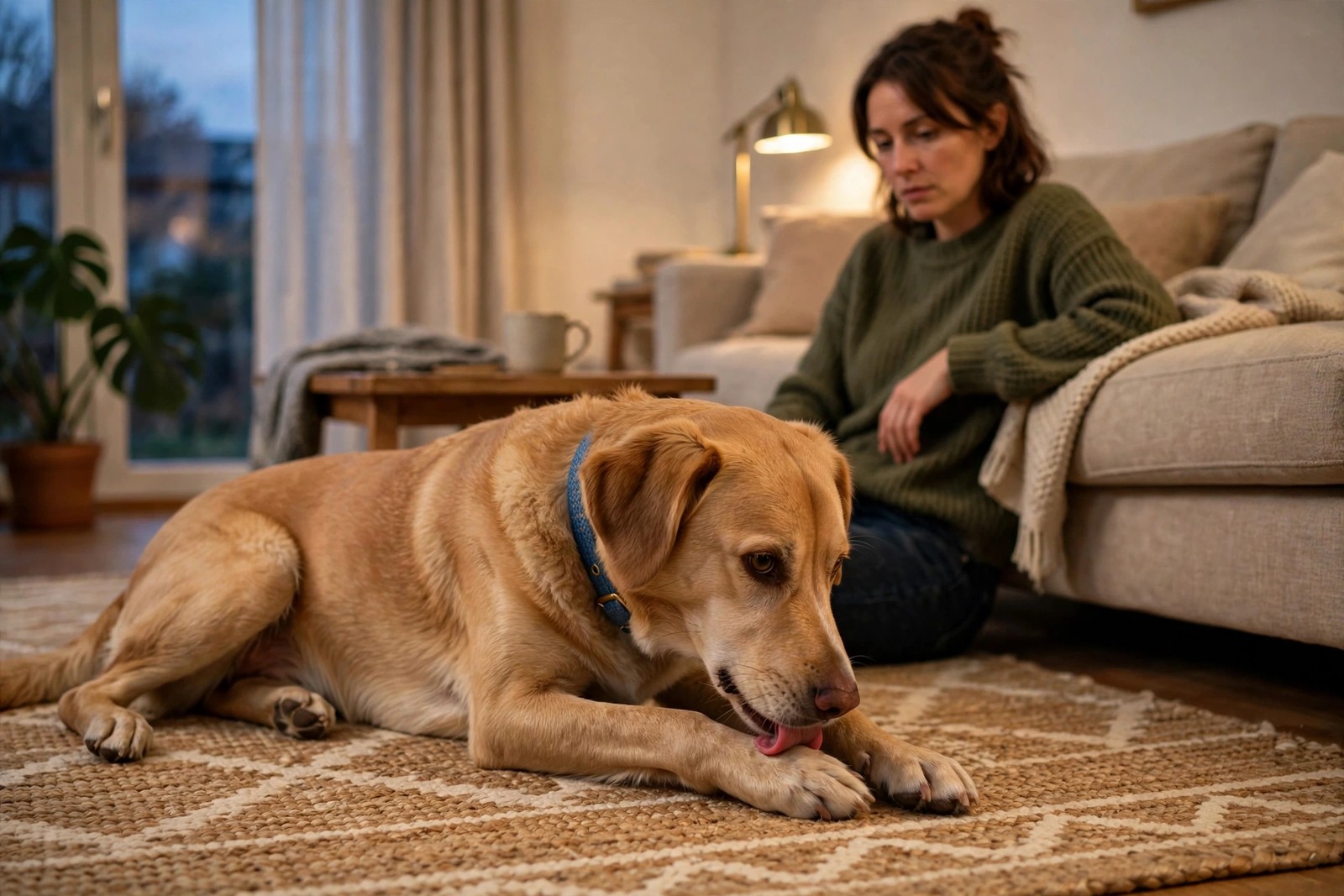
When a dog licks his paws now and then after a walk, he is usually just grooming. When he returns to his paws again and again, settling in for long sessions that stain the fur or redden the skin, the licking is telling you something, and the useful response is observation rather than guesswork. Several distinct possibilities can sit behind the same behavior, and no owner can separate them from the sofa, because irritation, allergies, pain, and anxiety can all produce a dog working stubbornly at his feet. What you can do, and what genuinely helps, is record the pattern of his licking so a veterinarian investigates with evidence instead of starting from a vague report.
The Possibilities a Vet Investigates
Skin irritation is the most local possibility: something contacting the paw, such as rough ground, road grit, wet grass, or a small cut, graze, or thorn, can leave a paw sore enough to earn repeated attention. Allergies form a second possibility, whether to pollens and grasses in the environment or to something in his food, and allergic itch very often settles in the paws, ears, and belly. Pain is a third: a dog may lick over a sore joint, a strained toe, or a cracked nail because licking is the only soothing tool he has for an ache he cannot show you directly. Anxiety and habit form the fourth, since some dogs lick as self-comfort when bored, unsettled, or left alone, and a habit begun for one reason can outlast it. A veterinarian works through these possibilities with an exam and history, sometimes with tests, and that investigation belongs in the clinic rather than in home remedies.
Observations That Help Distinguish Them
One paw or all four is the first distinction: a single paw licked obsessively points attention toward something local in that paw or leg, such as injury or pain, while all four paws licked evenly suggest a wider itch or a general habit. Timing is the second: licking that starts right after walks hints at something his paws contacted outside, while licking mainly at rest, in the evening, or when he is left alone hints toward itch that surfaces when he is unoccupied, or toward anxiety. Seasonality is the third: licking that flares each spring and fades in winter tracks with environmental allergies far more than with habit. Also note red or moist skin between his toes, any ear scratching or face rubbing, and when the licking first started.
When Licking Needs a Vet Visit
Take him in promptly when the licking is persistent rather than occasional, and sooner when it is damaging him. Skin that is reddened, moist, hairless, or broken from his own tongue, a paw he guards or a new limp, swelling between the toes, a bad odor from the feet, or licking paired with ear scratching and general misery all belong in an exam room. Resist prescribing home treatments in the meantime, because creams, sprays, and home soaks can mask signs a veterinarian needs to see, irritate already inflamed skin, or simply be licked off and swallowed. Keep his paws clean and dry with plain care, note what you observe, and let the appointment do the diagnosing.
Keep One Shared Observation Log
In a household, licking gets underreported because everyone sees a fragment: one person notices him at his paws after the morning walk, another hears him at night, and nobody holds the whole pattern. Fix that with one shared observation log that every person writes in the same way: the day, the time, which paw or paws, what he had just been doing, and how long the bout lasted. Assign the logging as a household routine, with whoever sees a bout recording it, and review the log together weekly to spot the seasonality and timing patterns that single memories miss.
Logged consistently in KinsLe, Care Teams let each person record his licking bouts in one consistent format, building a single pattern the veterinarian can use.