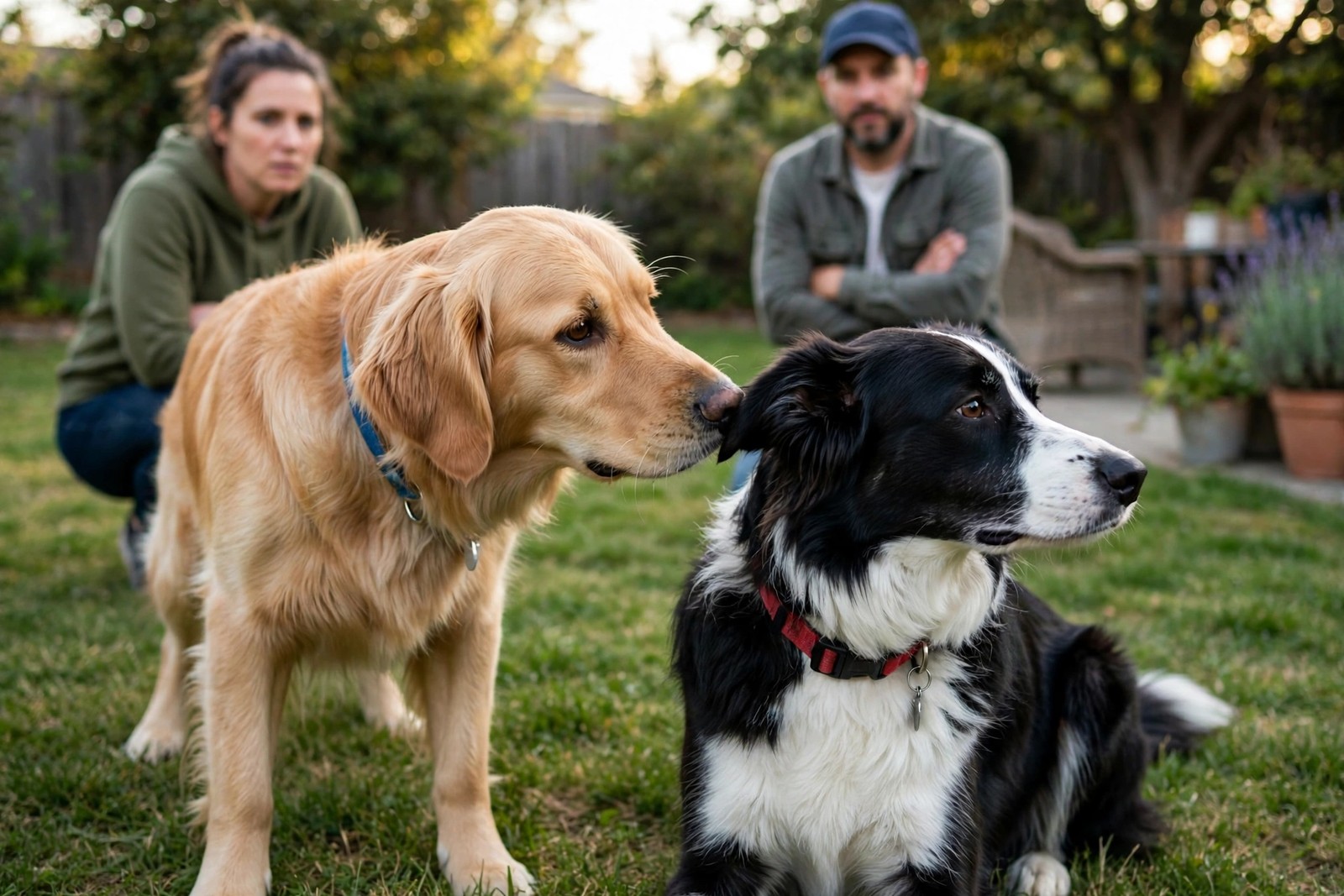
A quick ear lick between friendly dogs is ordinary social behaviour. One dog grooms another's ears as a friendly, slightly deferential gesture, the other dog stands still for it, and play moves on. Your dog's version runs longer: she settles in, licks with real focus, ignores the other dog turning away, and keeps going until she is growled at or snapped at. The difference between grooming and a problem is that missing stop signal, and it is worth addressing before a tolerant dog stops being tolerant.
Why Ears, and Why Hers in Particular
Ears are information-rich. The skin inside and around the ear carries scent, the shape funnels smells a dog finds interesting, and ear wax and moisture give the spot a taste many dogs actively seek out. If one particular dog draws all her attention, consider that dog's ears themselves: a dog with itchy, dirty or infected ears often produces more wax and odour, and companions may lick those ears persistently. In that case the thoughtful move is to mention it to that dog's owner so their veterinarian can check the ears, rather than letting your dog act as an unpaid diagnostic service. Her own temperament matters too. Young, socially keen dogs and dogs who groom when excited or slightly anxious often fixate on ears because the other dog is standing still and the target stays available during pauses in play.
The Signals She Is Missing
Dogs usually ask for space in stages. The licked dog turns her head away, licks her own lips, yawns, moves off, shakes as if drying herself, or freezes briefly. A polite playmate reads the first two stages and breaks off. A dog who licks through all of them is either too aroused to read them or has learned that persistence pays because nobody has interrupted her before. The final stage is the telling-off you describe: a growl, an air snap or a sharp bark. Those corrections are not the other dog being nasty; they are the loudest sentence in a conversation your dog has been ignoring at lower volume. Relying on them is risky, because a less tolerant dog, or the same dog on a sore day, may skip stages.
Managing Play Dates From Now On
Step in earlier than the dogs do. Allow a brief greeting lick, then call your dog away cheerfully, reward her, and let play resume; repeat that pattern so breaks become part of the game rather than the end of it. Structure the session with pauses: a minute of parallel sniffing on lead, a drink, a short scatter of treats in the grass, then free play again. Dogs who struggle to self-regulate do better in shorter, well-spaced meetings than in one long free-for-all. If she fixates on one dog, separate them kindly and give her a different partner or a break entirely. Watch the licked dog's ears afterwards; persistent redness, head shaking or scratching in that dog deserves a veterinary check. If your dog licks ears alongside other repetitive behaviours, or cannot be called away at all, a reward-based trainer can help build her recall and her reading of other dogs.
Play dates run better when both owners have agreed in advance who interrupts, at what point, and how the session will be structured. KinsLe Messenger gives you and the other owner a shared thread for each dog, so you can swap those observations, agree break signals and compare how each dog settled after the meeting.