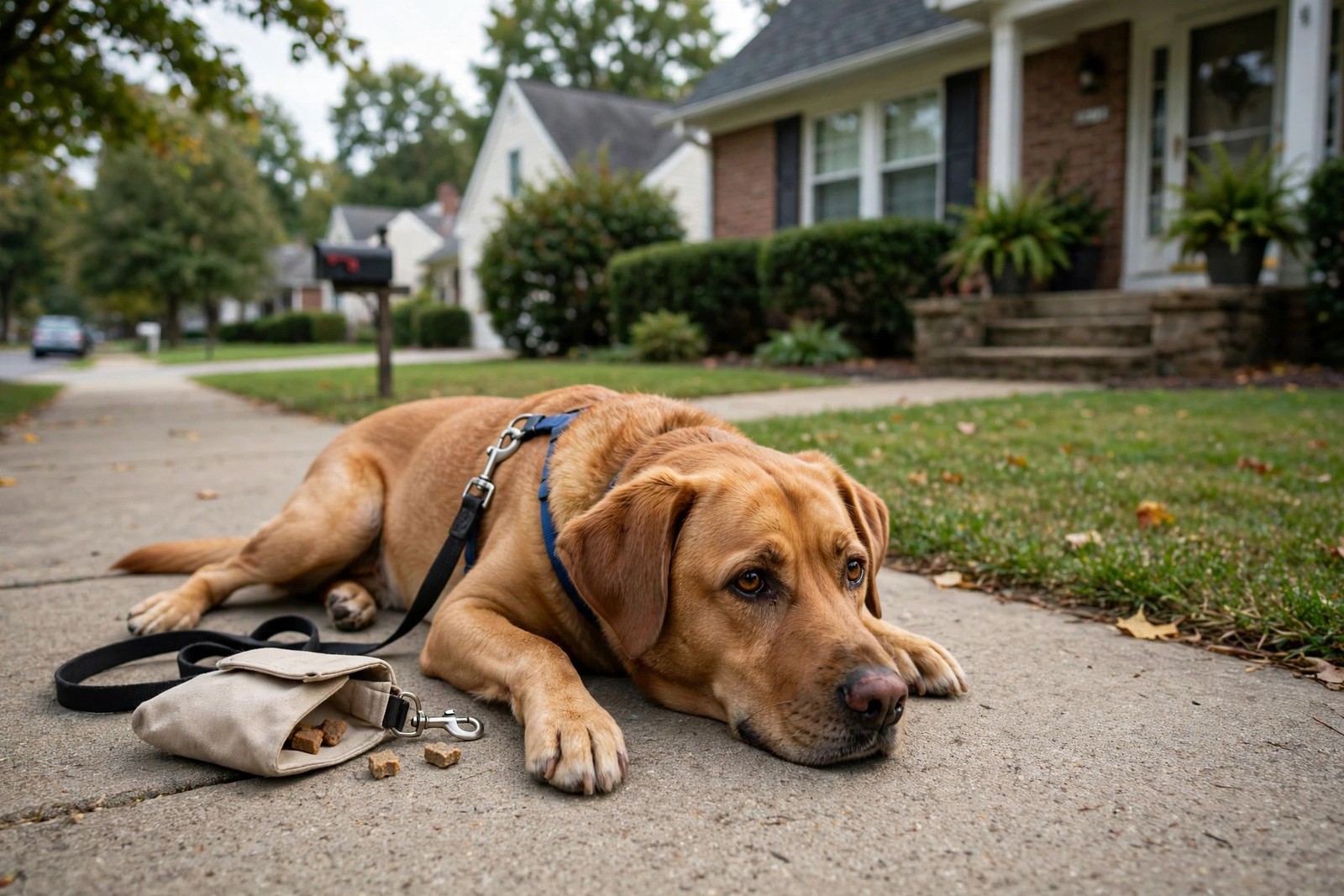
Your dog is not being stubborn at that house; he is reacting to information you cannot pick up. Another dog may have rushed him from behind that fence, a scent trail may have been laid there overnight, or a high-pitched device inside may be humming at a pitch only he hears. Planting and pulling back is a fear or conflict signal, not defiance. Do not drag him past; cross the road early, reward calm walking on the far side, and let distance rebuild confidence over weeks. If the refusal spreads to more places or comes with other changes, a vet check for pain and senses is the sensible next step.
What Actually Matters Here
Start from what he is telling you: feet planted and weight thrown backward mean the spot feels unsafe to him, whatever it looks like to you. Work out his threshold — the distance at which he notices the house but can still walk and take a treat — and treat that distance as your starting line. Reward the behaviour you want at that distance: loose-lead walking on the far side of the road, glances toward the house followed by looking back at you. Change only one thing at a time, edging a little closer over weeks, so you can see whether confidence is actually growing. Forcing him past at close range, or scolding the freeze, adds stress without teaching him the house is safe.
His reading of the street will sharpen with routine: dogs learn the sounds and smells of their regular route in detail, which is why one changed house — a new dog moved in, building work, a different car — can stand out to him while the rest of the walk feels familiar. A young dog's confidence can wobble as he matures, and an older dog's eyesight or hearing changes can make a once-easy stretch feel uncertain, so judge him against his own usual behaviour on this street, not against how other dogs pass.
Steps That Make the Difference
Build the new routine around that house, step by step:
- Cross the road well before his threshold distance, not at the house itself
- Reward calm walking and check-ins on the far side every time at first
- Practise the stretch at quieter times, when the house's dog is less likely to be out
- Note what is different at the house each day: dog visible, sounds, building work
- Turn back or take the side street on days he is already unsettled
Compare him with his own baseline on the rest of the route. A dog who walks happily everywhere except one doorway is giving you local information; a dog whose world is shrinking street by street is giving you a different message, and that change is worth a vet conversation about pain, eyesight and hearing.
Making It Part of Everyday Life
Keep the plan small and daily: a calm pass on the far side of the road, repeated over weeks, teaches more than one brave attempt to march him past the gate. Note how close he can comfortably get and whether treats still interest him at that distance, since creeping progress is easy to overlook without a record. Inside KinsLe, Care Teams holds the walking rota for this street, notifying whoever is due to take him out and timestamping each finished walk, so every walker follows the same distance plan.