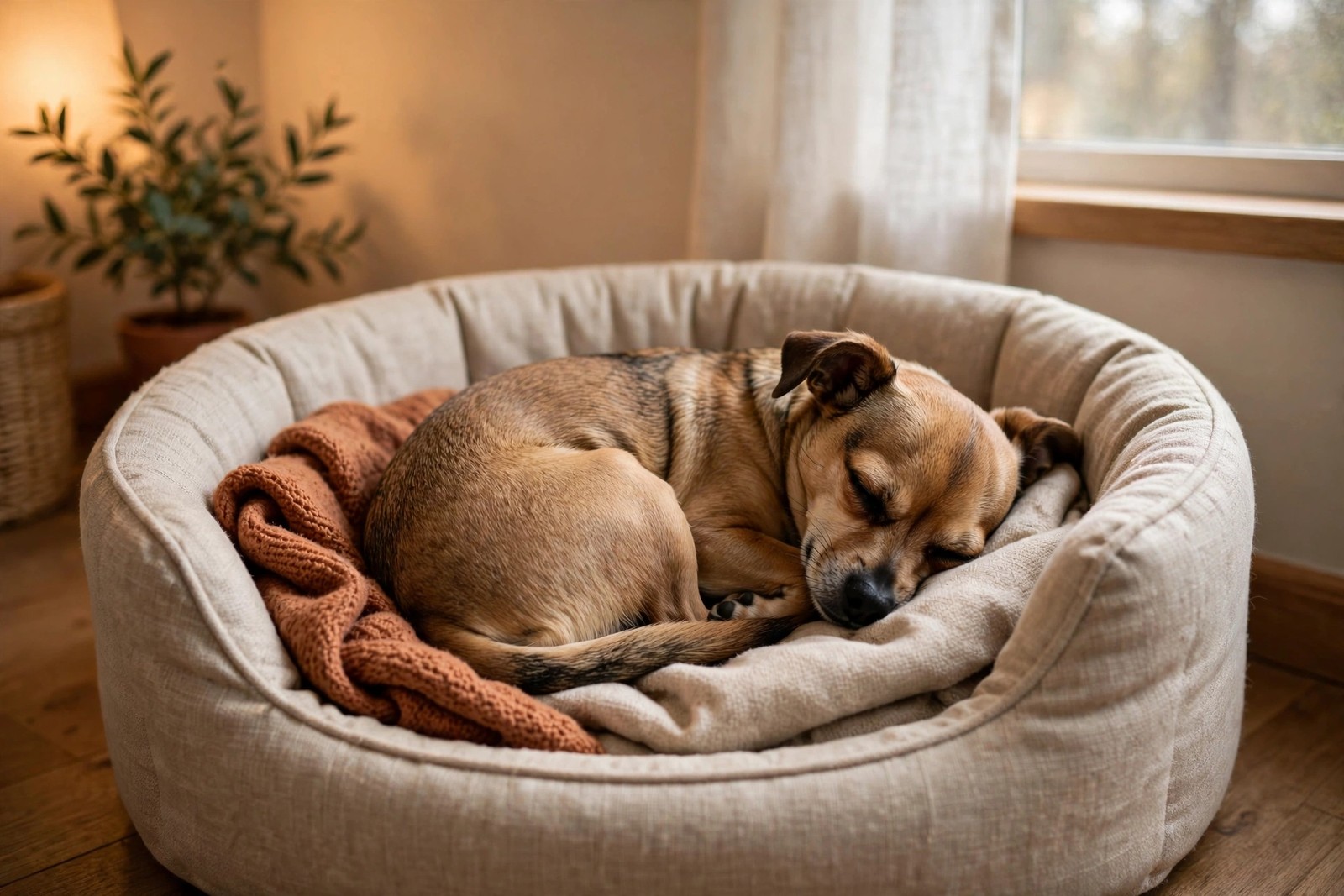
Nose tucked to tail, paws folded in, spine curved into a neat circle: the tight-ball sleep is probably the oldest posture in the dog's repertoire. Long before central heating and memory-foam beds, a dog's ancestors slept outdoors in all weathers, and curling solved two problems at once. Modern dogs keep the habit because it still works — and because, for some, it simply feels secure.
Conserving heat, the original reason
A curled dog exposes far less surface area to the air than a stretched-out one, and the thinly furred belly — a quick route for losing warmth — is turned inward, covered by legs and tail. The tail often drapes over the nose, warming the air the dog breathes. Small dogs, lean dogs, and short-coated breeds curl especially tightly because they lose heat quickly, and almost any dog curls more in winter, on hard cool floors, or in a draft. If your dog curls in the evening but sprawls by midday in a sunny room, temperature is the likeliest explanation.
Protecting the vulnerable parts
Curling also guards the abdomen and throat, the areas a sleeping animal can least afford to expose. That protective logic is why a dog who feels insecure — newly rehomed, staying somewhere unfamiliar, unsettled by visitors or building noise — often sleeps in a tighter ball than usual, in a corner or against a wall that covers one side. As confidence grows over days and weeks, the posture typically loosens: first a looser crescent, then legs stretched out, eventually the full belly-up sprawl of a dog who feels entirely safe.
Comfort fixes that genuinely help
Give a curler a bed that works with the instinct rather than against it: a round or high-sided bed that supports the curve, placed out of drafts and away from cold external doors, with a washable blanket your dog can nose into a nest. In colder months, moving the bed away from tiled floors or adding an insulating layer underneath makes a noticeable difference. Avoid repeatedly unfolding or repositioning a sleeping dog to check on them; watch instead whether the overall pattern relaxes as warmth and familiarity improve.
When a tight ball is a message
A dog who suddenly curls tightly all the time, in a warm room where they used to sprawl, deserves a second look. Curling can accompany feeling unwell or sore — a tucked, guarded posture is a common way dogs protect a painful abdomen or aching joints. Paired signs that move this from observation to vet appointment include shivering that is not about cold, reduced appetite, hiding away, reluctance to be touched, or disturbed, restless sleep. Puppies who cannot settle and cry through the night also merit prompt advice rather than waiting it out.
Puppies, seniors, and the shape of the curl
Puppies curl against littermates for shared warmth, and a puppy newly home alone often curls tighter than she will as an adult, especially if the bed is large and exposed; a smaller, high-sided bed and a worn item of your clothing nearby usually loosen the curl within days. Senior dogs present the opposite puzzle: stiff joints can make curling up, and uncurling again, genuinely difficult, so an older dog who stops curling may be avoiding pain rather than feeling warmer, just as one who starts may be seeking support. Coat matters too — a thick double-coated breed may curl mainly for the protected feeling, while a whippet-thin coat curls for literal warmth and benefits most from a blanket and a raised bed.
Posture changes are subtle, and they are easy to miss without a shared record. KinsLe's Care Teams lets everyone in the household add timestamped notes on sleep, appetite, and mobility to your dog's profile, so a slow shift toward constant tight curling can be spotted and raised at the next vet visit with dates attached.