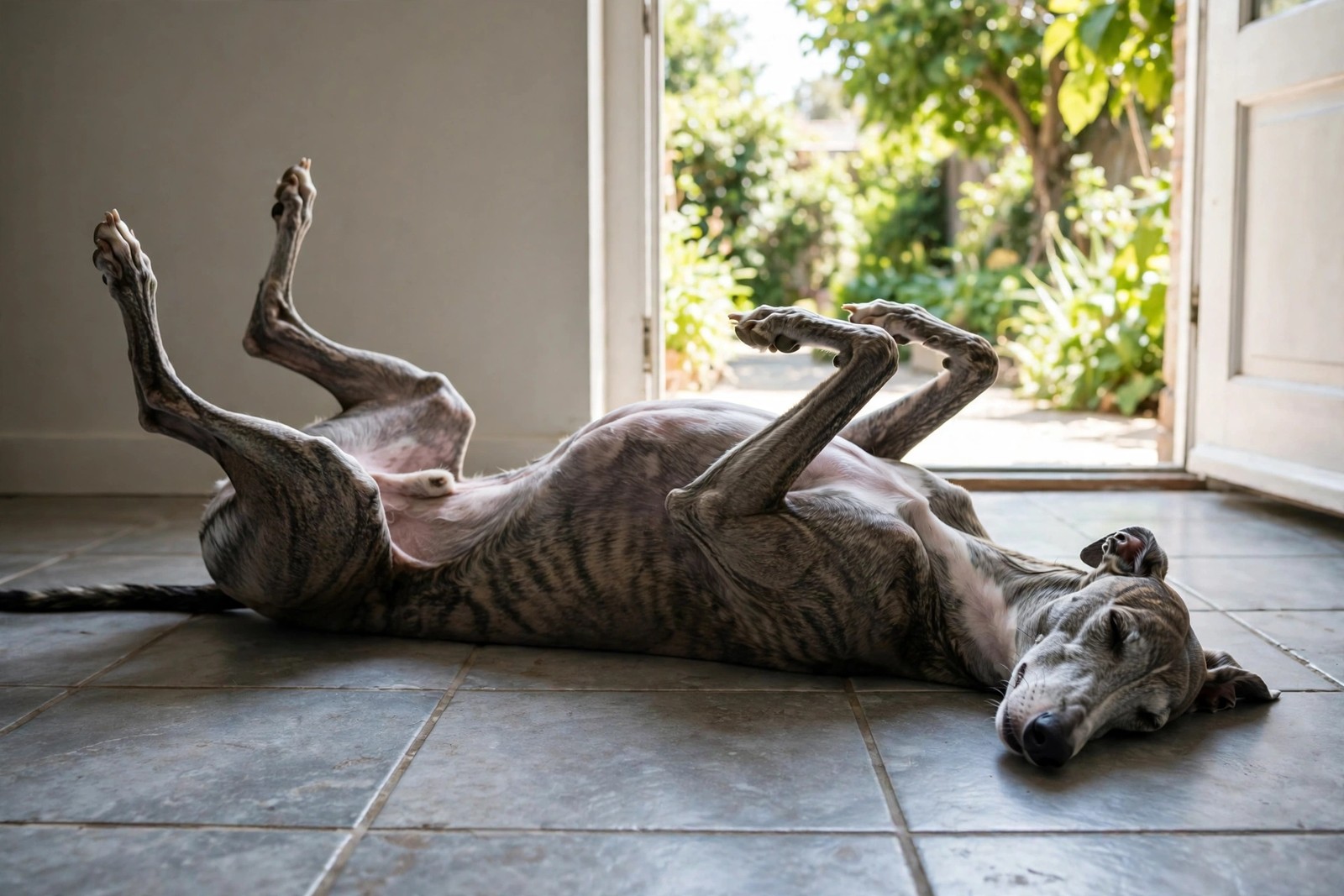
It looks like a dog who has fallen over and decided to stay there: flat on his back, belly to the ceiling, legs waving loosely in the air, utterly asleep. Owners often find the pose hilarious and faintly alarming in equal measure. In fact, it is one of the most reassuring sleep positions a dog can choose, and it tells you two things at once — he trusts his surroundings completely, and he may be managing his temperature.
The trust side of the pose
A dog's belly is his most vulnerable area, and sleeping exposes it fully only when a dog feels secure in the room, the household, and the company. Wild canids and nervous dogs sleep in ways that let them rise instantly; a back-sleeper has to roll, right himself, and get his feet under him before he can move, so the pose is a genuine statement of relaxation. Newly rehomed dogs rarely sleep this way at first. When the legs-in-the-air pose appears after weeks of tighter sleeping, it is a quiet milestone: your dog has decided this place is safe.
The cooling side of the pose
The posture is also a radiator. Belly fur is thinner and sparser than the coat on a dog's back, the skin beneath carries blood vessels close to the surface, and dogs have sweat glands in their paw pads — so a dog flat on his back with paws up is maximising the skin and pads exposed to cooler air. Expect the pose more in warm weather, in centrally heated rooms, and after evening exercise. A dog who seeks out a cool tiled floor and then rolls onto his back there is combining both cooling tricks at once.
Let sleeping back-sleepers lie
An exposed sleeping belly is not automatically an invitation. Many dogs who happily solicit belly rubs while awake dislike being touched mid-sleep, and a hand arriving from above can startle a deeply asleep dog into a reflexive snap. Admire the pose, take the photograph, and let him sleep; if he wakes and rolls toward you with a loose, wiggly body, that is the invitation. A gentle word before any touch gives a dozing dog time to surface safely.
Warm-weather care around the pose
Because back-sleeping often means a dog is warm, use it as a household cue. Check the water bowl is full and cool, keep bedding out of direct sun, walk in the cooler parts of the day, and never leave a dog in a parked car or a hot conservatory. A warm dog who is merely sprawling will settle and sleep soundly; one who pants heavily and constantly, drools thickly, seems agitated or wobbly, or vomits may be developing heatstroke, which is an emergency — move him somewhere cool and contact a vet immediately rather than watching and waiting.
Why some dogs never sleep this way
Not every relaxed dog back-sleeps, and its absence means nothing. Heavy, deep-chested, or very short-legged dogs can find the position physically awkward; older dogs with stiff spines or sore hips may avoid a posture that takes effort to get into and out of; and some dogs simply prefer side-sleeping with legs stretched, which cools them nearly as well and lets them rise faster. Judge your own dog against his own habits, not against another dog's sprawl. The meaningful change is a dog who back-slept for years and stops altogether, particularly if he also becomes reluctant to roll, play, or climb — that combination belongs in a conversation about comfort and mobility at his next vet visit.
Hot-day routines work when the whole household shares them rather than each person assuming someone else has done them. KinsLe's Care Teams lets you assign water checks, shade checks, and cooler-hour walks to named family members, with each completed task timestamped, so warm-weather care is visibly covered instead of hopefully remembered.