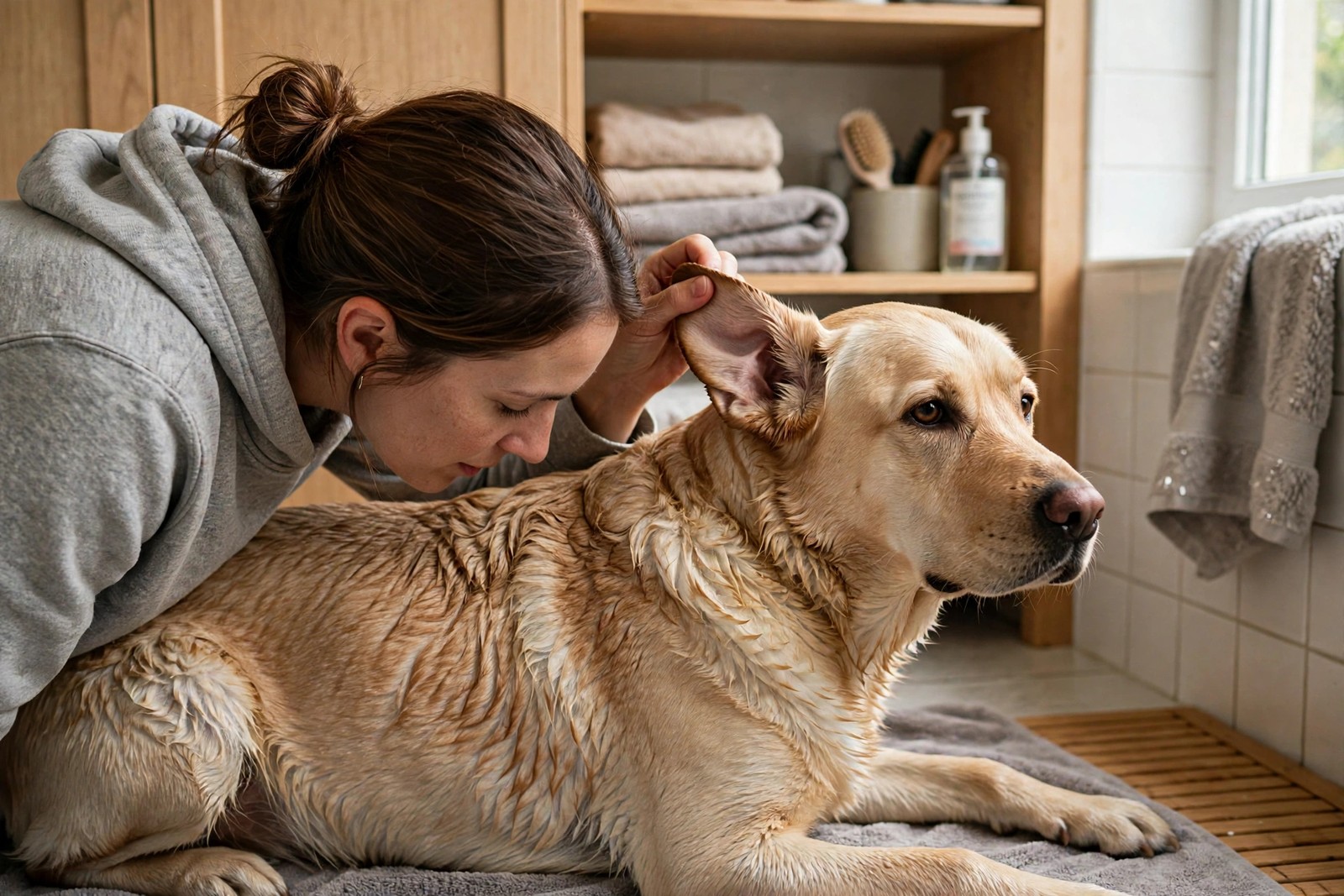
When a dog smells again shortly after a bath, the bath is usually innocent. Shampoo cleans the coat, and the coat is only one of the places a dog's smell is made. The odour that survives a bath, or returns within a day, is coming from somewhere the water never reached, something the water left behind, or something he lay on as soon as he was clean. Work through the check list below in order; each check takes about a minute, and each one ends in either a home remedy or a clear reason to book the vet.
Check One: The Ears
Lift each ear flap and smell inside. Healthy ears smell faintly waxy at most; a strong, yeasty, or sweet-sour smell from the ear points to an ear problem that no bath will touch, since the source sits down in the canal. Look as well as sniff: dark discharge, redness, or him shaking his head and scratching at one ear strengthen the case. Ear findings route to the vet rather than to home cleaning products, particularly if the smell is new, one-sided, or paired with head tilting.
Check Two: The Anal Glands
Check by observation only. Signs that his anal glands may be full or irritated include scooting along the floor, licking or chewing at his rear, a fishy smell that is most noticeable around his back end, and swelling beside the anus. Expression of these glands is clinic-side work, done by the veterinary team who can also judge whether the glands are infected or otherwise abnormal, so a dog showing those signs goes on the appointment list rather than being squeezed at home in the bath.
Check Three: Teeth and Breath
Lift his lip and look at his teeth and gums while you assess his breath. A smell that turns out to be breath explains why the coat was never the problem: mouth odour travels with him everywhere and settles on bedding and on anyone he breathes over. Tartar build-up, red or bleeding gums, a broken tooth, or breath that has changed character recently all route to the vet, since mouth pain and dental disease hide behind what owners assume is ordinary dog smell.
Check Four: Bedding and Collar
Smell his bedding, his blankets, and his collar separately from the dog. A clean dog who sleeps for ten hours in a bed that carries weeks of accumulated odour will smell of that bed by morning, and fabric collars hold smell tenaciously even when the dog wearing one is freshly washed. Wash the bedding hot, wash or replace the collar, and judge his smell again before concluding the bath failed.
Check Five: Drying and Rinsing
Finally, audit the bath itself. A thick coat left damp at the skin dries slowly and develops a musty, mildew-like smell within hours, especially in folds, armpits, and a heavy ruff. Shampoo left by incomplete rinsing turns stale in the coat in the same window. Next bath, rinse until the water runs completely clear and dry him through to the skin, parting the coat as you go. Write down what you found at each check, even when the finding is nothing, because a dated list of clear checks is useful evidence rather than a wasted ten minutes. If every check comes back clean and the smell still returns, that pattern is itself a finding worth a veterinary visit, with your dated notes on what you checked. Recording those checks in Care Teams on KinsLe keeps the list from being half-done, because each completed check is timestamped where the whole household can see it.