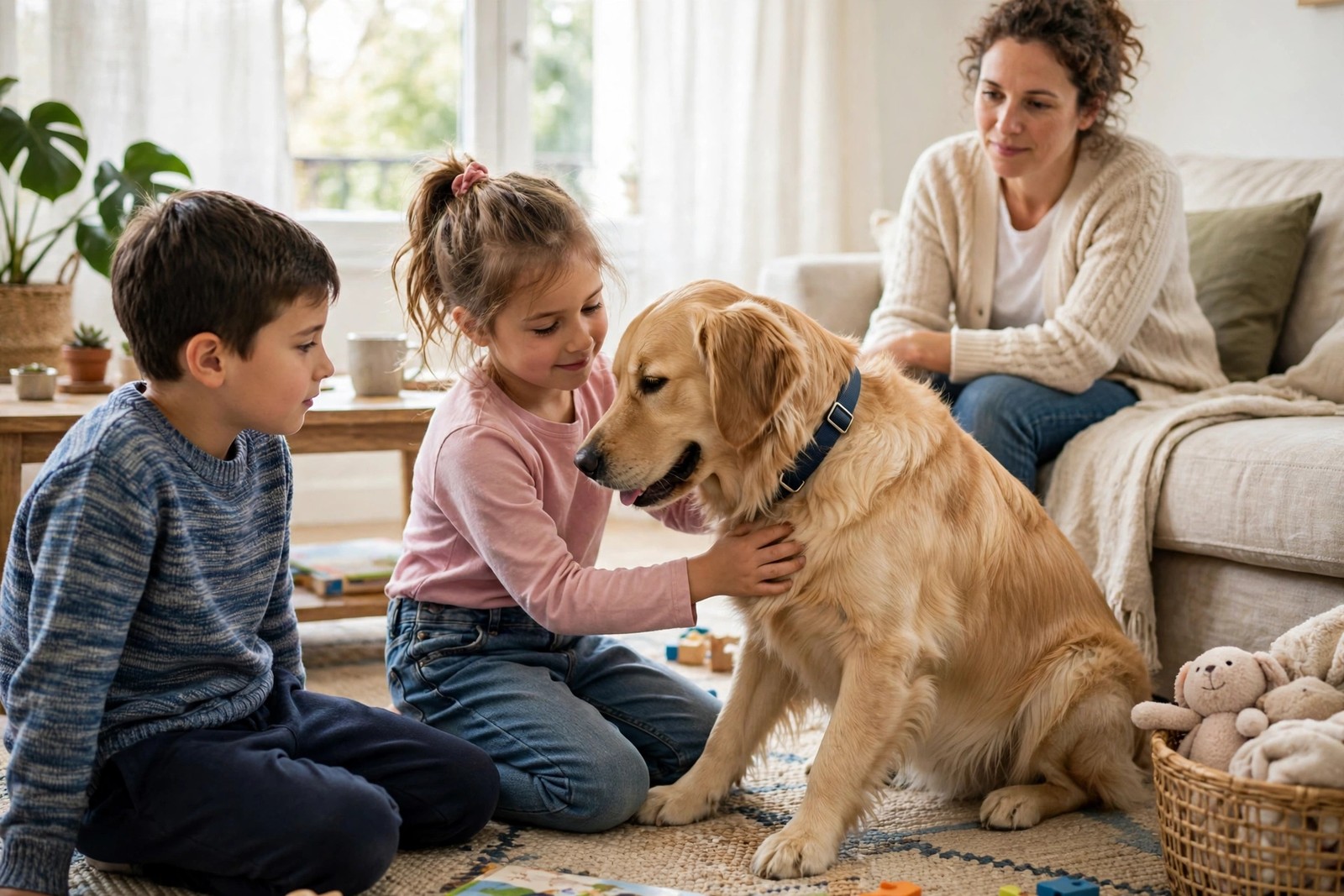
This pattern confuses families because the two halves seem to contradict each other. The same dog who trots over, leans against the children and solicits fuss will snap at the air beside a child's face during a hug. There is no contradiction once you separate what she is choosing from what is being done to her. She chooses company, contact and stroking she can walk away from. A hug removes the walking away: arms go around her neck or shoulders, her movement is pinned, a face comes close to hers, and the squeeze often lasts longer than she wants. Many dogs tolerate that from children they love while disliking every second of it, until tolerance runs out.
What an Air Snap Is Telling You
Dogs usually ask for space politely first. Watch for her turning her head away, licking her lips, yawning, showing the whites of her eyes, going still, or leaning away during cuddles. If those signals are missed, the requests get louder: a growl, a snap into the air, and only then a bite. An air snap is a deliberate miss and a serious warning at the same time; she chose not to connect, and she is telling you the earlier stages have been used up. Treat it as a household alarm. She has now rehearsed the loud warning, and a dog whose warnings keep being overridden may skip one next time, particularly if she is tired, sore, startled awake or being hugged by a visiting child whose movements she cannot predict.
New Rules for the Children, Starting Today
Hugs end, for every child, including visiting ones. Replace them with interactions she demonstrably enjoys and can leave: the children sit or stand still, invite her to come to them, and let her choose to step in. Stroking should be on her chest or shoulder rather than over the top of her head, in short turns of a few seconds, stopping to see whether she nudges back for more or moves off. That consent check teaches children to read her answer and gives her the exit that hugs removed. No child lies on her, rides her, carries her, or puts a face against hers, and she always has a child-free bed or room she can retire to without being followed. Children can still be deeply involved in her life through feeding, training games, scatter hunts in the garden and being the person who produces her favourite toy, all of which build the bond hugs were reaching for.
Getting Support and Watching the Whole Picture
Book a veterinary check, because pain in the neck, shoulders, ears or skin makes restraint and close handling feel worse, and a sudden drop in handling tolerance deserves investigation rather than assumption. Then work with a qualified reward-based behaviour professional who will watch the children and dog together, in the home, and set handling rules at the level she is genuinely comfortable with. In the meantime, manage the environment: separate her with a gate during boisterous play, parties and any time no adult is actively watching, and brief every adult, grandparent and babysitter on the no-hug rule so one well-meaning squeeze does not restart the pattern. If she begins warning in other contexts too, such as handling, grooming or being approached on her bed, tell the behaviour professional promptly, because a widening pattern changes the plan.
Supervision only works if someone specific owns it at each moment rather than everyone assuming someone else is watching. KinsLe's Care Teams lets you assign supervision, feeding and play-session duties for her to named adults, with each completed task marked complete with a timestamp.