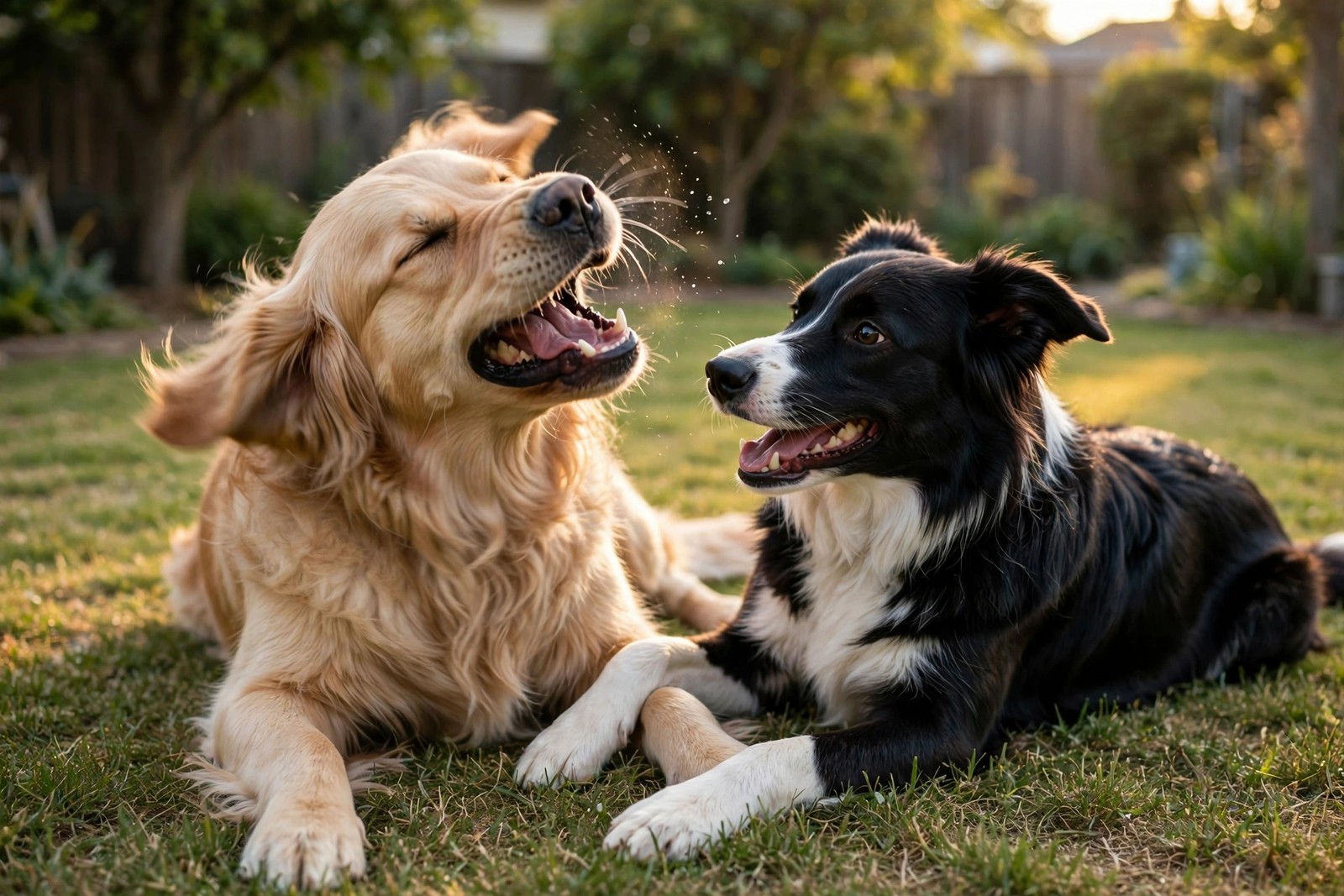
A wrestling match between two dogs can look and sound chaotic: open mouths, mock growls, bodies rolling, and every so often one dog stops, shakes her head and sneezes in a rapid little volley before diving back in. Owners often worry the sneezing means dust, a cold or something stuck up a nose. In the middle of play, it usually means none of those things. Play sneezing is a recognised social signal in dogs, and once you know it, you will start noticing it in many good-natured wrestles you watch.
What a Play Sneeze Communicates
Play needs constant clarification, because many play behaviours are borrowed from fighting and hunting: chasing, grabbing, pinning and showing teeth. Dogs wrap those behaviours in signals that say this is still play, including the loose play bow, exaggerated bouncy movements, self-handicapping by stronger dogs, and the play sneeze. The sneeze is a sharp exhale through the nose, often repeated two or three times, sometimes with a head shake, delivered mid-action rather than during rest. It appears to work as punctuation: I am excited, this is fun, and nothing I just did was serious. You will notice it most at peak moments, right after a pin, a chase reversal or a mock pounce, which is exactly where a misunderstanding could start. Dogs who play together regularly use the signal freely, and the wrestling typically resumes in a looser, sillier register straight afterwards.
Healthy Wrestling Around the Sneezes
Read the sneezes as part of the whole conversation. Good wrestling alternates: both dogs take turns chasing and being chased, pinning and being pinned, and both choose to re-engage after pauses. Bodies stay wiggly rather than stiff, mouths stay open and loose, and either dog can walk away and be allowed to. Interrupt kindly if one dog is always on top, one keeps trying to leave, tails tuck hard, or the play stops pausing. Sneezing does not rescue a one-sided game; a dog sneezing while pinned and struggling is not having fun, whatever the signal means in a balanced match. Short breaks every few minutes, called by you rather than negotiated by the dogs, keep arousal at the level where play signals still work.
When Sneezing Is Not About Play
Context is the dividing line. Sneezing that is confined to play, stops when play stops and is absent across the rest of the day is the social signal. Sneezing deserves a veterinary conversation when it happens at rest, starts suddenly in an older dog, comes in hard fits, or arrives with one-sided nasal discharge, nosebleeds, pawing at the face, snorting or reverse sneezing fits, reduced appetite, or swelling around the nose or eyes. Those patterns can point to irritation, a foreign body such as a grass seed, dental problems affecting the upper jaw, or infection, none of which can be sorted out from the sofa. Note which side any discharge comes from, film a fit if you can, and take both to your veterinarian rather than treating the nose at home. A dog who has recently been in kennels, daycare or contact with a coughing dog and starts sneezing with a cough needs prompt veterinary advice and a break from playmates until she is cleared.
Film one good wrestling session, sneezes included, and watch it back slowly; the pauses, roles swapping and loose bodies will show you more than the live match did. KinsLe Messenger lets you share that clip in your dog's own message thread, so family members and your other dog's regular playmates' owners can compare notes on how the games look.