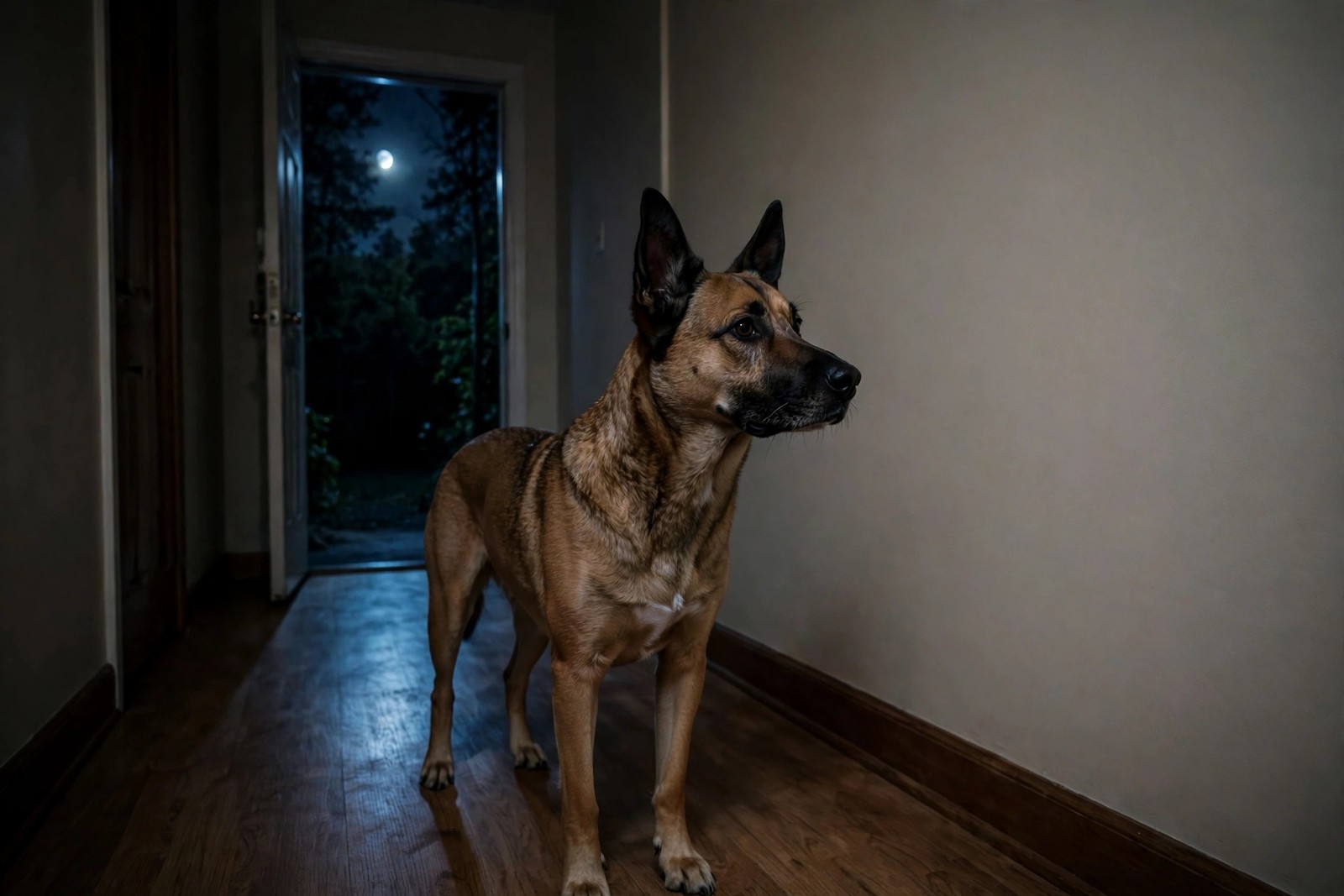
Few behaviours unsettle a household like a dog standing in a dark room at two in the morning, fixed on an empty wall, barking at apparent nothing. The apparent part matters. Dogs hear frequencies well above the human range and detect sounds far fainter than people can, so a dog's nothing is often simply a sound outside your hearing or too quiet for you at that distance. The detail in your question helps: it happens mainly on quiet evenings and at night, which is exactly when faint sounds are least masked by the daytime noise of the house and street.
Sounds That Live Inside Walls
Houses are not silent structures. Water pipes expand and contract as heating cycles end, making ticks and taps that travel along a wall. Timber and plaster settle as temperatures drop overnight. Insects move in cavities, and rodents, where present, are active after dark, scratching and scurrying along runs that can run directly behind plasterboard. A dog tracks those sounds to their source, stares at the point on the wall where the sound is loudest, and barks when it repeats, moves or stops and starts unpredictably. Test this explanation practically: note which wall, whether the heating has recently switched off, and whether the episodes match the times pipes cool or a boiler cycles. If you suspect animals in the wall, that is a pest-control question worth answering properly, both for the house and because a dog who can hear them nightly will keep reporting them.
Sounds Arriving From Outside
Quiet nights carry sound. Wind drops, traffic thins, and noises from several streets away, a fox calling, a neighbour's gate, a distant dog answering something, arrive through windows and vents at a clarity they never have by day. A dog staring at an exterior wall may be facing the direction of a sound on the other side of it rather than the wall itself. Her stillness is concentration: ears working, head tipping to localise, then barking when the sound resolves into something she judges worth announcing. Age changes this picture too. Senior dogs sleep more lightly, hear selectively rather than better, and can wake disoriented in a dark house, barking at sounds they would have slept through when younger. A dog who has recently started night barking after years of sleeping through deserves the pattern taken seriously rather than dismissed.
What to Check and When to See the Vet
Work through the plain explanations first: pests, plumbing and heating noises, a new appliance cycling at night, and anything outside that a short listen at the wall or window confirms. Then look at her: true head pressing, where a dog stands pushing her head into a wall or corner and stays, is different from staring and needs prompt veterinary attention, as do episodes with a vacant, unresponsive quality, drooling, pacing in circles, or behaviour changes by day. Mention night barking to your veterinarian if it is new in a senior dog, is increasing, or comes with restlessness, changed appetite, confusion at other times or disturbed sleep across the whole night, because pain, sensory loss and cognitive decline can all surface first as night-time unease. Keep a simple log for two weeks: time, wall or window faced, sounds you could verify, how long she took to resettle. Patterns in that log usually identify the trigger, and the log is useful evidence if a veterinary visit follows.
Answer her calmly rather than scolding the barking, since she is reporting something real to her; settle her with a familiar cue, check the house briefly so she sees the all-clear ritual, and avoid a big lights-on investigation that turns each episode into an event. When you want another angle on those nights, put a follow-up question to KinsLe's Kinny; he answers using the KinsLe Answers library.