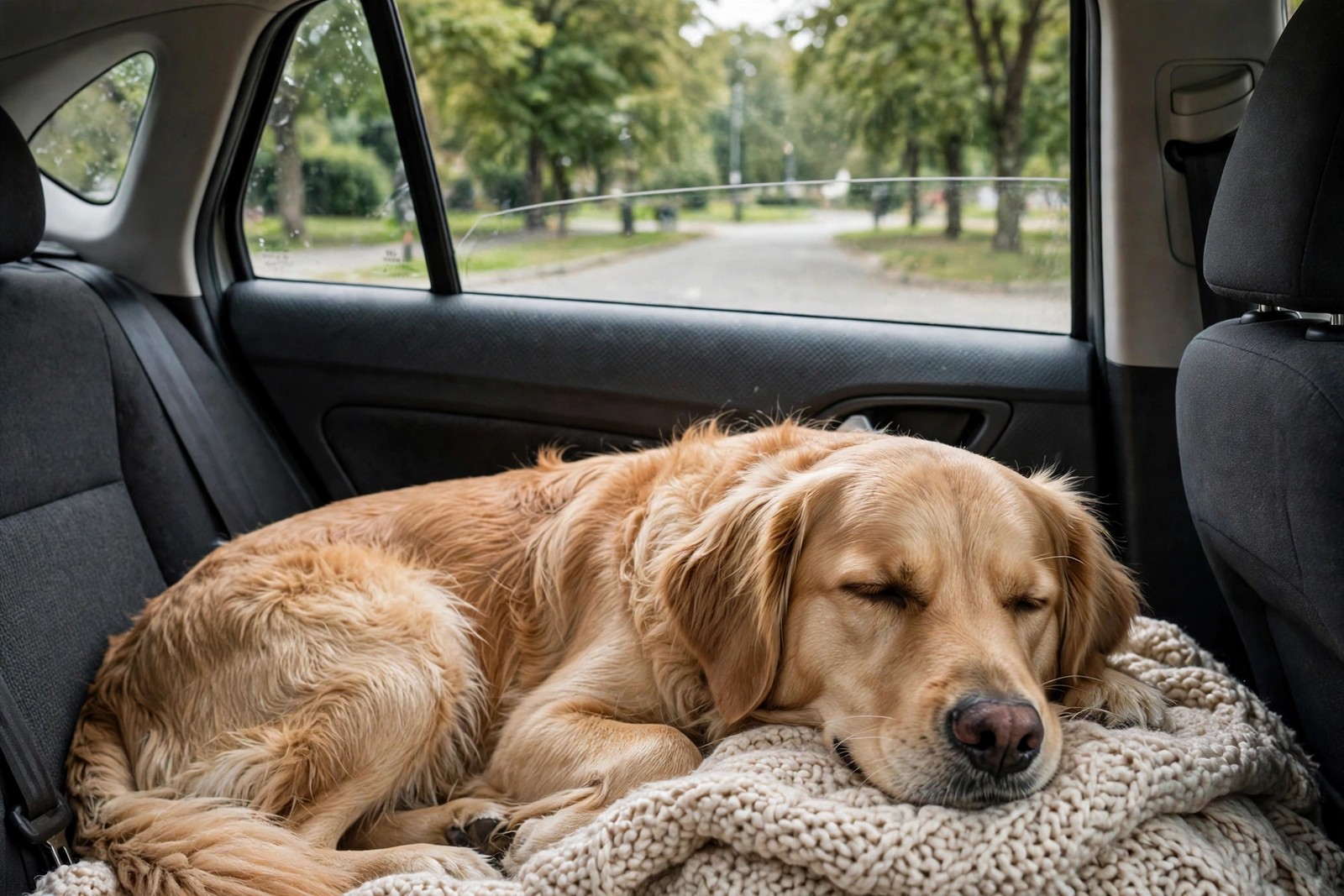
Short trips combine the two hardest parts of car travel: stop-start movement through corners and roundabouts, which stirs motion sickness, and a dog who is still fresh, alert, and excited about the park, so he feels every jolt and anticipates the destination. Longer motorway trips are smoother and more monotonous, which lets many dogs settle, and the early nausea window often passes before the journey ends.
Why the short trip feels worse
Motion sickness in dogs is closely tied to uneven movement. Braking, accelerating, turning, and circling a roundabout send repeated, changing signals to the balance system, while the view through the side window moves quickly and unevenly. On a motorway, the car holds a steady speed, the road curves gently, and the view becomes a steady blur, so the balance system has less new information to argue about. Many dogs therefore struggle in the first stretch of a journey and then settle, which is exactly why a short journey can end while the dog is still in the worst phase.
Excitement adds a second source of drool. A dog who knows the park route will often whine, pace, pant, and drool from anticipation before sickness even enters the picture, and an excited dog swallows less often, so saliva pools and becomes visible. The two causes look alike from the front seat, which is why the pattern matters: drool that starts as soon as the park road appears, eases once the dog is out and moving, and never leads to vomiting leans toward excitement, while drool paired with lip licking, yawning, restlessness, and vomiting leans toward nausea. Some dogs show both at once.
Making short trips easier, step by step
Start with the car itself. Keep the air cool and fresh, with a window cracked for airflow rather than a blast of hot air, and give him a secure resting place in a footwell where it fits snugly or in a well-anchored crate, so he is not sliding across the seat at every corner. Dogs differ on whether a forward view or a covered, settled space suits them better, so try one arrangement for several short trips before judging it.
Feeding timing matters too. Offer no food for a few hours before travel, while keeping water available, so a queasy stomach is not also a full stomach. Then build a separate practice habit: brief drives to nowhere interesting, ending back at home with calm praise and no park reward. The aim is to break the link between car and excitement, and to give his balance system short, successful experiences that end before sickness builds. If vomiting stays frequent, drooling is heavy on every trip, or he becomes reluctant to enter the car at all, talk to a vet about nausea and anxiety, since those conversations belong with a professional rather than with home remedies.
Reading progress without fooling yourself
Judge progress by the same measures on every trip: how soon whining starts, how much drool appears, whether he lies down, and whether he recovers quickly at the destination. A dog who still whines at the park turn but lies down after a few minutes and recovers fast is improving, even if the journey is not yet silent. A dog who drools more, vomits more often, or starts refusing the car is telling you the current step is too much, and the practice trips need to be shorter or the vet conversation needs to come sooner.
Keep the household plan consistent, because one person driving gently to the park, another driving fast to the park, and a third skipping practice drives will blur any pattern. Agree the feeding window, the resting arrangement, and the practice route, and write down each trip so the trend is visible. KinsLe's Care Teams supports that steady plan, because practice drives, feeding times, and drooling notes for this dog can be assigned to named family members and marked complete with a timestamp.