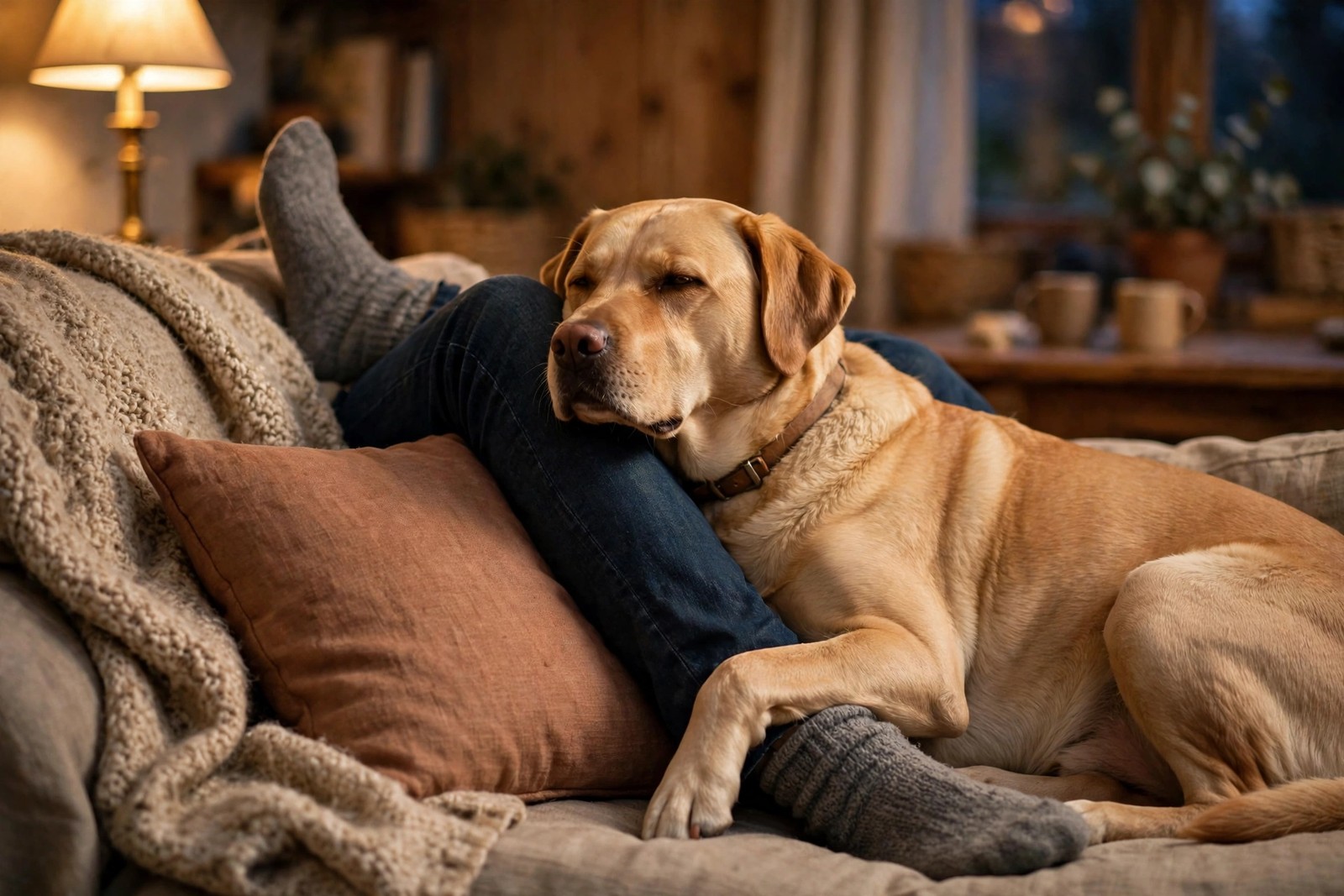
That steady weight against your leg or side on the sofa is not an accident. Dogs choose where to rest, and pressing against a person is one of the clearest ways a dog asks for — and enjoys — physical closeness. Understanding which kind of pressing you are seeing helps you respond well, because a relaxed lean and an anxious press look similar at first glance but mean quite different things.
Affection and simple closeness
For many dogs, contact itself is the reward. Puppies sleep in a pile with littermates, and plenty of adult dogs keep that preference for dozing in touch with someone they trust. A dog who sighs, softens their eyes, and melts their weight into you after a walk is showing contentment, not a problem. Some breeds are famous leaners — large, people-oriented dogs such as Great Danes often back up and sit their weight against their owner's legs — but any breed can be a devoted leaner.
Seeking security when the world feels uncertain
Pressing can also be a request for reassurance. A dog who only becomes clingy during thunderstorms, fireworks, or visits from unfamiliar people, and who pants, paces, trembles, or follows you from room to room, is likely anxious rather than affectionate. In that case, calm contact genuinely helps: let your dog stay close, keep your own voice and movements unhurried, and avoid either fussing intensely or pushing them away. If storm or noise anxiety is severe or worsening, a vet or qualified behaviour professional can help with a wider plan.
Attention, warmth, and learned habits
Dogs repeat whatever works. If leaning reliably produces ear scratches, sofa invitations, or a slipped treat, your dog has learned a polite and effective way to ask. Cold evenings add another motive: your side is warm, and smaller or short-coated dogs especially may press in partly for heat. None of this needs correcting unless the leaning bothers you — a big dog's full weight can pin a person happily but uncomfortably through a whole film.
When pressing is new, and what to do instead
Pay attention to a change in pattern. A previously independent dog who suddenly presses in constantly, especially alongside appetite loss, stiffness, reluctance to walk, hiding, or disturbed sleep, may be uncomfortable or unwell, and that combination earns a vet visit rather than a training response. If you simply want more space, teach a settle cue on a dog bed beside the sofa and reward your dog generously for choosing it, so they keep the closeness without the full-body lean.
Puppies, rescues, and the settling-in lean
Newly rehomed dogs often lean before they fully relax in other ways. A rescue dog who presses against your legs while still startling at household noises is using you as a safe base while the home becomes familiar, and that leaning usually broadens into looser, more varied resting as confidence grows over the first weeks. Puppies lean for a simpler reason: they have only just left a litter pile, and contact is their default sleeping arrangement. Neither needs training away. What helps both is predictability — the same feeding, walking, and settling routine each day — because a dog who can predict the day needs to borrow less reassurance from your side.
Because several people often share the sofa and the care, shared notes stop one person's observation being lost. KinsLe's Care Teams lets each family member record feeding, walks, and behaviour notes against the same pet, with completed tasks timestamped, which makes a gradual shift toward clinginess visible before it becomes a worry.