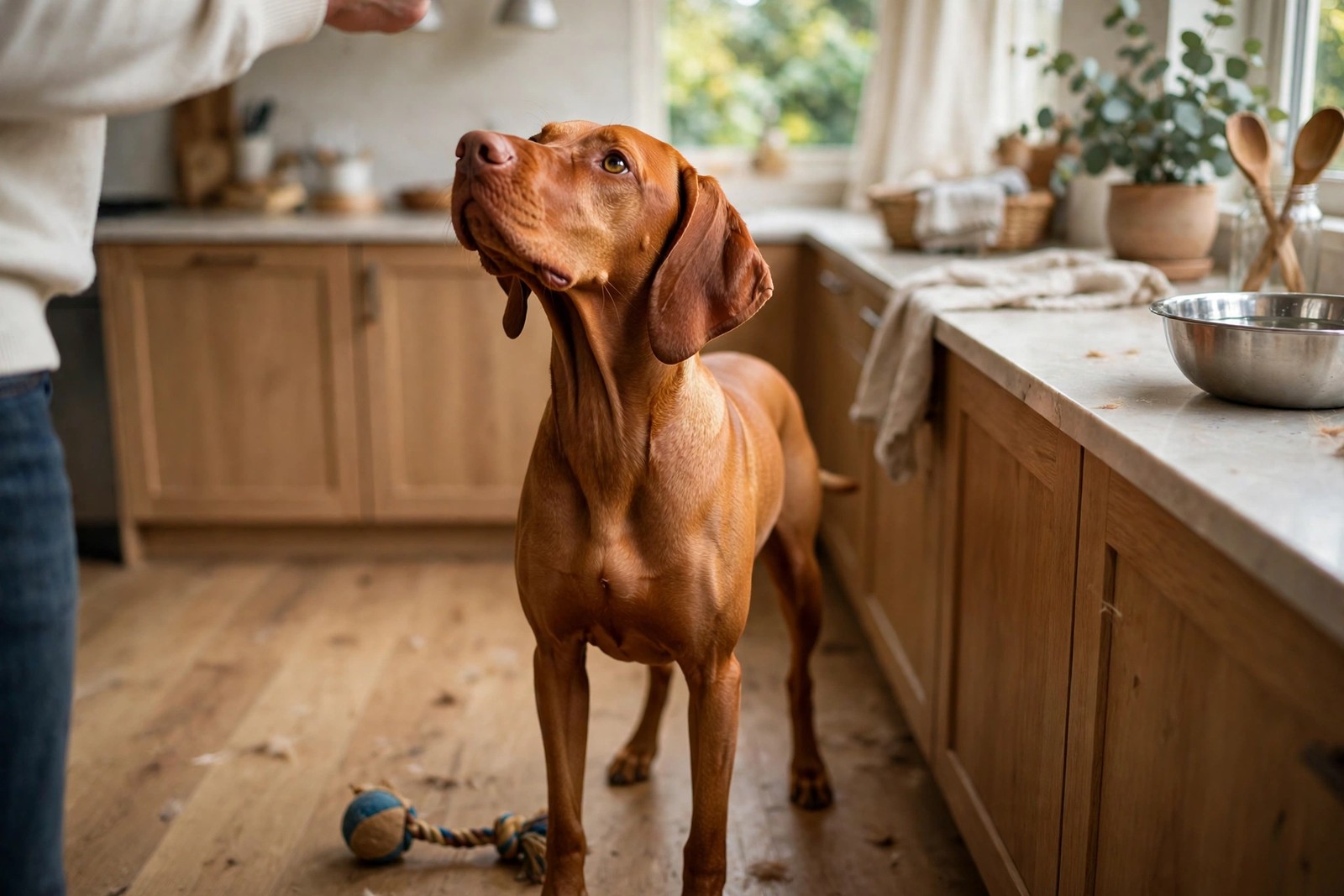
Vizslas are vocal dogs, but calling them guard barkers misses the point. The everyday Vizsla bark is a demand: a request for play, exercise, food, or simple physical contact with its people. Vizslas bond with unusual intensity, follow their owners from room to room, and lean against legs on the couch, so a closed door or an ignored dog is, in the dog's view, a problem worth announcing. The barking is communication aimed at you, and it usually stops the moment the underlying want is met or clearly refused.
Under-exercise is the loudest cause
A Vizsla is a sporting dog built to run and work for hours, and unspent energy comes out as noise. A Vizsla who gets a short leash walk and then a long, empty day will bark at the yard, at the toy shelf, at you, and at nothing, because demand barking is how an athlete with no game fills the schedule. Substantial daily exercise, including real running where it is safe and legal, plus training work that asks the dog to think, lowers the whole household's volume. Judge the fix by the evening: a properly tired Vizsla chooses the couch over commentary.
Attention barking and how not to pay it
Demand barking survives because it works. The dog barks, a person looks, talks, laughs, pushes the dog away, or gives in and throws the ball, and every one of those responses pays the bark. Break the cycle by rewarding the quiet version of the same request: the dog who brings a toy and waits, lies down near you, or stands silently at the door earns the game or the outing. Ask for a sit or a down before meals, doors, and play so patience becomes the dog's default currency. When barking starts, wait for a genuine pause before responding, and pay that pause generously at first.
Alone time needs building, not assuming
Vizslas left alone before they have learned the skill often bark, whine, and work themselves up, because the breed's closeness cuts both ways. Build departures gradually in short, boring repetitions, return before distress peaks, and pair alone time with a food puzzle or chew that appears only when you leave. A dog walker or household member's midday visit breaks long days into lengths a young Vizsla can handle. Persistent panic, destruction at doors, or drooling during absences deserves a conversation with a veterinarian or a qualified behavior professional rather than more repetitions of a failing plan.
Channeling the voice into work
A Vizsla with a job barks less at the household. Retrieving games with rules, scent work in the yard, and training sessions that build toward a real skill give the dog's intensity somewhere official to go. Some Vizslas also whine, yodel, and grumble conversationally, and owners who know the breed read those sounds differently from true barking; they are contact noises, usually answered by brief attention and a settled routine. Teach a reliable quiet cue during calm practice, pay it handsomely, and use it to close genuine barking episodes rather than trying to silence the dog's whole vocabulary, which is neither possible nor fair.
Protecting the exercise and company plan
A Vizsla's quiet depends on a daily plan that other people can break without noticing: a skipped run, a training session nobody ran, an evening when everyone assumed someone else played with the dog. Write the plan down with names against it: who runs the dog in the morning, who covers midday company or walking, who runs evening training, and who checks that the settle routine happened. Shared visibility keeps the athlete's needs from depending on memory. Through KinsLe, Care Teams turns the day's running, training, and company commitments into assigned household duties, so a Vizsla's needs are covered even on the busiest days.