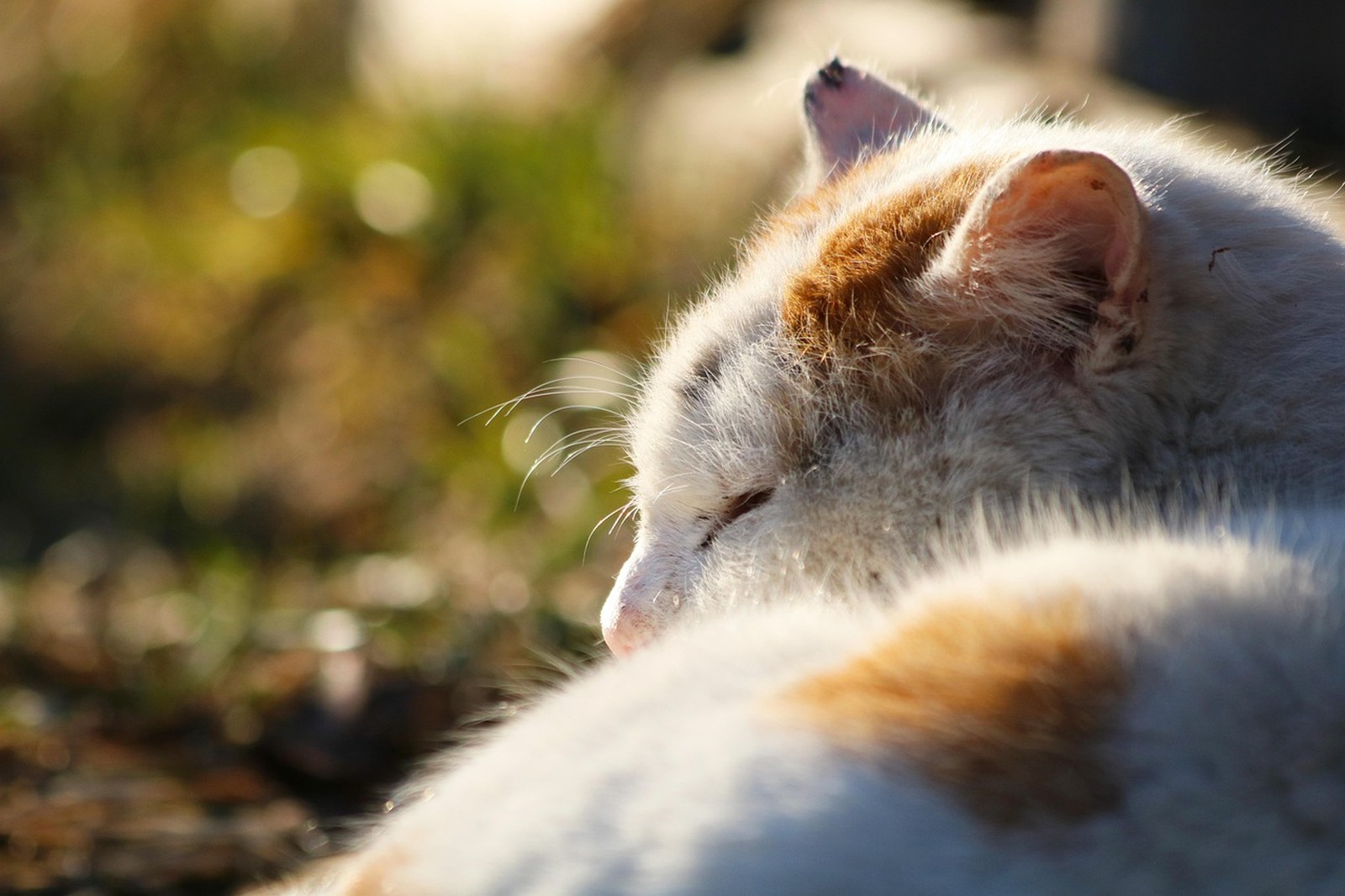
Cats are creatures of fixed geography, and elderly cats especially tend to keep the same sleeping spots for years. So when your senior cat gives up the armchair she has claimed for a decade and starts sleeping behind the sofa, in a hallway, or on the bathroom tiles, treat the change as information. She has not become fussy; something about the old spot, or about her, has shifted.
Pain and the climb she no longer wants
Arthritis is very common in older cats and notoriously easy to miss, because cats rarely limp theatrically — they quietly reorganise their lives around sore joints. A favourite spot that requires jumping onto a windowsill, climbing cat-tree levels, or stepping over a high bed edge may simply have become too costly. Watch for the supporting evidence: hesitating before jumping, taking stairs one step at a time, sleeping in places reachable without climbing, grooming less over the back and hips, or becoming grumpy when picked up. A vet can assess pain properly, and there is a great deal that can be done once it is recognised.
Temperature, light, and the search for quiet
Older cats regulate body temperature less efficiently and feel cold more keenly, particularly if they have lost weight or muscle. A cat who migrates to sun patches, radiators, or freshly folded laundry may be following warmth; one who chooses cool tiles in summer may be doing the reverse. Senses change too — eyesight and hearing decline can make a once-cosy exposed spot feel unsafe, or make the busy living room feel overwhelming, and many senior cats withdraw to quieter corners simply to sleep undisturbed by children, younger pets, or the television.
Cognitive changes and disrupted routines
Cognitive decline in elderly cats can reshuffle habits in ways that look eccentric: sleeping in odd places, being awake and vocal at night after sleeping all day in a new hideaway, seeming briefly disoriented in familiar rooms, or forgetting where the litter tray is. These changes develop gradually and are often blamed on stubbornness. They deserve a vet conversation, partly because support at home genuinely helps — steady routines, night lights on the route to the litter tray, resources kept in predictable places — and partly because conditions such as raised blood pressure or thyroid problems can produce similar signs and need ruling out.
Making the new geography work for her
Follow her lead rather than dragging her back. Place low-entry, well-padded beds in the calm places she is choosing, with one near warmth and one somewhere cool, and make sure food, water, and a low-sided litter tray are reachable from her new territory without stairs or jumps. Keep a brief note of where she sleeps and any night-time restlessness, appetite, thirst, weight, or litter changes; that note turns a vague sense that she is different into evidence a vet can act on. Book a senior check promptly if the sleeping change arrives with any of those signs.
What to watch over the following fortnight
Give changes a short, defined watch rather than an anxious open-ended one. Over the next two weeks, note where she sleeps each night, whether she still uses her old spot at all, how she manages the jumps she used to make, and whether she eats, drinks, and uses the litter tray as usual. A cat who has simply chosen a warmer, lower bed and is otherwise entirely herself can be discussed at her next routine senior check. A cat whose new sleeping place comes with reduced jumping, a thinner feel along the spine, night-time yowling, or a litter tray used less often should be seen sooner, and your two weeks of notes will let the vet judge how fast things are moving.
Senior care generates a steady stream of check results, weight readings, and vet observations that are far more useful together than scattered. KinsLe's Pet Passport keeps that record in one portable packet for your cat, so every appointment — routine, urgent, or with an unfamiliar clinic — starts from her full recent history rather than from memory.