
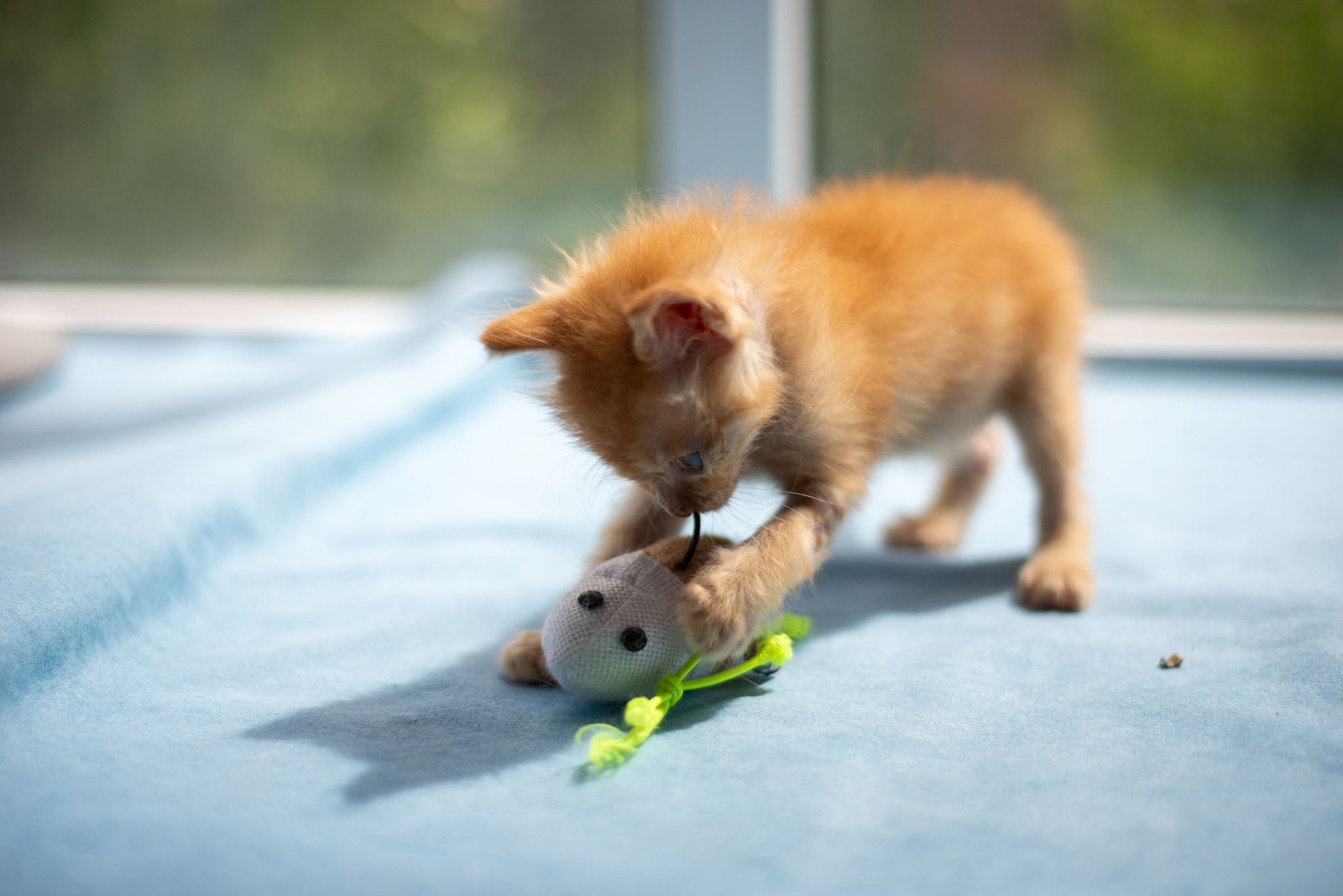
Your kitten bites your hands during play because, to her, wiggling fingers look, move, and react exactly like prey — and biting prey is precisely what a young predator is practicing. It is rarely aggression. The fix is to stop play the instant teeth touch skin, every time, and redirect that hunting energy onto toys so she learns hands are never the game.
Why Kittens Target Hands
Kittens explore the world mouth-first and learn bite inhibition — how hard is too hard — from their mother and littermates between roughly 2 and 12 weeks old. A sibling who gets bitten too hard yelps and walks away, and the lesson lands. Kittens taken from the litter early, or raised as singletons, often miss some of that feedback and need you to supply it.
Hands make it worse. They dart, they squeak when nipped, and people instinctively wrestle back, which to a kitten confirms this is a brilliant game. Even gentle hand-wrestling with a tiny kitten teaches a rule that becomes painful at five kilograms of adult cat, so it is kinder to set the boundary now.
The Stop-and-Redirect Routine
Consistency matters more than scolding. Use the same sequence every time:
- The moment teeth or hard pressure touch skin, go still. Yanking your hand away triggers a stronger grab, so freeze first.
- Say a calm, consistent 'ouch' — not a shout — and withdraw attention for 20 to 30 seconds. Play simply ends.
- Then offer a proper target: a kicker toy she can bunny-kick, a wand toy that keeps distance, or a plush mouse to bite instead.
- Reward gentle play. If she bats at a toy with soft paws or mouths the toy instead of you, keep the game going and praise her.
Short sessions help too. Kittens get overstimulated quickly, and biting often spikes right before a kitten tips into frantic mode. Ending while play is still gentle teaches her that calm play lasts longer.
What Not to Do
Never flick her nose, spray her, scruff her for play biting, or 'bite back' — punishment damages trust and often increases defensive biting later. Avoid gloves as play armor; they still teach her that hands inside the glove are fair targets. And do not let visitors undo the rule because 'it's cute at this size.' It will not feel cute at full size, and mixed messages are the fastest way to keep the habit.
If play biting is paired with hissing, flattened ears, hiding, or biting when you simply reach toward her outside play, that is a different picture — fear or pain may be involved, and a veterinarian or qualified behaviorist should take a look.
Toys That Absorb the Bite
Keep a small arsenal within reach of the sofa and bed: long wand toys for distance, kick sticks for the bunny-kick urge, crinkle balls for solo pounces, and a few chew-appropriate toys for teething youngsters. Rotate two or three at a time so novelty survives. A kitten who gets two or three short, toy-focused sessions a day has far less leftover hunt energy to spend on your fingers.
Share the House Rules With KinsLe Messenger
Half the battle is making sure everyone plays by the same rules, and KinsLe Messenger — the per-pet communications hub on your kitten's profile — makes that easy: send the 'teeth touch skin, play stops' rule to family, roommates, or a visiting friend in the same thread where you coordinate her care. No one can claim they did not know hand-wrestling was off limits. If your roommate keeps wiggling fingers despite the rule, send a pointed reminder through the KinsLe Messenger hub on KinsLe asking that every game switch to the wand toy instead.