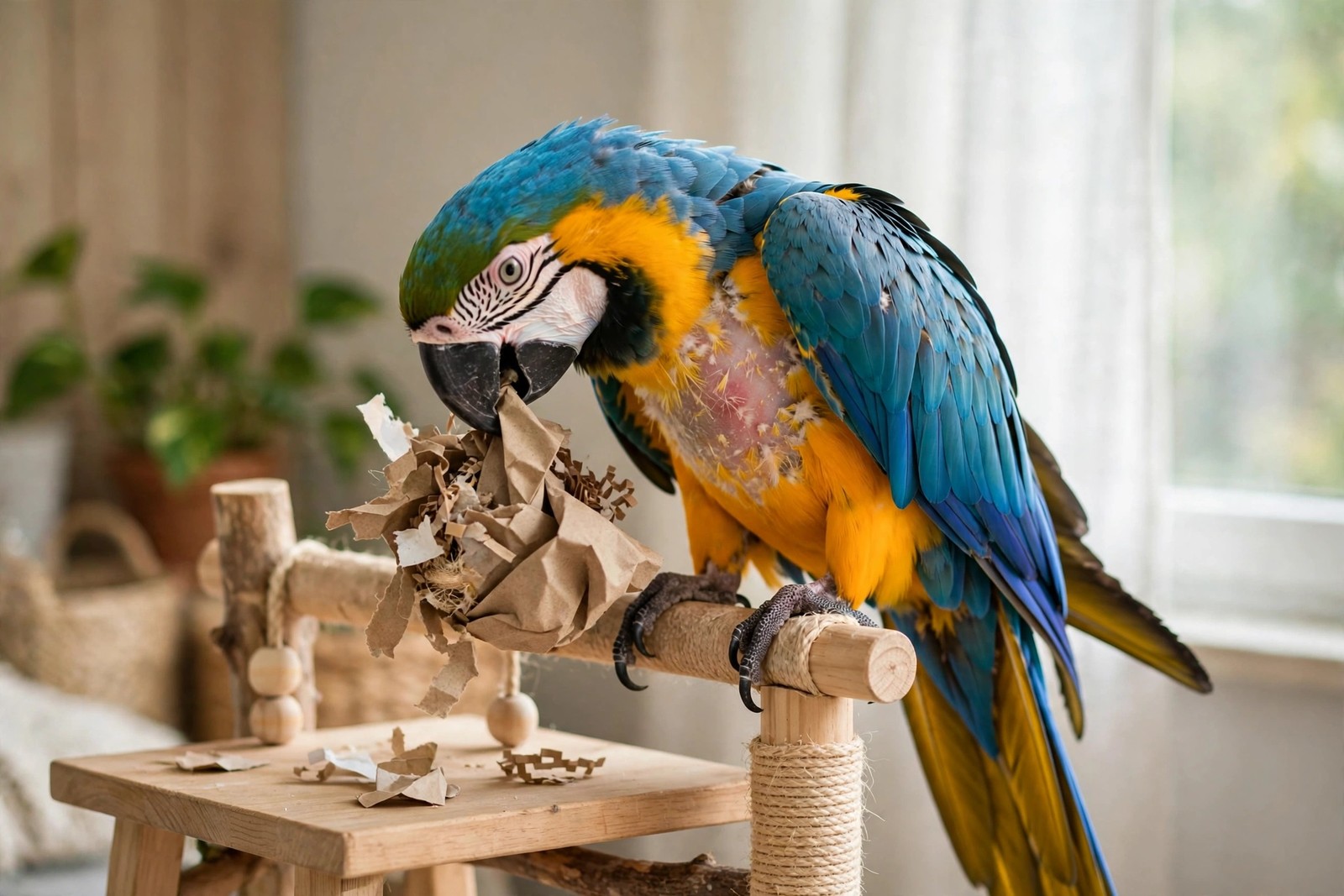
A macaw that plucks his feathers is telling you something is wrong in his body, his routine, or both. Plucking is different from normal preening and different from a molt. He grips a feather, pulls or chews it, and repeats the act on his chest, legs, or wings until bare patches appear. Because so many causes look alike from the outside, guessing at home is the wrong starting point.
Start With His Vet, Before Anything Else
Make an avian vet appointment first, even if he seems bright and is eating well. Medical problems are among the possibilities a vet needs to rule out, and they can sit underneath a behavior that looks purely emotional. A vet may ask about his diet, sleep, cage placement, recent changes, and when the plucking began, and may examine his skin and feathers or run tests based on what that history suggests. Only the vet can sort medical causes from other drivers for his case, so do not start a supplement, spray, or collar plan on your own.
Bring useful notes to that visit. Write down when he plucks most, what happens just before, whether new feathers are growing in damaged, and any change in droppings, appetite, voice, or energy. If he is bleeding, chewing his skin open, or has stopped eating, call promptly rather than waiting for a routine slot.
The Daily-Life Possibilities to Work Through
After medical causes are addressed, look honestly at his day. Boredom and under-stimulation are frequent drivers for a large, intelligent parrot. A macaw is built to spend hours searching, husking, and dismantling food, and a bowl handed over in minutes leaves that working brain idle. Sleep matters just as much. Birds commonly need about 10 to 12 hours of quiet, dark, uninterrupted sleep, and a cage kept in a bright, noisy living room late into the evening can leave him short night after night.
Diet is another possibility to review with his vet, especially if his meals lean heavily on seed with little variety. Hormonal shifts can raise restlessness and feather focus at certain times of year, and stress from change can start the habit: a moved cage, a new work schedule, a house guest, construction noise, or less time out with his people. None of these possibilities proves itself alone. The pattern in your notes, paired with the vet findings, points to which ones deserve attention first for him.
Foraging Work and Calm Household Responses
Give his beak and brain a job that pays in food. Hide pieces of his meals inside folded paper cups, woven shredders, cardboard foraging boxes, and toys he must open, pull apart, or unscrew to reach. Scatter several stations around his cage and play stand so searching takes real time, and rotate the puzzles before he masters every hiding place. Offer fresh branches and shreddable materials approved for parrots, and reward time spent working, chewing toys, bathing, and playing away from his feathers.
Never punish him for plucking, and never scold, spray, or rush over in alarm when you see it. A big dramatic reaction can teach him that plucking brings his favorite people running, which makes the act more valuable. Stay gentle and neutral in the moment, redirect him toward a foraging toy or a shower, and save warm praise and attention for calm play and exploration. Everyone in the house needs the same low-key response, or his lesson changes with each person.
That shared response works when the household keeps one observation log. In the household plan, Maria records when he plucks and what came before, Ben covers his cage on time for full sleep, and Sofia refreshes his foraging stations each morning, with each job written down and checked off. Patterns that look random in memory turn clear on paper after two weeks.
Progress stays visible to the whole household when KinsLe provides the shared record, because the Care Teams assignments place his sleep cover, foraging refresh, and observation notes under specific names instead of relying on memory.