
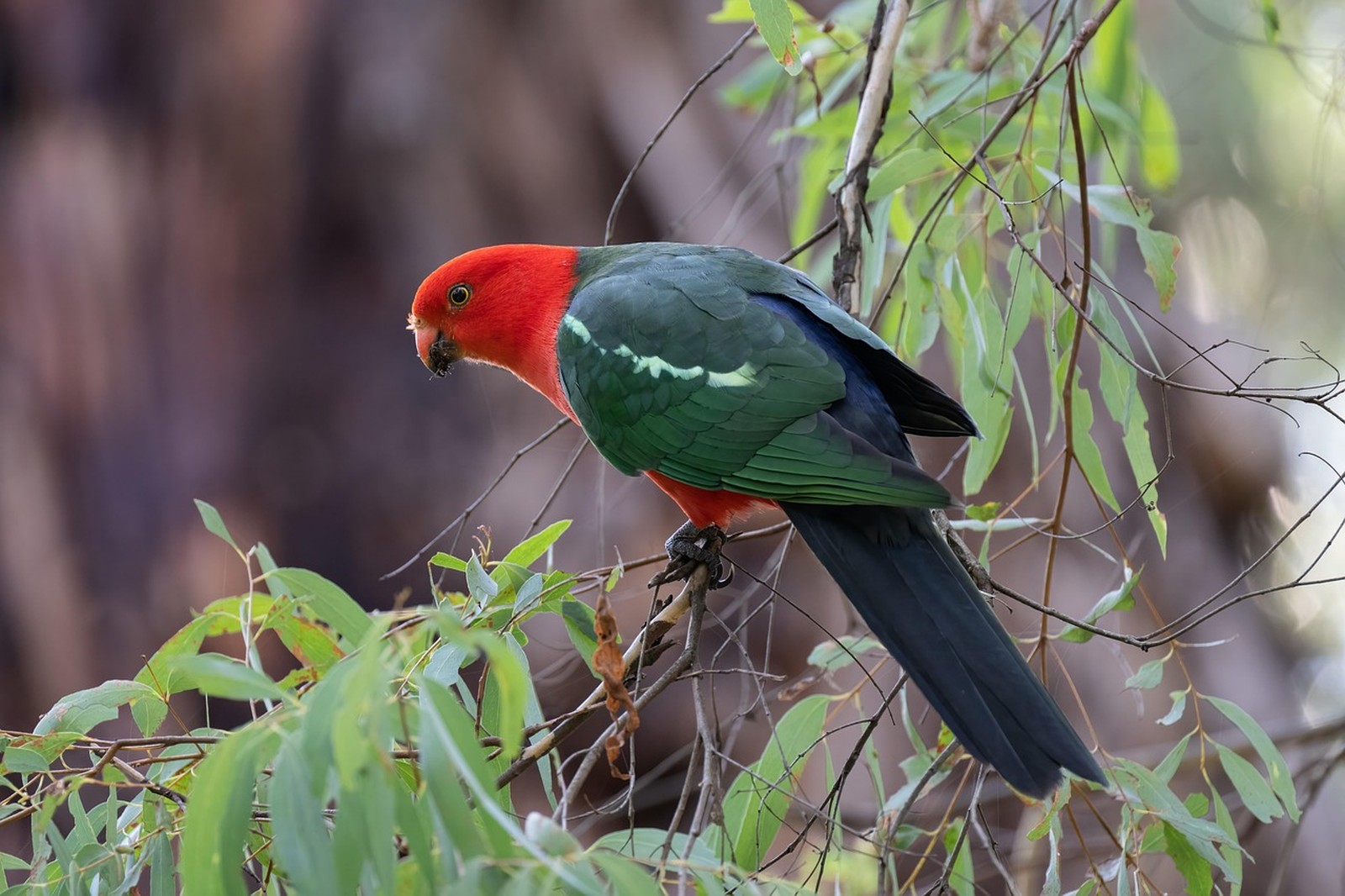
Your parrot copies everything you say because mimicry is how parrots bond and fit in with their flock — and in your home, you are the flock. Your words, your laugh, the microwave beep, and the doorbell are all flock sounds worth learning. Parrots don't grasp most words the way we do, but they learn remarkably fast which sounds earn attention, laughter, and company.
The Wild Reason Behind the Imitation
Wild parrots live in tight social groups with shared local "dialects" — flocks develop their own versions of contact calls, and a young parrot learns its flock's sounds the way a child picks up an accent. Belonging is safety, so the drive to match the group's noises is deep. Your pet parrot simply transfers that instinct to its human flock. This is also why parrots often mimic the most emotionally charged sounds best: the excited "hello!" when someone comes home, the laugh that fills the room, the phrase always said while handing over something delicious. Sounds said with energy, at predictable moments, get learned.
Do They Understand What They're Saying?
Mostly, parrots learn associations rather than dictionary meanings — "hello" belongs to arrivals, "want some?" belongs to food appearing, whistling belongs to mornings. That's still real learning: many parrots use words in the right context with impressive accuracy, requesting specific foods, greeting specific people, or announcing they want a shower when they hear the taps. Research with grey parrots has shown some individuals can go further, labeling objects, colors, and even expressing simple requests deliberately. For everyday life, the practical takeaway is this: your parrot is paying close attention to when you say things, not just what you say — so the household's habits are the curriculum, whether you plan them or not.
Making the Most of a Feathered Echo
- Teach on purpose. Repeat chosen words and phrases, in context, with enthusiasm — greetings at the door, labels at mealtimes ("apple!" as the apple appears).
- Reward the attempts. Laughter and attention are rocket fuel for mimicry; respond delightedly to the words you want more of.
- Mind the accidental lessons. The shout during a football match, the argument in the kitchen, the phrase said while frustrated — an attentive parrot files them all, and performs them for guests.
- Add variety. Whistles, kisses, tongue clicks, and simple tunes give your bird a repertoire even if words come slowly.
- Be patient with quiet birds. Some individuals mimic sounds but rarely speech, and females of some species talk less than males. A parrot that never talks still bonds deeply — vocal talent varies like it does in people.
Keep recording devices and phone speakers in perspective, too: live interaction, with eye contact and response, teaches far faster than loops of audio.
Safety Around a Bird That Repeats Everything
A copying parrot broadcasts your household — so think about what it's hearing. Avoid drilling words you'd regret hearing at full volume in front of your grandmother, remember that parrots can repeat things like door codes or snippets of private calls, and brief guests if there's a phrase the bird is currently "practicing" that you'd rather not reinforce with shocked laughter. On the health side, a parrot that suddenly stops vocalizing, or whose voice sounds hoarse or changed, should see an avian veterinarian — the voice is a real health signal in birds. Also guard a talented mimic's environment: no non-stick cookware fumes or heavy aerosols around those hard-working airways.
One Household, One Script
Because your parrot learns from everyone, the whole home is effectively its teaching team — and teams need a shared playbook. With KinsLe's Family Sharing, everyone in the care circle can agree on which phrases to encourage and reinforce, note the new word that landed this week, and avoid accidentally teaching competing cues. It turns accidental mimicry into a fun, coordinated family project. A shared phrase list sits in the Family Sharing notes on KinsLe, where grandparents can check which greeting is being practiced this week before they start chatting to the bird.