
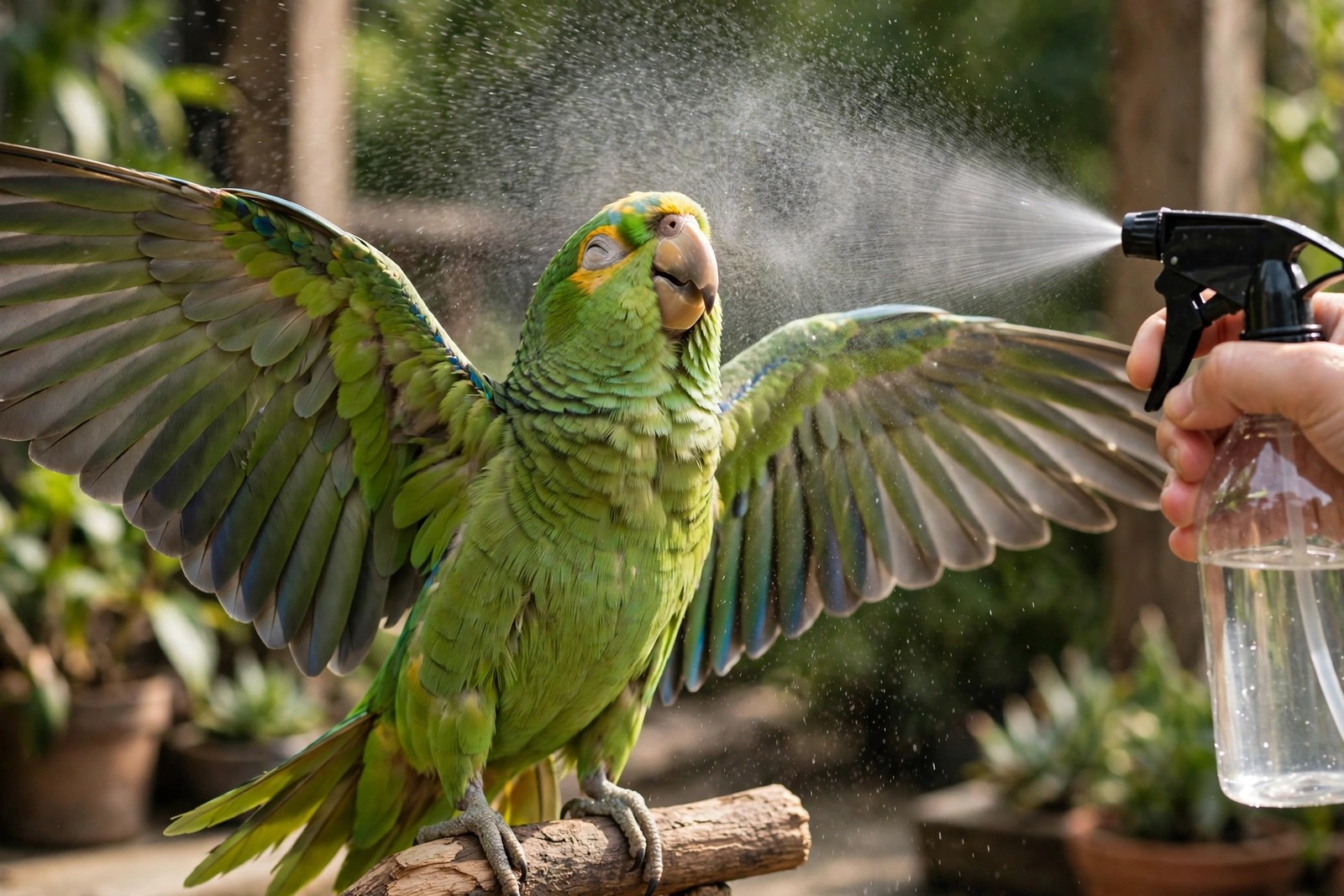
Your parrot loves being misted because it mimics rain — and for a bird whose wild relatives bathe in tropical showers, rain is instinctively wonderful. Misting triggers happy preening, helps with dry skin and feather condition, and feels especially good during a molt. That spread-winged, leaning-in, sometimes slightly ecstatic look is your bird doing exactly what parrots evolved to do when the rain starts.
The Rain Instinct
In the wild, rain is bathing weather. Wild parrots bathe in downpours, rub against wet leaves, and emerge to preen every feather back into place. Your home's dry, heated or air-conditioned air is nothing like a rainforest canopy, so a misting bottle is the closest substitute most pet parrots get. The behaviour it unlocks — bathing, then thorough preening — is real feather maintenance: preening re-zips feather barbules, distributes oils, and removes dander and loose down. A parrot that mists and preens regularly is literally keeping its plumage in working order.
Why Misting Feels Extra Good During a Molt
Growing feathers arrive wrapped in a waxy sheath, and new pin feathers can be itchy and sensitive. Moisture softens those sheaths so they flake away more easily during preening, which is why many parrots that are lukewarm about misting in normal weeks demand it during a heavy molt. Gentle misting also settles the extra dander that molting releases into your home. If your bird is suddenly obsessed with the spray bottle, check for pin feathers before assuming anything else — it is usually that simple.
How to Mist the Kind Way
- Use plain, lukewarm water in a clean bottle reserved only for misting — never one that has held chemicals.
- Mist above and slightly in front of your bird so the water falls gently, like rain, rather than blasting directly into her face.
- Read the answer she gives you: wings spread, feathers fluffed, and leaning toward the mist means continue; moving away, flattening, or lunging at the bottle means stop, every time.
- Mist earlier in the day so she dries fully before bed, and never mist a bird that is ill, chilled, or already stressed without vet guidance.
- Follow with preening time — do not immediately return her to a busy, noisy room mid-routine.
Some parrots prefer a shallow dish, a shower perch with the spray bouncing off you first, or wet leaves to rub against. The preference is personal; the principle — offer, never impose — is universal.
Sharing the Ritual With a Sitter, Through KinsLe
A morning mist is exactly the kind of detail a sitter needs to know — and exactly the kind that gets forgotten in a handover. KinsLe's Care Pass solves that: it is a temporary scoped link to your parrot's care information, and the person receiving it needs no account and no app to open it. Add “she loves her morning mist, lukewarm water, sprayed from above” to her care notes and the ritual survives your vacation. Your parrot's first profile is free. Set up her Care Pass before your next trip, then explore more pet answers on KinsLe for more parrot behaviour explained.