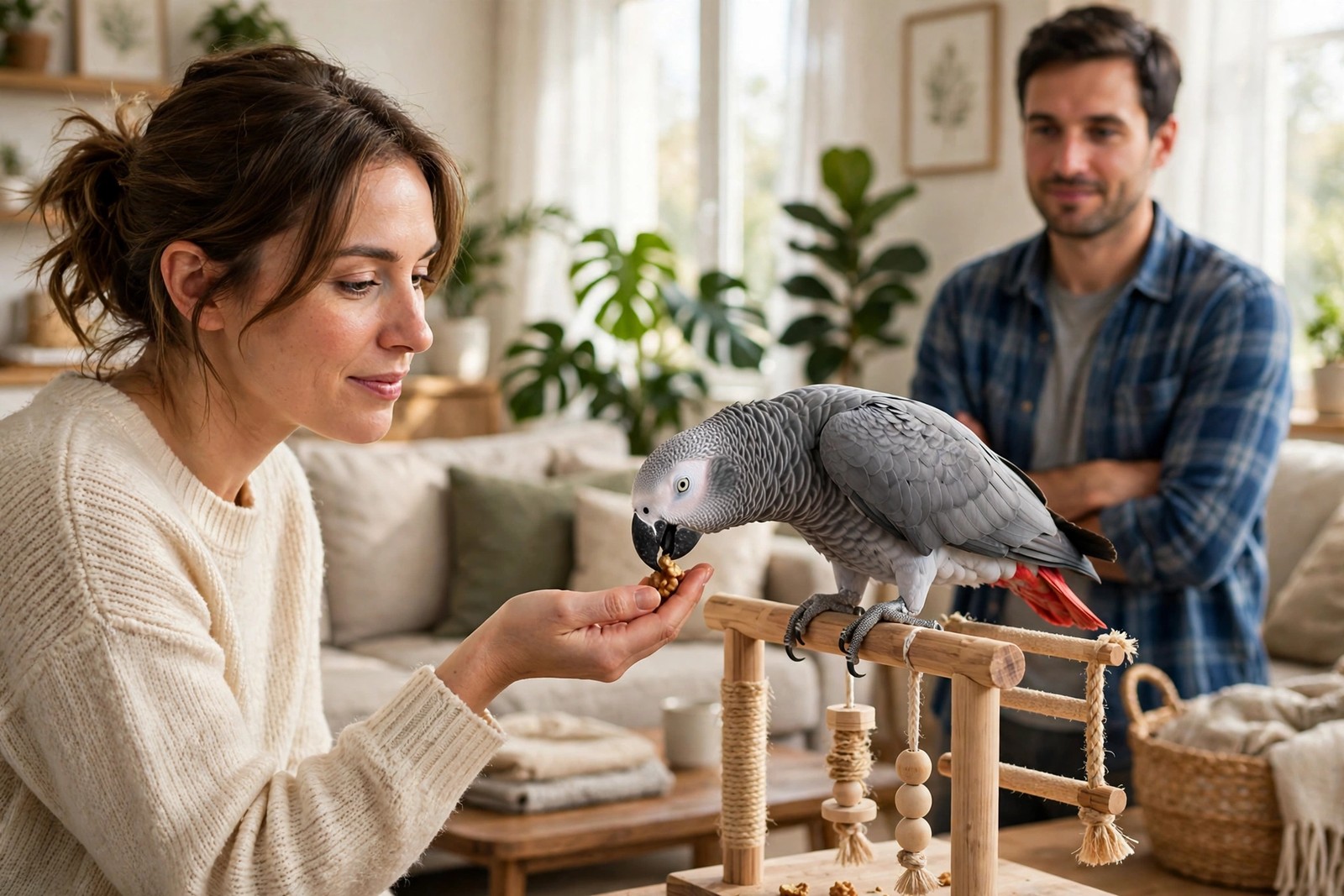
A parrot that adores one person and rejects the rest is usually showing pair-bonding, not favouritism in the human sense. In the wild, many parrot species form a close bond with a single mate, staying in near-constant contact, feeding each other, and driving off birds that approach too closely. In a living room, the person who feeds, trains, and spends the most time with the parrot often fills that mate role. Everyone else can be filed, unfairly but instinctively, as competition.
Signs the Bond Is a Pair Bond
Look for the cluster, not just clinginess. A pair-bonded parrot may regurgitate soft food toward the chosen person, pin the eyes while lowering the head, flutter the wings, and seek body contact for long stretches. The same bird may lunge at hands that reach toward it while it sits with its person, bite a spouse who walks past the cage, or scream when the favourite leaves the room. Petting under the wings, down the back, or around the vent can strengthen the mate message, because parrots reserve that kind of touch largely for a partner. Stroking the head and neck is the safer social touch.
Hormones can sharpen the behaviour. Long daylight hours, warm mushy foods, access to dark corners, boxes, or tent-like hideaways, and constant cuddling can all push a mature parrot further into breeding mode. A bird that was merely friendly in winter may become possessive and bitey in spring without anything in the family changing.
How Everyone Else Earns Trust
The non-chosen people should stop competing for cuddles and start becoming useful and predictable. Reaching in to demand a step-up teaches the parrot that a particular hand means being grabbed, so hands should retreat before the bird has to escalate to a bite.
- Let each other person become the sole source of one prized food, such as a small piece of walnut or a sliver of almond, delivered calmly at the cage door.
- Start pointer training through the bars: the parrot touches the end of a wooden pointer, hears a click or praise word, and earns that food. Two or three minutes is enough.
- Sit nearby reading or talking without staring directly at the bird, and let the parrot watch that person refill water or place fresh food without being handled.
- Move training outside the cage only when the bird steps toward the person willingly, and end while things are calm.
Progress is measured in small permissions: the parrot stays relaxed, takes food gently, and chooses to move closer. A bird that leans away, pins its eyes hard, or opens its beak is saying the session should end now.
Resetting the Household Pattern
Spread the good jobs around. If the chosen person does every feed, shower, game, and bedtime, the bond tightens further. Rotate feeding, cage cleaning, and training so care comes from the whole household, and keep sleep at a consistent 10 to 12 hours in a quiet, darkened cage area, which helps take the edge off hormonal behaviour. Avoid letting the parrot sit on a shoulder all day with its favourite person, because constant contact feeds possessiveness; play stands in shared rooms give the bird company without ownership.
If biting is severe, a child is being targeted, or the bird injures its own feathers or skin in frustration, an avian veterinarian or a qualified parrot behaviour consultant should see the bird, because pain and illness can also lower tolerance. Keeping a simple shared record of who trained, what food was offered, and how the parrot responded helps the whole family work from the same evidence, and KinsLe Care Teams keeps those rotating trust-building duties visible to everyone so the bird gets one calm, consistent approach.