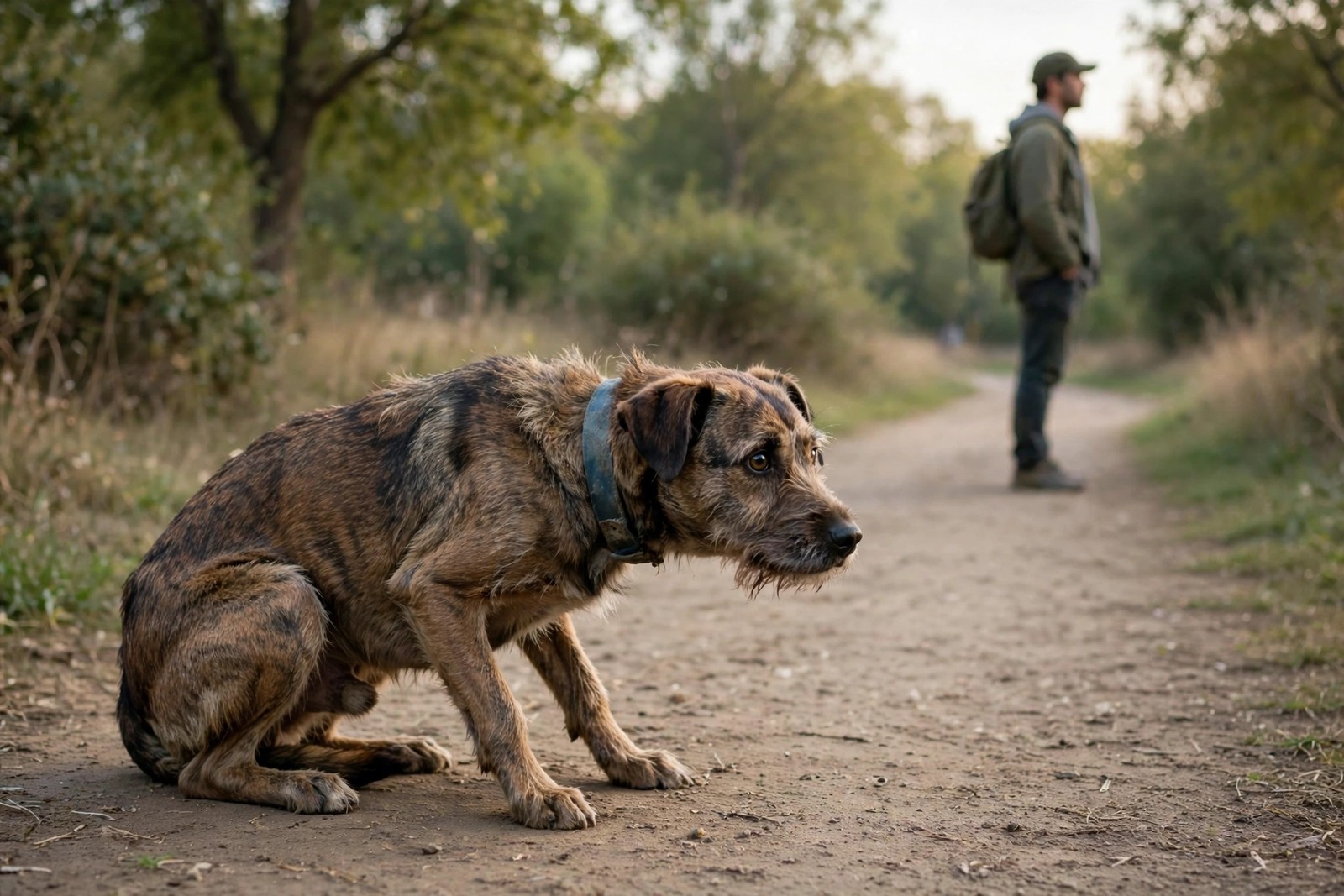
That is fear, not stubbornness. A stubborn dog typically ignores a cue with a loose body and a turned head, while a cowering, shaking dog shows a full fear response: lowered body, tucked tail, flattened ears, trembling, and a wish to increase distance. Hats are a classic trigger because they change the human silhouette and hide the eyes and forehead, and a dog with patchy early socialisation may have met few men or few hat styles. The dog is not choosing to disobey; he is telling you, with his whole body, that this shape reads as unfamiliar and threatening.
Why hats, and why men in hats in particular
A hat widens the head, casts shadow over the eyes, and removes the familiar forehead and hairline the dog uses to recognise a person, so a known man can look like a different, larger figure once a hat goes on. Broad-brimmed hats, caps with a peak, and hoods change the outline in different ways, which is why a dog may cope with one style and panic at another. Men can also be a separate factor: a deeper voice, a larger frame, a direct approach, or a habit of leaning over a dog can add to the unfamiliarity, and a rescue dog with limited early contact with men may have learned men, hats, or both as unpredictable.
Rescue history adds uncertainty rather than a single explanation. You may never know whether he had a bad experience with a man in a hat, or simply too few calm experiences with men in hats during the early months when new sights normally become familiar. Fear that is repeatedly pushed past its limit often grows broader, so a dog who starts with hats may begin reacting to hoods, sunglasses, or tall men in general if every encounter ends in panic.
Distance first, and hat games at home
Work at a distance where he can notice a man in a hat without cowering. At that distance, the sight of the hat predicts something wonderful, such as high-value food delivered calmly, and then the man moves away or the dog moves away, so the encounter ends well. Shorten the distance only when his body stays loose at the current distance across several sessions, and step back at once if trembling, cowering, freezing, or attempts to flee return. Never force a greeting, never hold him in place while a stranger approaches, and never remove his escape route, because a trapped fearful dog has fewer choices than a free one, and fewer choices mean more panic.
At home, make hats boring and predictable. Place a hat on the floor near his bed, let him sniff it in his own time, and reward calm investigation. Then wear a hat yourself for a few minutes during ordinary, pleasant activities, remove it, and repeat with different styles at his pace. Ask a trusted male friend to appear at a distance wearing a hat, stand sideways rather than facing the dog, avoid direct eye contact and leaning over him, and toss food gently to the side rather than handing it forward.
When to seek professional help
Seek a vet conversation and a qualified behaviour professional sooner if fear is broad, worsening, or spilling into everyday life: if he refuses walks, reacts to many strangers, shows aggression when cornered, or cannot recover after an encounter. A vet can check for pain or health issues that lower tolerance, and a behaviour professional can build a plan that fits his history and your home.
Household consistency is part of the treatment. If one person keeps distance and another drags him forward to meet every man in a hat, the dog receives opposite lessons and his fear stays unpredictable. KinsLe's Care Teams supports that shared fear plan, because distance work, hat games at home, and notes on his reactions can be assigned to named family members and marked complete with a timestamp.