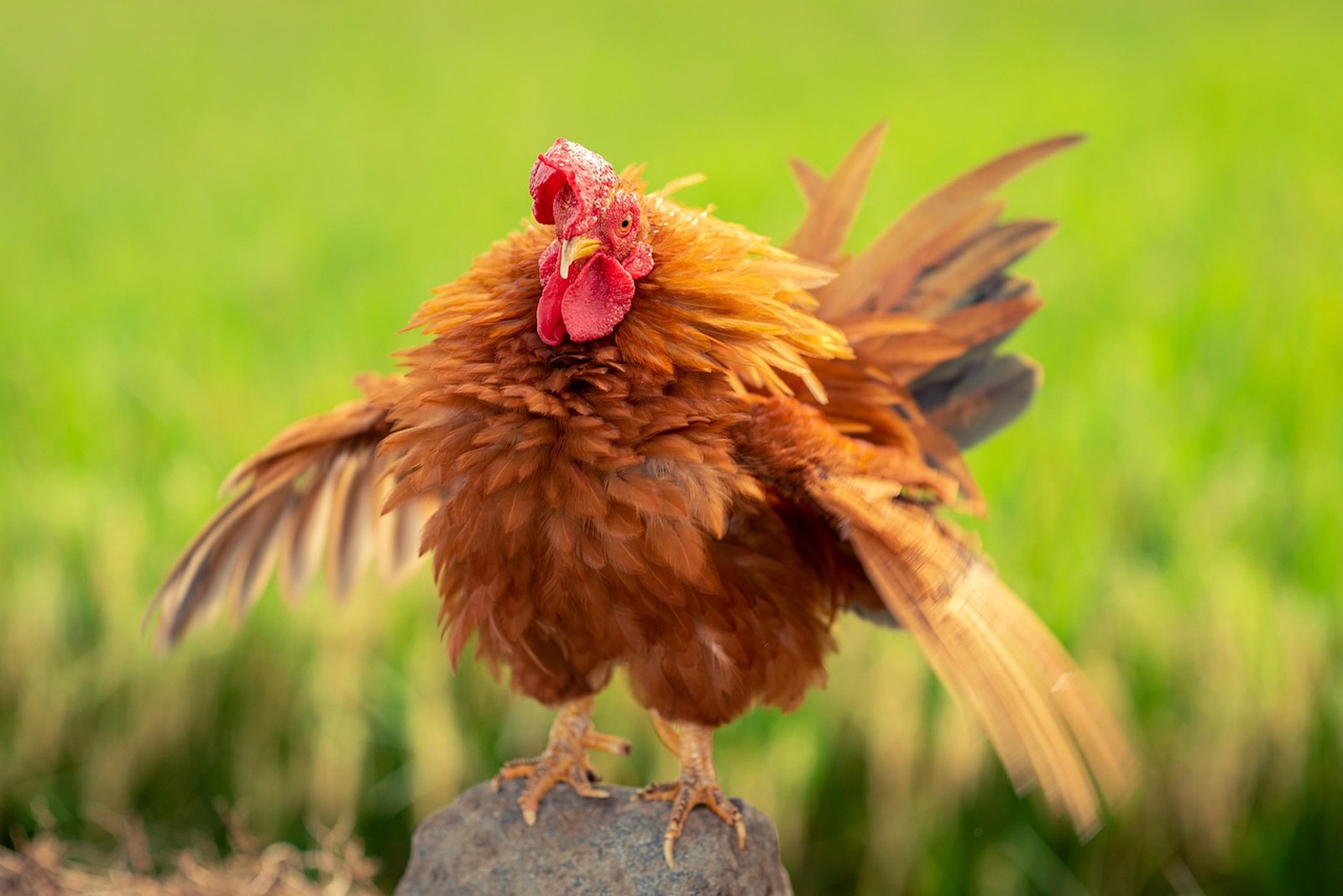
From the rooster's side of the fence, the charge makes complete sense. His role in the flock is early warning system and bodyguard: he watches for danger, calls the hens to food, and drives off anything he judges a threat to them or a rival for his position. A human who enters the pen carrying a bucket, bends over the hens, picks one up while she squawks, or simply walks confidently through his ground can land in either category. The charge, usually opened by the sideways shuffle, dropped wing, and hard stare that precede it, is him attempting the drive-off on you.
Why You, and Why Now
Targeting is rarely random. Roosters commonly fix on the person they have successfully moved before, because the first time a startled keeper stepped back, dropped the feed scoop, or hurried out of the gate, the lesson landed: this large animal retreats when rushed. Children and shorter adults get targeted more often because they are closer to his size class and retreat faster, which is also why they are at most risk from him. Timing matters too. Young cockerels frequently turn pushy as they mature, and established roosters are typically at their most territorial in the breeding season, when hens, mating rights, and nest areas are all in active dispute. A bird hand-reared as a pet chick deserves a special mention: raised without a healthy respect for people, he often grows into the boldest charger of all, because nothing in his upbringing ever filed humans under animals to give way to.
Reading and Answering the Charge Safely
Learn the preamble rather than the charge itself: he goes still, fixes you with one eye, drops a wing, and shuffles sideways, tidbitting at the ground while watching you. That is the moment to slow down, turn to face him squarely, and stand your ground or move calmly and directly about your work rather than running, which confirms his power, or kicking out, which he reads as a fight he must answer and which reliably makes the next encounter worse. A carried bucket, feed bin lid, or soft broom held as a moving fence between you and him lets you finish chores without contact, and many keepers do pen jobs in long trousers and boots as routine insurance, since spur injuries to legs are the common wound and any puncture needs proper cleaning. Never send a child into a pen with a known charging rooster, and keep children's faces, which are at spur height on a jumping bird, out of his territory entirely.
Management That Lowers the Temperature
Reduce both his reasons and his opportunities. Feed and water from outside the fence where the setup allows, collect eggs when he is shut in another section, and avoid cornering him or chasing hens around him, since restraining a squawking hen in front of him is practically a declaration of war. Avoid picking him up for cuddles in the pen in front of the flock, which some keepers find blurs the working relationship; handling for health checks is better done calmly at night on the roost, when roosters are at their most docile. Some birds settle with maturity and consistent, unruffled handling of the boundary; others do not, and a persistently dangerous rooster who injures people is a management failure waiting for a worse day, so experienced keepers make an honest decision about a separate pen or rehoming him to a flock where he harms no one, rather than letting the pattern run. A sudden personality change in an older, previously steady bird is the exception worth a vet conversation, since pain and illness can shorten any animal's temper.
Dividing the Yard Work Sensibly
However you manage him, the daily jobs still have to happen, and they should belong to the people he respects rather than the ones he hunts. KinsLe's Care Teams lets a household assign feeding, watering, and egg collecting for the flock to named, experienced adults, each task marked complete with a timestamp, so chores are visibly covered and never drift by default to a visiting grandchild or the neighbour's teenager while you are away.