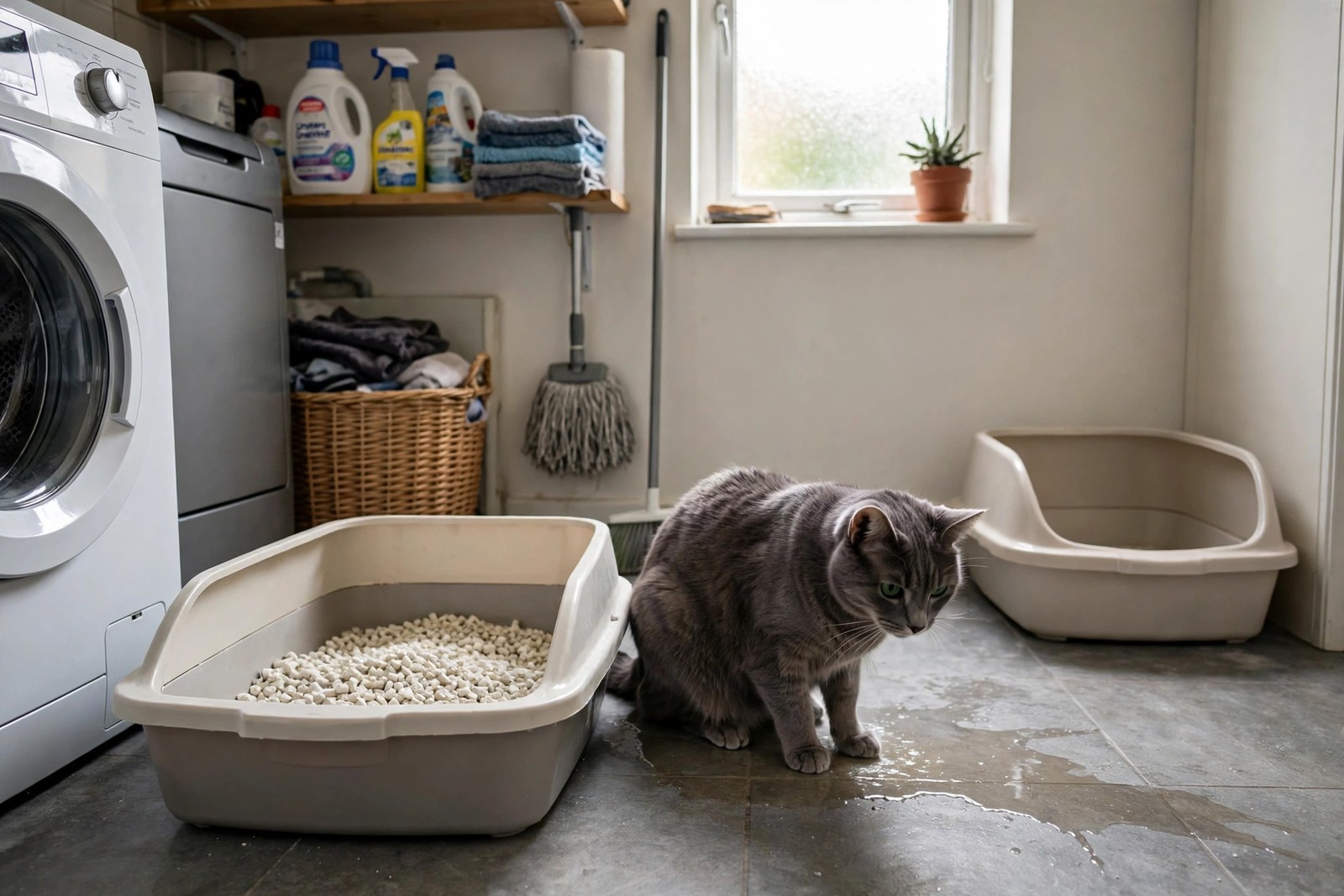
Owners often read this pattern as spite, because the cat plainly knows where the litter box is: she uses it faithfully for one job and pointedly not for the other. Read it instead as a diagnostic gift. Pooping in the box rules out the simplest explanations, that she does not know the system or rejects the box entirely, and points you toward the things that differ between the two acts: peeing may hurt, peeing may feel urgent, peeing may not be toileting at all, or the box may work for a quick visit and fail for the longer, more exposed business of urinating.
When Peeing Itself Has Become the Problem
A cat with an irritated or painful urinary tract often connects the pain with the place she felt it. She still defecates in the box because that does not hurt, but she experiments with the bath, the laundry pile, or a cool floor for urination, hoping a different place will feel different, and soft surfaces are frequent choices. The accompanying signs are the ones to watch for: small, frequent puddles rather than one normal-sized one, visiting the box often and producing little, straining, crying while trying, licking herself more, or spots of blood in the urine. These signs mean a vet visit promptly rather than a litter experiment first, and one version is a true emergency: a cat, above all a male cat, who strains and passes no urine at all can be blocked and needs a veterinarian the same day, without waiting to see whether the morning improves things.
When It Is Marking, Not Toileting
Some outside-the-box peeing is communication. A spraying cat stands, tail upright and quivering, and releases a small amount backward onto a vertical surface such as a wall, door, or the side of furniture; the puddle-on-the-floor crouch of a toileting cat looks entirely different. Marking is most typical of unneutered males but occurs in neutered cats of both sexes, and it often answers a perceived territory pressure: outdoor cats visible through windows, a new pet, building work, or a changed routine. Marking cats usually still urinate normally in the box as well, which is another reason the two piles of evidence, poop in the box and spray on the wall, can coexist happily in one cat's week. Neutering status, household stressors, and the vertical-versus-horizontal detail are exactly what your vet or a behaviourist will ask about first, so note them before you clean up.
The Box Itself, Judged by a Cat Who Half-Likes It
A cat may accept a box for defecation yet avoid it for urination when the details are marginal: urine takes longer and involves more digging and turning, so a box that is slightly too small, a liner that catches claws, heavily scented litter, or a hooded box holding odour is more off-putting for the longer visit. Arthritis and age enter here too, since a high-sided box a cat will climb into once a day for one purpose may be skipped for the other when a lower-effort spot exists. Work through it one change at a time: an extra box in a quiet spot, unscented litter at a comfortable depth, scooping at least daily, and boxes placed away from food and appliances. Clean accident spots thoroughly, because a place that smells like a toilet will be reused as one.
The Order That Solves Most Cases
Vet first for any cat whose pattern is new, whose amounts are small and frequent, or who shows any straining, blood, or behaviour change; box and stress work second, for the cat who has been given a clean urinary bill of health; and a written record throughout, because episodes that look random usually show their trigger, a visitor, a new cat outside, a litter change, a missed weekend of scooping, once dates are attached. That record is also what makes repeat vet visits productive instead of repetitive. KinsLe's Pet Passport holds your cat's examination notes, urine test results, and the litter and box changes you tried in one packet, so every follow-up starts from the full history of the pattern rather than from memory.