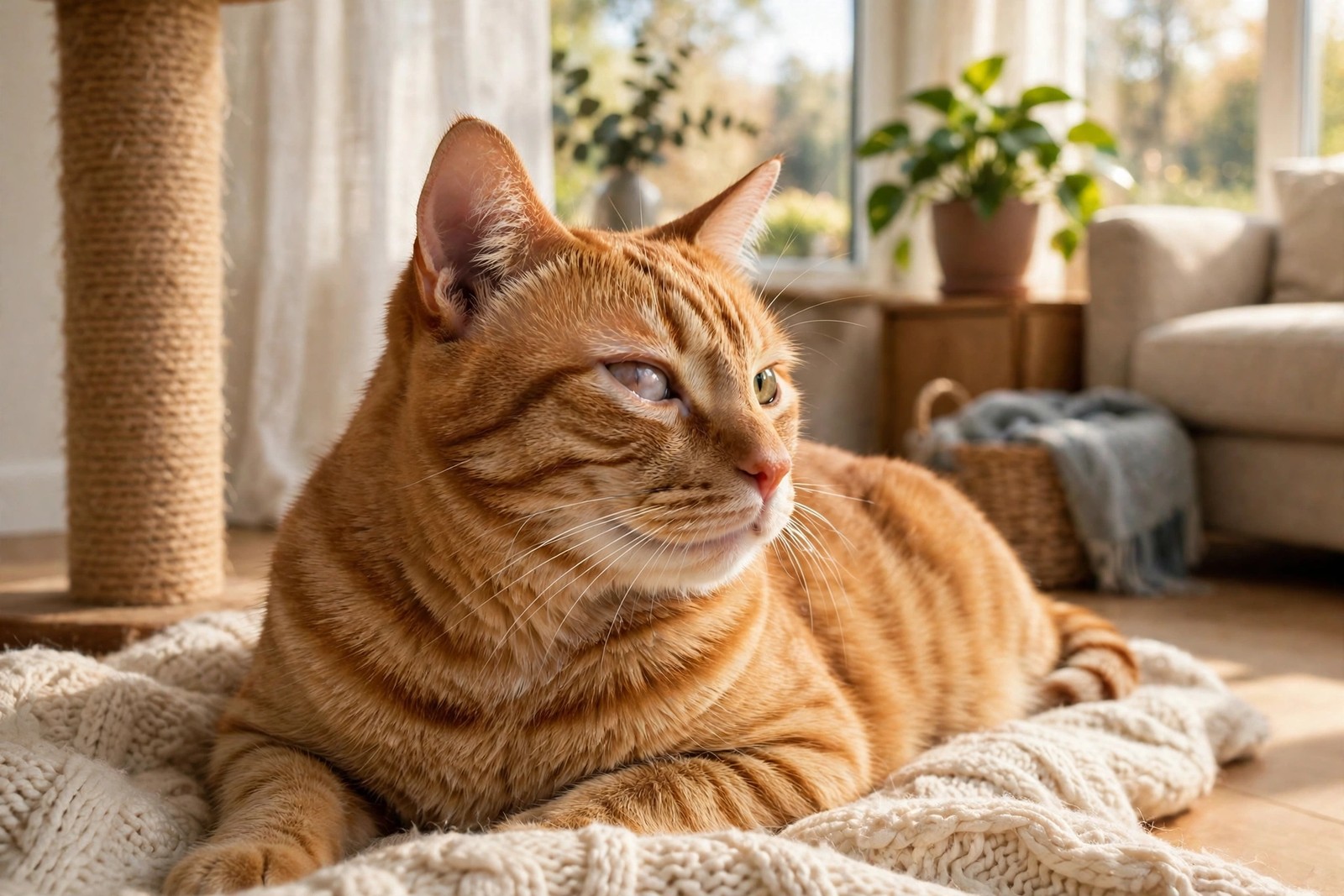
Cats have a third eyelid — a pale membrane that sweeps from the inner corner of the eye — and you normally barely see it. When it becomes visible across part of one or both eyes in a cat who is awake, it is a sign, not a diagnosis: common reasons include a cat who is unwell or in pain generally, dehydration, eye pain or irritation (conjunctivitis, an ulcer, something in the eye), certain gut upsets (a recognised link exists between third-eyelid showing and gastrointestinal parasites or viruses), recent sedation, and occasionally a nerve-related condition (Horner's syndrome) when one side is affected with other signs like a smaller pupil.
Reading the Context Around It
Look at the whole cat: is she eating, bright, using the tray normally? Both eyelids showing in a cat who also has diarrhoea, weight loss, or lethargy points to a systemic cause and a vet visit within a day or two. One eyelid showing with a red, watery, or sore-looking eye points to the eye itself and should be seen sooner, especially with squinting. Note any worming status (bring it up to date if it has lapsed, using a vet-recommended product) and whether the sign comes and goes. Never put drops in the eye unless prescribed for this problem — a vet needs to check for an ulcer first, because some drops worsen one seriously.
Working With Your Vet
A showing third eyelid needs context before it needs conclusions. Note whether one eye or both are affected, when you first spotted the membrane, and what sits alongside it — appetite, litter-tray habits, energy, any diarrhoea or recent sedation. A clear photograph taken at home helps, because the sign may fade in the consulting room, and dated notes about whether it comes and goes give your veterinarian a sequence to examine rather than a single worried observation.
Book within a day or two for third eyelids showing on both sides with any other sign of illness, and the same day for a single sore, red, or squinting eye. If your cat seems entirely well and the membranes appeared briefly after sleep or travel sedation, mention it at the next routine visit — but a persisting sign is never one to simply file away.
At that visit, her earlier eye history matters: previous conjunctivitis, worming dates and any past sedation all shape what the vet checks first. KinsLe's Pet Passport gathers those details with her vaccination record and visit notes into a packet that travels with her, letting the eyelid change be judged against her own past appointments rather than recalled from memory.