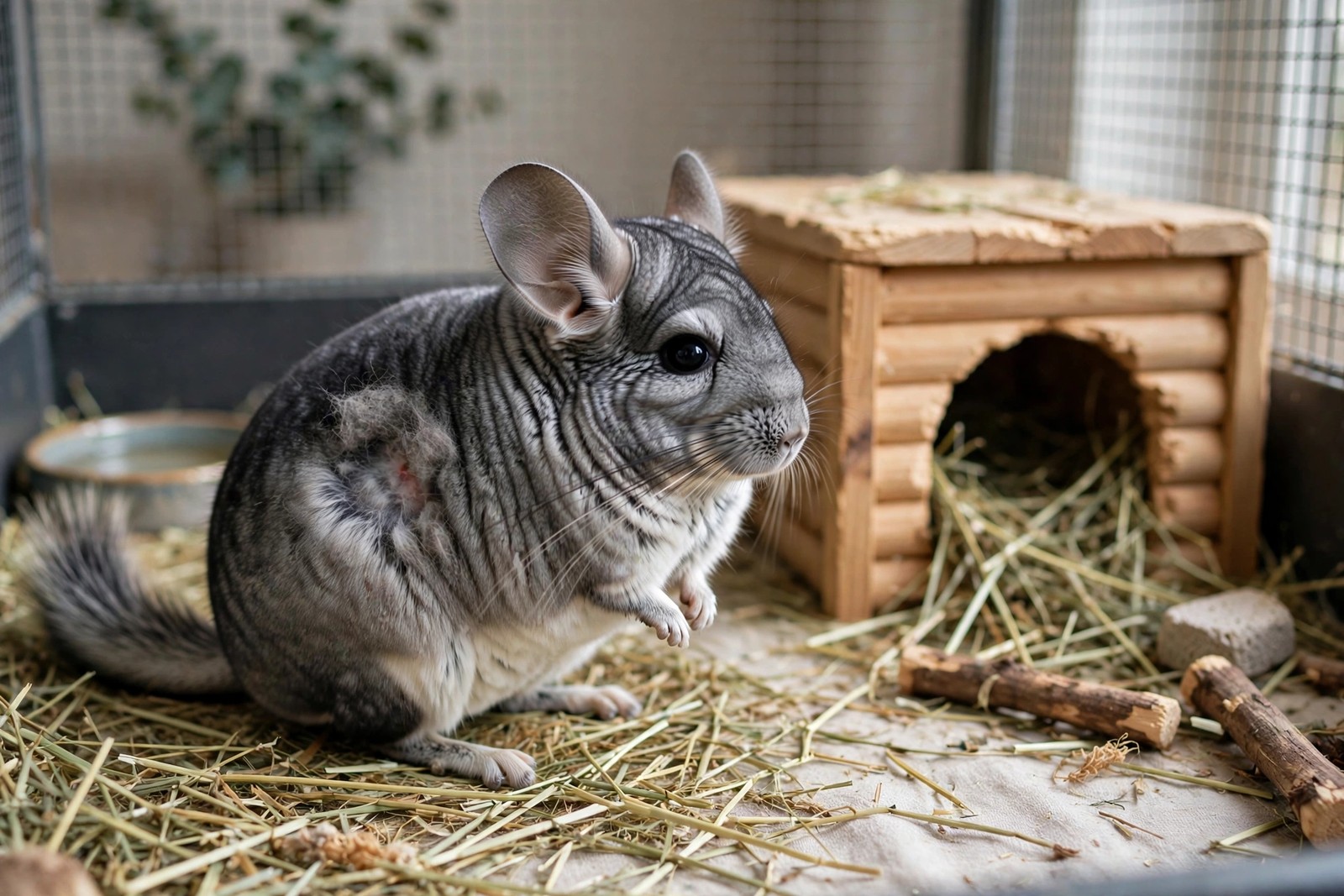
When a chinchilla comes away from a fright with a bare patch, the missing fur is often a defence working exactly as it should. Chinchillas can release a clump of coat — fur slip — when grabbed or startled, leaving smooth, clean skin that regrows slowly over the following weeks and months. Other patches tell other stories: fur chewed short by the chinchilla itself or by a cage mate, scaly ringworm patches around the face, ears, or feet, and, less often, diet or hormone problems behind a thinning coat.
Reading the Skin Under the Fur
The skin tells you which family you are in: smooth, normal, unbroken skin after a handling scare is fur slip; short, barbered fur is chewing; scaly, crusty, or red skin is a vet visit (ringworm needs proper treatment and hygiene care, since it spreads to other pets and people). Review the recent past honestly: rough handling, a fall, a fight, a new cage mate, a move, or a boredom problem all leave signatures. Chinchillas also need regular dust baths to keep that dense coat healthy — a chinchilla denied dust bathing develops a greasy, clumped, unhappy coat — but dust does not fix chewing or fungus. Persistent or spreading loss, any broken skin or scratching, or a chinchilla who also goes quiet or off food should be examined by an exotics vet rather than watched indefinitely.
Working With Your Vet
For a chinchilla, bring the story of the patch, not just the patch itself. Note when you first saw it, whether a scare, a fall, a new cage mate, or a handling change came just before, and whether the skin underneath looks smooth, barbered, scaly, or red. Photograph the area under the same light every few days, so regrowth — or spread — is visible rather than guessed at. An exotics veterinarian should examine any loss that spreads, breaks the skin, comes with scratching, or arrives alongside quietness or a reduced appetite, and a suspected ringworm case should stay apart from other pets until it has been seen, since that fungus can pass to people as well. Dust baths still matter for coat condition, but they will not settle chewing or clear a fungal patch, so keep them as routine care rather than as any kind of treatment.
For the visit itself, carry KinsLe's Pet Passport along — one portable packet holding this chinchilla's records, dates, and past findings.