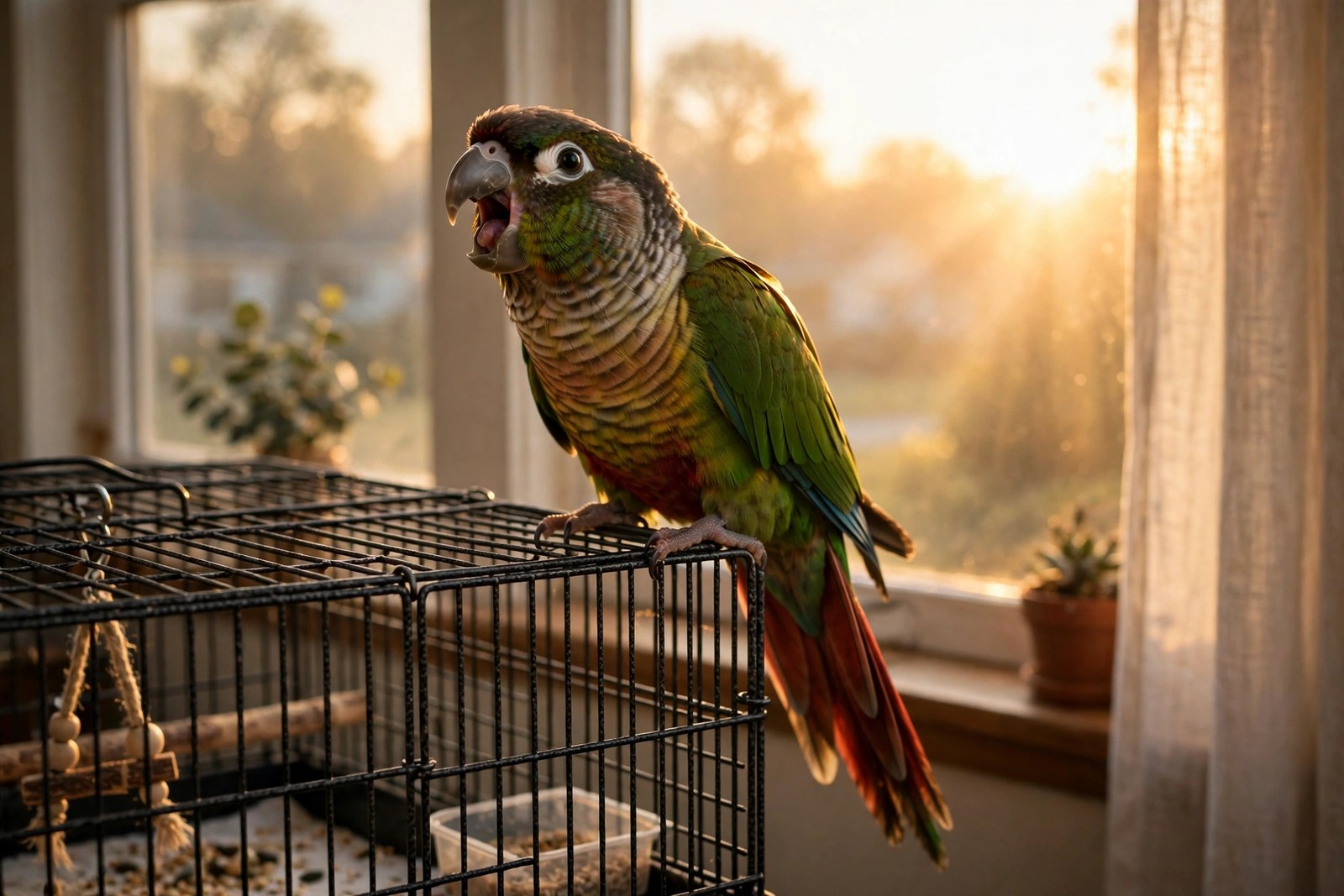
That first blast of conure noise at sunrise is not bad behaviour, excess energy, or a bid to annoy the neighbours. It is a dawn chorus, and for a flock parrot it is one of the most important conversations of the day.
First Light Means Contact Calling
Wild conures roost together overnight, then call loudly as light returns. Contact calls do several jobs at once: they confirm which flock members are present, re-establish contact after hours of silence, and coordinate the move to feeding areas. A pet conure treats your household as the flock, so the calls are aimed at you. If you are still in bed, the bird calls louder and longer, because in flock terms nobody has answered yet.
Timing gives the clue. Dawn calling starts with first light leaking around a cover, or the moment the cover comes off, peaks for a short burst, and then drops sharply once the bird can see you, gets breakfast, and starts the day. A conure that screams steadily for hours is a different problem, usually boredom, loneliness, or a learned pattern of screaming for attention, and should not be dismissed as morning noise.
Why Answering Wrong Makes It Louder
Rushing in, shouting back, or uncovering the cage the instant the noise peaks all teach the same lesson: maximum volume makes people appear. Even scolding is flock contact to a conure. The workable approach is to wait in another room until there is a brief gap in the calling, then walk in calmly, greet the bird in a normal voice, and uncover and feed. Over days, the bird learns that quiet pauses, not the loudest scream, start the morning. A soft answering whistle from another room can also reassure a bird that the flock is awake without staging a grand entrance.
Managing the Morning Realistically
- Give a true sleep period of about 10 to 12 hours in a dark, quiet area. A thin cover in a bright, noisy room leaves a conure half-rested and quicker to call.
- Keep uncovering, breakfast, and out-of-cage time at consistent times, including weekends, because a two-hour lie-in reads to the bird as a missing flock.
- Put a foraging task in the cage at bedtime, such as food wrapped in plain paper inside a cardboard tube, so the first wakeful minutes have a job attached.
- In summer, expect an earlier start. First light, not the clock, sets a conure's morning, so blackout covering or moving the sleep cage away from east-facing windows can buy the household some time.
Do not punish dawn calling, cover a bird for hours as a response to noise, or expect a species built to be heard across a forest canopy to be quiet. Choose instead to manage light, timing, and your own response, and the morning burst usually shrinks to a short, predictable greeting. If the pattern changes suddenly, or loud calling comes with reduced appetite, fluffed posture, or changed droppings, an avian veterinarian should check the bird rather than the behaviour being assumed to be attention-seeking. When everyone in the house follows the same uncover-and-feed sequence instead of improvising, KinsLe Care Teams keeps that routine assigned and timestamped so the conure gets one consistent start to the day.