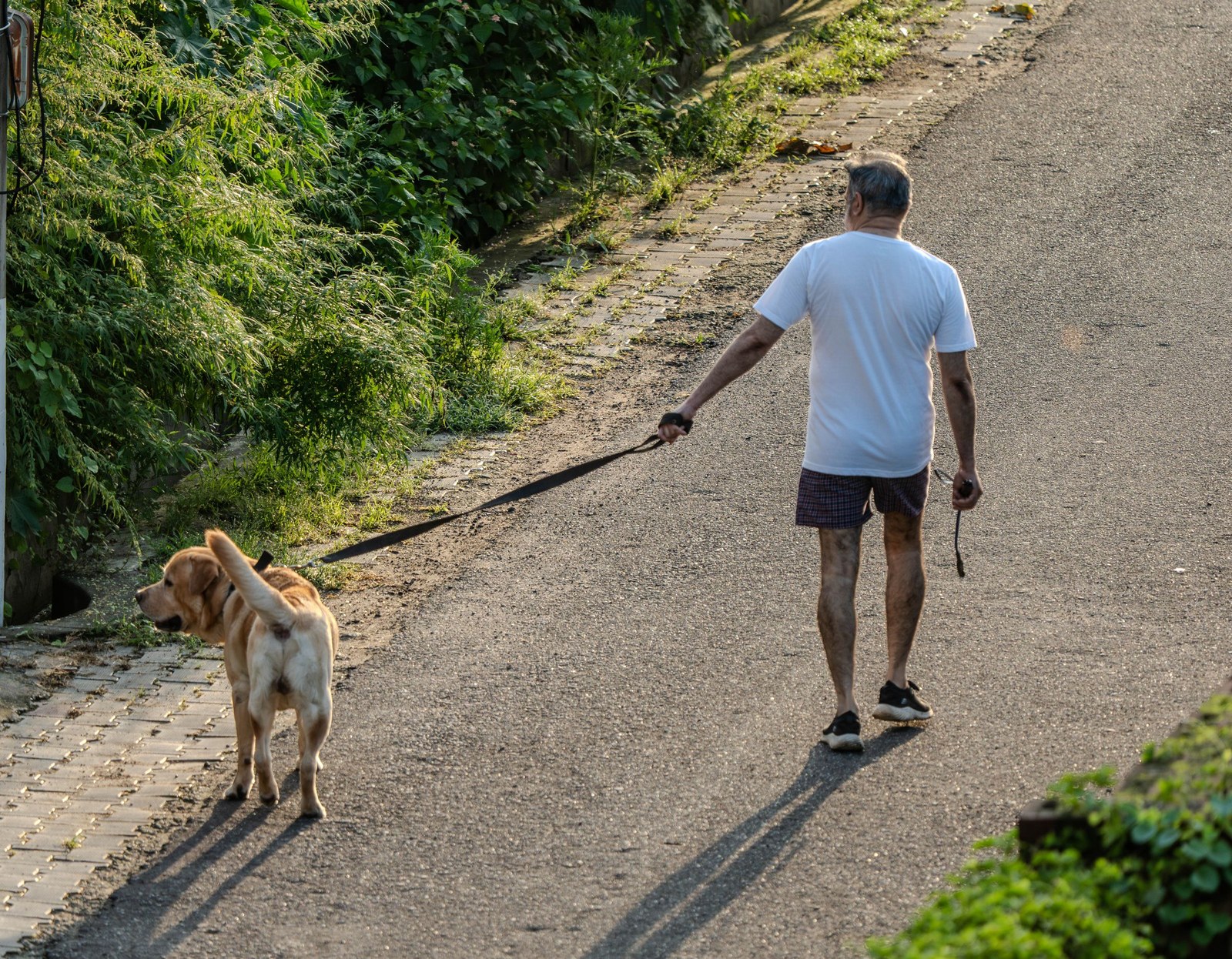
A dog can gain weight on exactly the same scoop of food when life around that scoop changes: aging and a slower metabolism, spaying or neutering, fewer or shorter walks, more treats from more people, or an underlying health issue quietly shifting how the body uses energy. The food looks identical — the dog and the day do not.
The common, non-alarming reasons
Age is the biggest. A two-year-old Border Collie who ran everywhere becomes a seven-year-old who trots, naps longer, and burns less, yet the bowl stayed the same size it was at peak activity. After spaying or neutering, many dogs also need fewer calories than before, while appetite stays cheerful.
Activity drift is subtler. A house move, a new job, winter weather, a child's school schedule, or an injury in the family can shave twenty minutes off daily movement for months. Nobody decided to exercise less — life did. Meanwhile extras creep in: a new partner who treats generously, a neighbor with biscuits, training for a new puppy in the same house, or food stolen from a cat's bowl or an open bin.
Measuring matters too. "One scoop" grows over time. Weighing or using a marked cup for a few weeks often reveals the scoop was really a scoop and a half.
How to investigate before you worry
Run a calm two-week audit:
- Weigh the food, or use one level measuring cup every time, and write the amount down.
- Log every treat, chew, topper, scrap, and second feeder.
- Note walks, play, and rest honestly — not the intended routine, the real one.
- Weigh your dog, or note body shape with side and top photos.
If the audit finds the leak, fix that first and re-check shape in three to four weeks. If it finds nothing and weight is still climbing, that is useful information for your veterinarian, not a failure.
When a vet visit is the right next step
Book a visit for unexplained, rapid, or continued gain, especially with other changes: low energy, increased thirst, hair or skin changes, panting, stiffness, or a pot-bellied look. Only a veterinarian who examines your dog and, where needed, runs tests can sort out whether a health condition is contributing. Do not start a strict diet, change prescription food, or stop medication based on home suspicion alone.
Your veterinarian may set a target weight, suggest a measured reduction, and schedule re-weighs. Steady progress beats dramatic cuts.
Keeping portion honesty kind, not stressful
Families do best with a visible system: food stored with its measuring cup, treats in one place with a daily allowance, and feeding times owned by specific people. That removes blame — the system, not a person, holds the line. Keep rewards joyful but counted, and protect exercise your older dog can enjoy, like sniff walks and gentle swimming where appropriate.
Bringing a clear history with KinsLe's Pet Passport
"He eats the same" is hard for a clinician to act on; a dated feeding and weight history is gold. KinsLe's Pet Passport keeps vaccines, medications, allergies, documents, and vet notes together as one records packet, so you can add weights, body condition notes, and what you actually fed, then share it at the visit. That turns a vague worry into a focused conversation. Pet Passport puts dated weight entries and measured-portion notes, kept on KinsLe, in front of your veterinarian at each re-weigh, so the same-food story becomes a record that can be judged against the target set at the last visit.