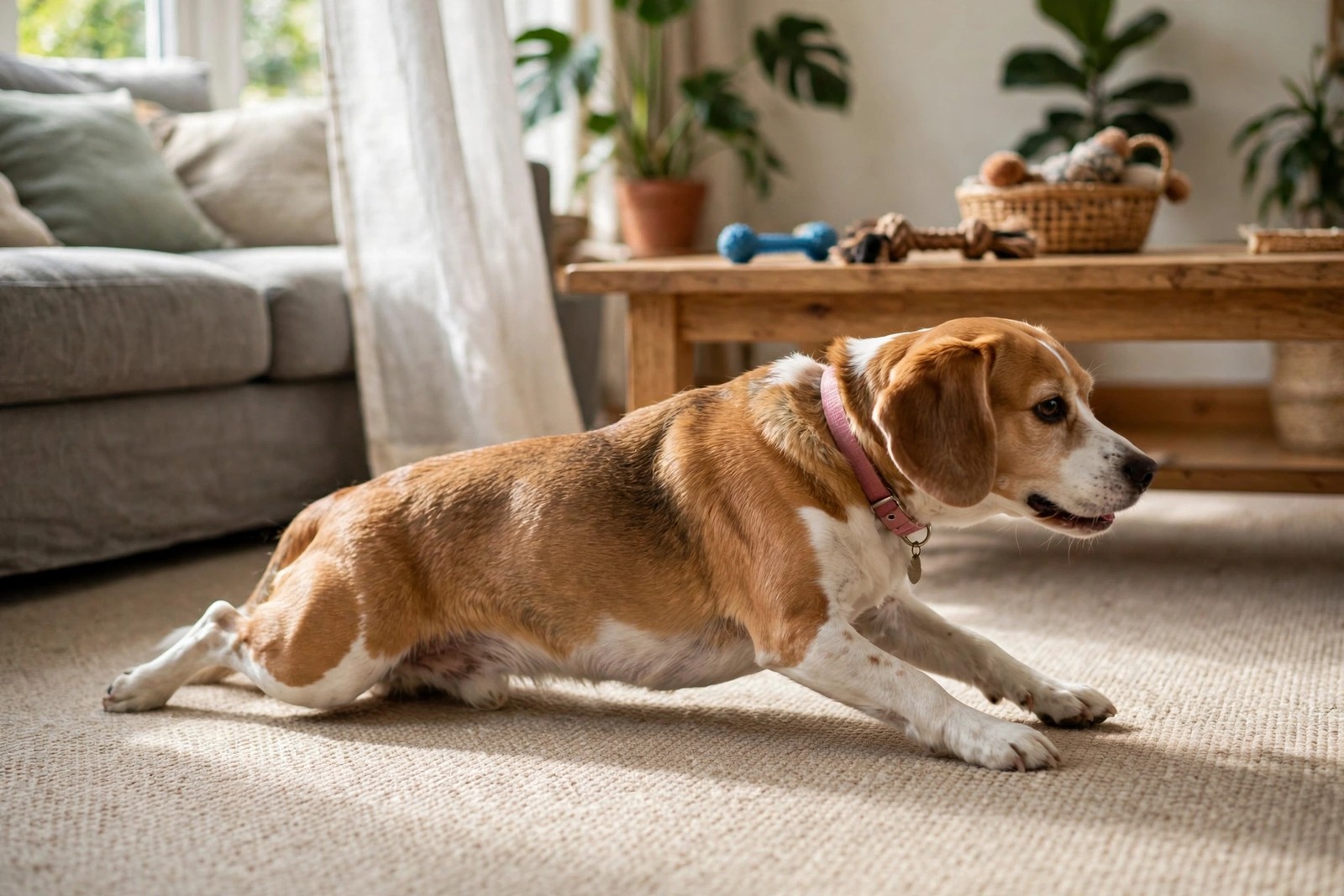
Dragging her bottom across the floor is her way of reaching an itch or ache she cannot otherwise touch. Glands that are full or irritated lead the list of causes: the two small scent glands sitting just inside the anus, which normally empty as she passes stool but sometimes stay full until they grow uncomfortable or become infected. Other causes include intestinal worms (you may see rice-like segments around the rear), skin irritation or allergies around the rear, a sore or matted area, diarrhoea residue, and occasionally something stuck. A dog who scoots occasionally after a soft stool may just be cleaning up; repeated scooting is a symptom, not a habit.
What Owners Can Sensibly Do
Check the area visually: redness, swelling to one side of the anus, a bad fishy smell, discharge, or your dog licking and biting at the area all point to glands that need attention. Anal glands are properly emptied by a vet or experienced groomer — internal expression is more complete than squeezing externally at home, and squeezing an infected gland can be painful and messy. Keep worming current, keep your dog's weight healthy (overweight dogs empty their glands less effectively), and note how often it happens: a pattern of recurrence is exactly why vets sometimes discuss diet, allergies, or gland problems in more depth.
Working With Your Vet
At the appointment, expect the vet to examine the glands from inside, where pressure can be applied properly and infected material can be seen, and to ask about worming, stools and diet. Mention how often she scoots, whether one side looks swollen, and any fishy smell at home, because a gland that refills within days of being emptied raises different questions from one that troubles her twice a year. If glands recur, the conversation may turn to allergies, weight or the glands themselves — decisions that belong at that examination, not in guesswork at home.
See the vet promptly if scooting persists, there is swelling or redness beside the anus, discharge or blood, a fishy smell, or your dog is clearly sore — an anal gland abscess can rupture and is genuinely painful. Scooting plus visible worms means a worming conversation at the same visit.
For this dog, keep a rear-end record rather than a general log: the date of each scooting bout, whether it followed a soft stool, what worming she is on and when it was last given, and the date of every gland check. Three bouts in a month read very differently from three in a year, and that simple count is what tells you — and the vet — whether you are looking at a passing irritation or a pattern that needs a plan.
Store worming dates, gland-check results and each episode's date in the Pet Passport on KinsLe, and the packet is ready for the surgery, a trip or a boarding stay.