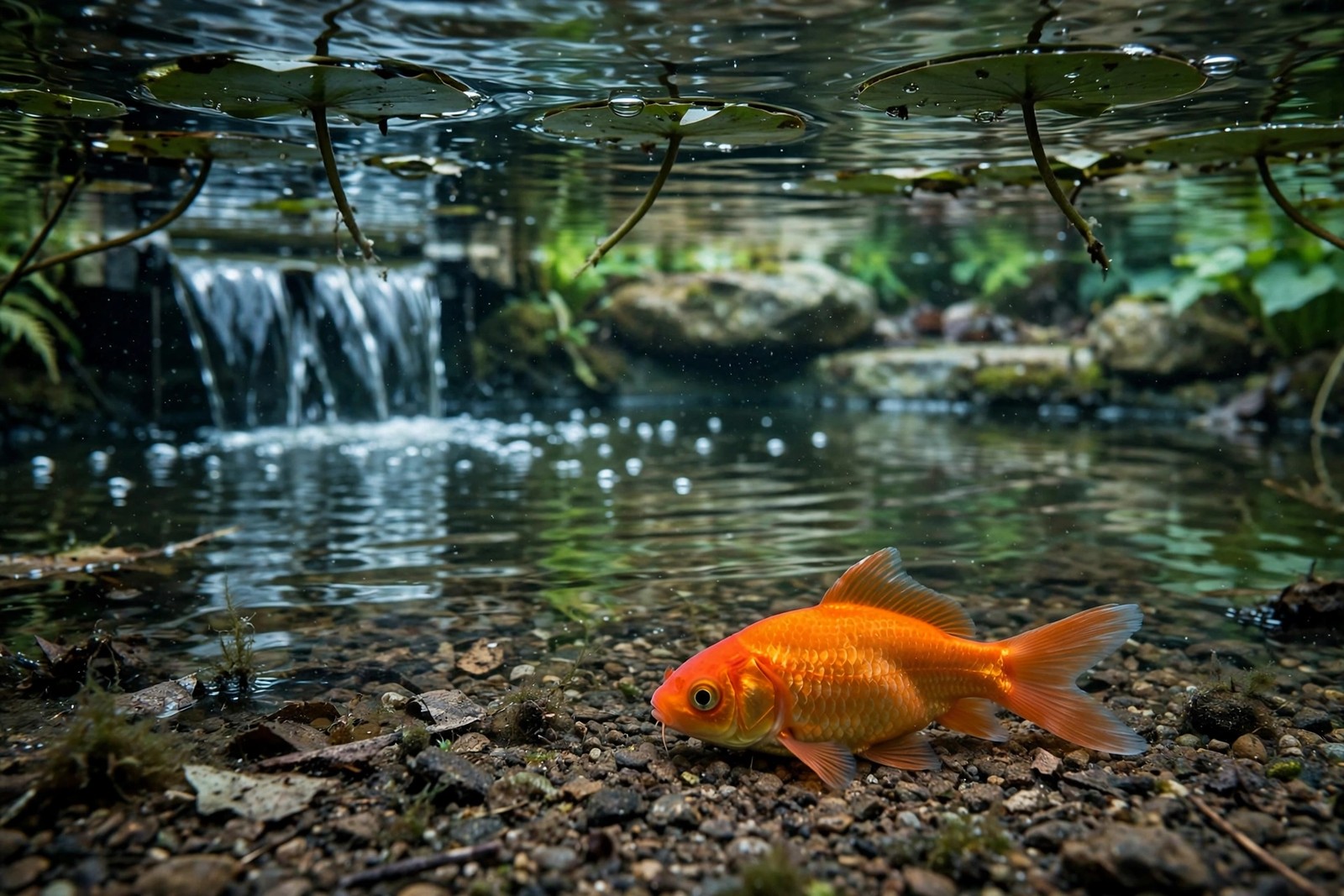
A goldfish resting on the pond floor means opposite things in different seasons, so start with the calendar and the thermometer rather than with worry. In cold water this is usually a fish doing exactly what goldfish evolved to do. In warm water, a fish parked on the bottom is a prompt to check oxygen, water quality, and the fish itself — in that order — because pond problems usually show in behaviour before they show anywhere else.
The Cold-Water Explanation
Goldfish are cold-water fish whose metabolism follows the water temperature. As the pond cools in autumn and winter, they eat less, move less, and settle into the deepest part of the pond, where the water is the most stable, hovering or resting on the bottom in a state of torpor. They may stay there for long stretches, barely stirring, and they should not be fed as they would be in summer — uneaten food in cold water simply decays. Leave a torpid fish alone: do not net it, warm it, or bring it indoors, because a sudden temperature change does far more harm than the cold it was coping with. If ice forms, the keeper's job is only to keep a small area of surface open for gases to escape, using a floating de-icer or hot water poured gently on the ice, never by smashing it, since the shock waves stress the fish below.
The Warm-Water Checks, in Order
If the water is mild or warm and your goldfish are on the bottom, think oxygen first. Warm water holds less dissolved oxygen than cold water, levels are lowest around dawn, and a hot, still night after a sunny day — or a heavy algae bloom dying back — can leave fish short of air. Fish short of oxygen more often gather at the surface or under a waterfall, but weak or early-affected fish may simply sit on the bottom and breathe hard. Check that the pump, filter, and waterfall or fountain are actually running, clear any intake choked with weed or leaves, and run extra aeration if you have it while you investigate.
Test the water second. Ammonia or nitrite from overfeeding, decaying leaves, a dead fish or snail, or an overloaded filter will make goldfish lethargic and bottom-bound, and several fish affected together is the classic signature of a water problem rather than individual illness. Test ammonia, nitrite, nitrate, and pH, net out decaying matter, stop feeding, and make a partial water change with dechlorinated water of a similar temperature if ammonia or nitrite is present. Look at the fish third: one fish alone on the bottom, with clamped fins, white spots, red streaks, raised scales, or a swollen body, may be ill or injured while the pond itself is fine, and isolating and examining that fish beats treating the whole pond blindly.
Sleep, Age, and When to Get Help
Goldfish also simply rest. A fish that settles on the bottom at night or for short daytime naps, then rises, feeds, and swims normally, is showing ordinary rest, and older, larger fish rest more than youngsters. The dividing line is duration plus company: bottom-sitting that lasts all day in warm water, spreads to other fish, or comes with lost appetite, fast breathing, or visible marks has crossed from rest into a problem. Act on the water the same day — oxygen and ammonia will not improve by being watched — and if the water tests clean while a fish worsens, or several fish deteriorate despite corrected water, get professional eyes on them rather than adding pond treatments at random. That is the moment KinsLe's Pet Services Directory earns its place in this article: it helps you locate an aquatic veterinarian or an experienced pond professional in your area, so a sick fish is examined by someone who can test, look, and advise in person.