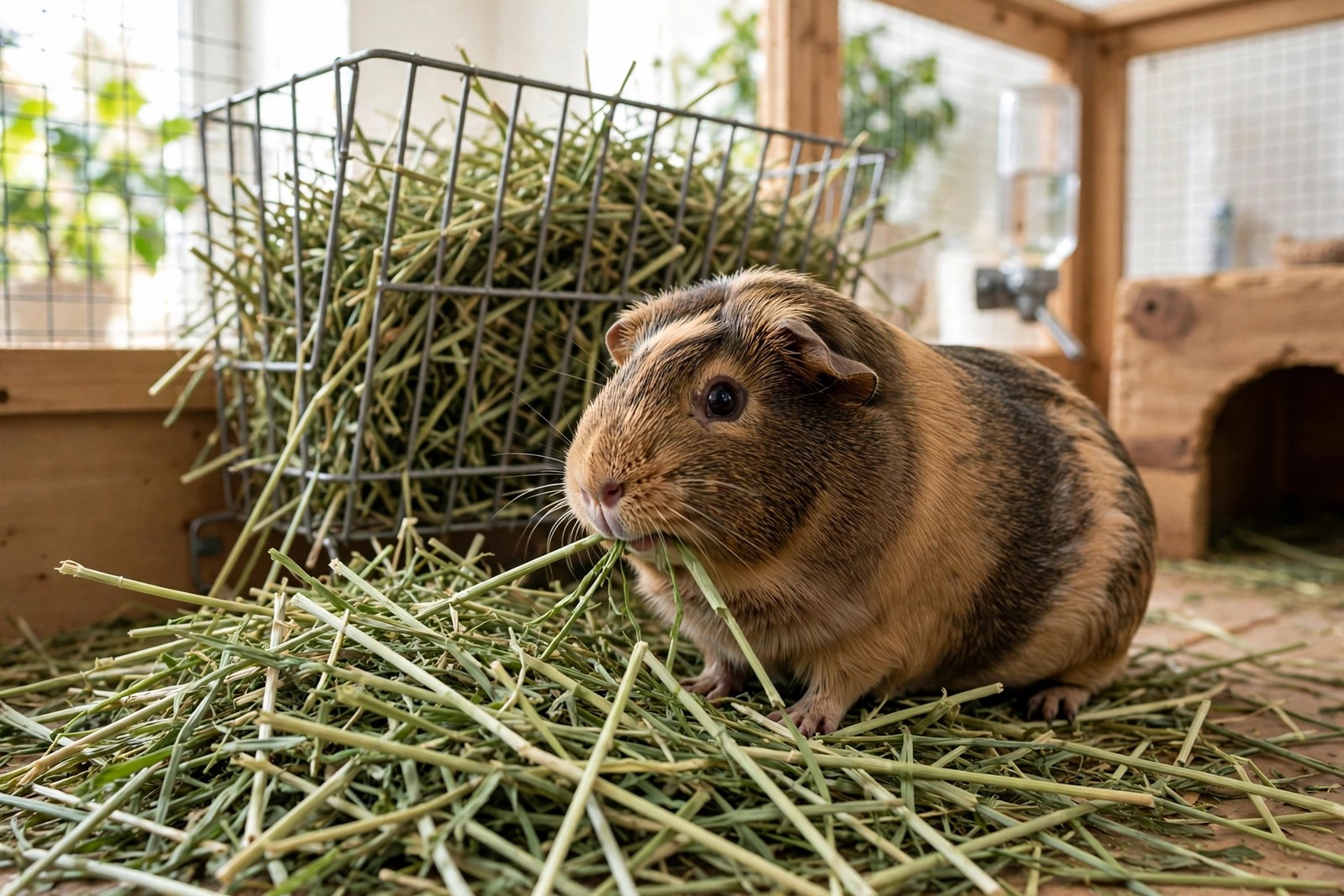
Guinea pigs are often fussy about hay because hay is not one uniform food: freshness, dust, stalk length, and variety change how it smells, tastes, and feels in the mouth, and a guinea pig who sorts, drops, or ignores a pile is usually telling you something about that pile. Hay should form the bulk of the daily diet, since constant chewing wears the teeth and keeps digestion moving, so fussiness that leaves the hay untouched deserves attention rather than a shrug.
Freshness, dust, and the bottom of the bag
Start with the pile itself. Hay that has sat open in a damp room, been flattened under a water bottle, or mixed with soiled bedding quickly loses its green colour and sweet, grassy smell, and many guinea pigs will pick through it or abandon it. Dust is a separate problem: a dusty pile irritates the nose and eyes, and a guinea pig may sneeze, shake its head, or eat only the cleanest stalks. Shake a handful outdoors, look for grey dust or mould spots, and discard any hay that smells musty or feels damp, because mouldy hay should never be offered.
The bottom of the bag is a classic trap. As a bag empties, the remaining hay is often short, broken, and dusty, with few long stalks to chew, so a guinea pig who ate happily from the top of the bag may sort and reject the bottom. Open a fresh bag, offer a generous pile from the top, and compare the response before concluding that your guinea pig dislikes a variety.
Timothy, orchard, and how to trial a variety
Timothy hay and orchard hay are two varieties owners commonly reach for, and they suit different mouths. Timothy hay is typically coarser, with longer, firmer stalks that give strong chewing wear, while orchard hay is typically softer, leafier, and sweeter-smelling, which suits guinea pigs who reject coarse stalks or who need encouragement to eat. Alfalfa hay is different again: it is richer and suited mainly to young, pregnant, or nursing guinea pigs, so it should not become the everyday hay for a healthy adult.
Trial varieties properly rather than swapping daily. Offer one variety in a large pile for several days, in the same place, at the same times, and note how much is eaten, how much is sorted onto the floor, and whether droppings stay plentiful and well formed. Mixing two varieties in one pile can help a reluctant eater, because the softer hay draws the guinea pig in while the coarser stalks still provide chewing, but keep the trial notes clear so you know which variety did the work.
When fussiness points to teeth or health
Sudden fussiness deserves a vet conversation. Guinea pig teeth grow continuously, and overgrown or misaligned teeth can make chewing painful, so a guinea pig may drop hay, eat only soft leaves, favour one side of the mouth, drool, or lose weight while still showing interest in food. Those signs do not diagnose a dental problem by themselves, but they are the pattern a vet needs to hear, and a vet can examine the mouth properly in a way no home check can match.
If the vet gives the teeth a clean bill, return to management. Offer fresh hay twice a day, in generous piles rather than small pinches, and remove soiled hay at each refill so the fresh pile is not mixed with the rejected pile. Keep fresh vegetables as a complement, not a replacement, because vegetables alone do not provide the long chewing time hay provides, and keep pellets measured rather than heaped, so a full pellet bowl does not crowd out hay. KinsLe's Care Teams supports that steady hay routine, because fresh hay refills, variety trials, and notes on what your guinea pig actually eats can be assigned to named family members and marked complete with a timestamp.