
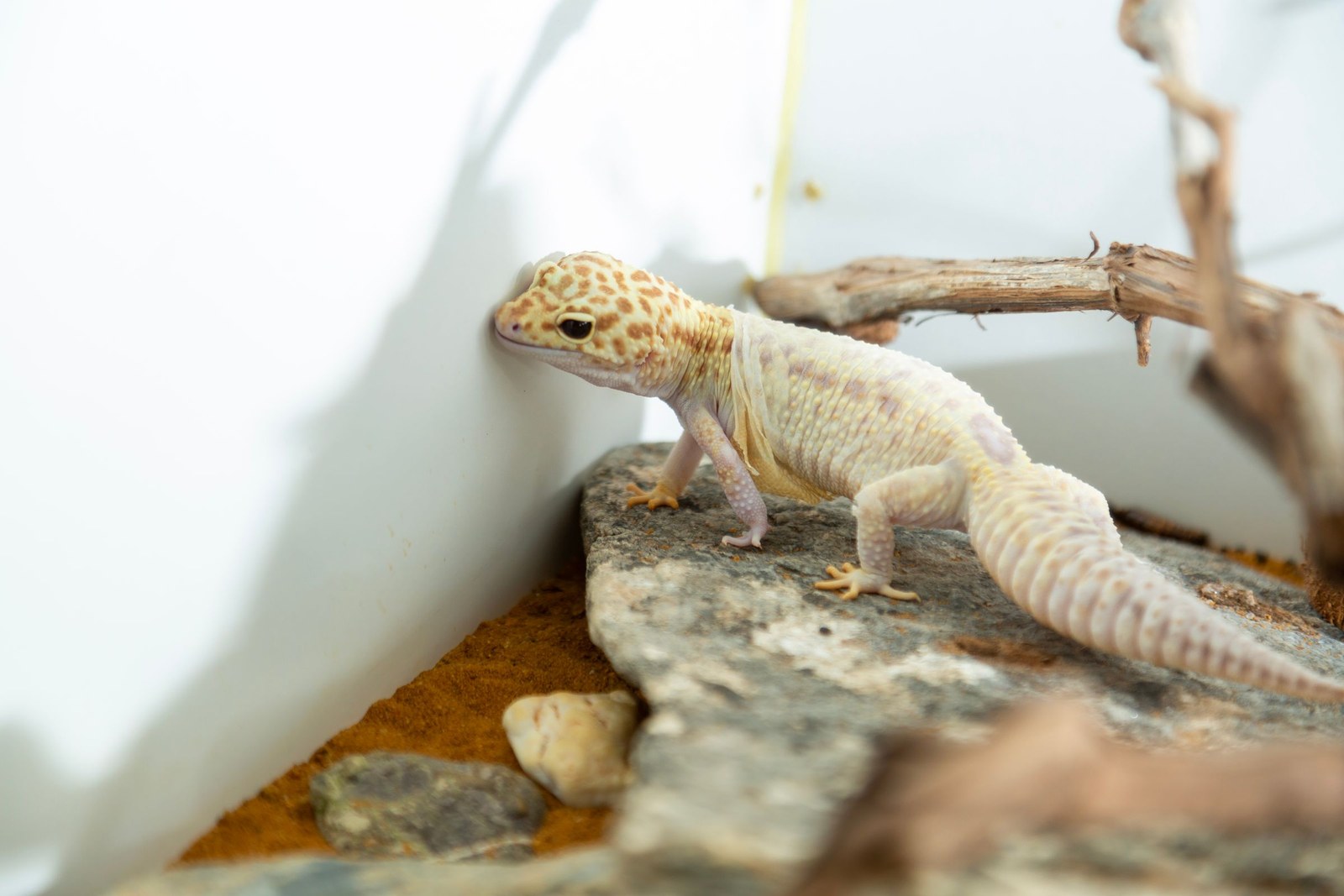
Shed gets stuck on a leopard gecko's toes most often because humidity is too low overall or the humid hide is not actually humid — or not being used — and the thin skin around those tiny toes dries and clings instead of releasing. It matters more than it looks: leftover rings of shed can tighten as the gecko grows, restrict circulation, and in bad cases cost a toe, so this is a small problem worth fixing early and gently.
Why Toes Are the Trouble Spot
A leopard gecko sheds its skin in pieces and usually eats most of it, which means you may not notice a shed happened at all — except at the extremities. Toes are thin, tapered, and far from the warm, moist belly, so shed there dries fastest and releases last. If the humid hide sits on the cool side, has dried out, or the gecko simply prefers a different hide, toes are where the shortfall shows up first.
Check the setup before blaming the gecko: a humid hide on the warm side, lined with damp moss or paper towel and refreshed regularly, plus a water dish that is actually being kept full, solves the majority of toe-shed cases going forward.
Helping Loosen Stuck Toe Shed, Safely
Set up a shallow soak of lukewarm water — just deep enough to cover the feet — and let your gecko stand in it, supervised, for ten to fifteen minutes. Softened shed often comes away as the gecko walks around afterward. For a stubborn bit, a gentle roll with a damp cotton swab can coax loosened skin off.
What not to do matters here: never pull at skin that resists, never use tweezers on a wriggling gecko's toe, and never keep soaking a stressed gecko for marathon sessions. If a piece will not budge after a soak and a gentle swab, leave it, improve humidity, and try again the next day — force tears live skin and invites infection.
Signs It Has Gone Beyond a Home Fix
Book a reptile veterinarian promptly if:
- A toe looks swollen, dark, or discolored compared with its neighbors
- Skin rings have built up over several sheds
- Your gecko is limping, biting at a foot, or going off food
- Shed keeps sticking despite a properly maintained humid hide
A vet can remove constricting shed safely and check circulation in the toe — and repeated problems despite good humidity deserve a professional look at the whole picture. This article is general guidance and cannot assess your individual gecko.
Preventing the Next Stuck Shed
Make the humid hide genuinely inviting: correct side of the enclosure, damp — not soggy — medium, checked every couple of days. Do a quick toe inspection after each shed you notice, under good light, while handling is calm. Thirty seconds of looking now prevents the pinched-toe problem that is much harder to fix later.
Finding Reptile Help Nearby With KinsLe
When toes look swollen or shed keeps sticking, you need a vet who actually treats reptiles, not just the nearest clinic. KinsLe's Pet Services Directory helps you find local groomers, vets, sitters, and trainers, so you can search for reptile care in your area before a small toe problem becomes urgent. Having a clinic identified ahead of time turns a worrying discovery into a quick phone call. Before a small toe problem turns urgent, use KinsLe to search the Pet Services Directory for a reptile veterinarian nearby, then call ahead and describe the swollen toe or the rings that will not release, so the visit starts with the right clinician.