
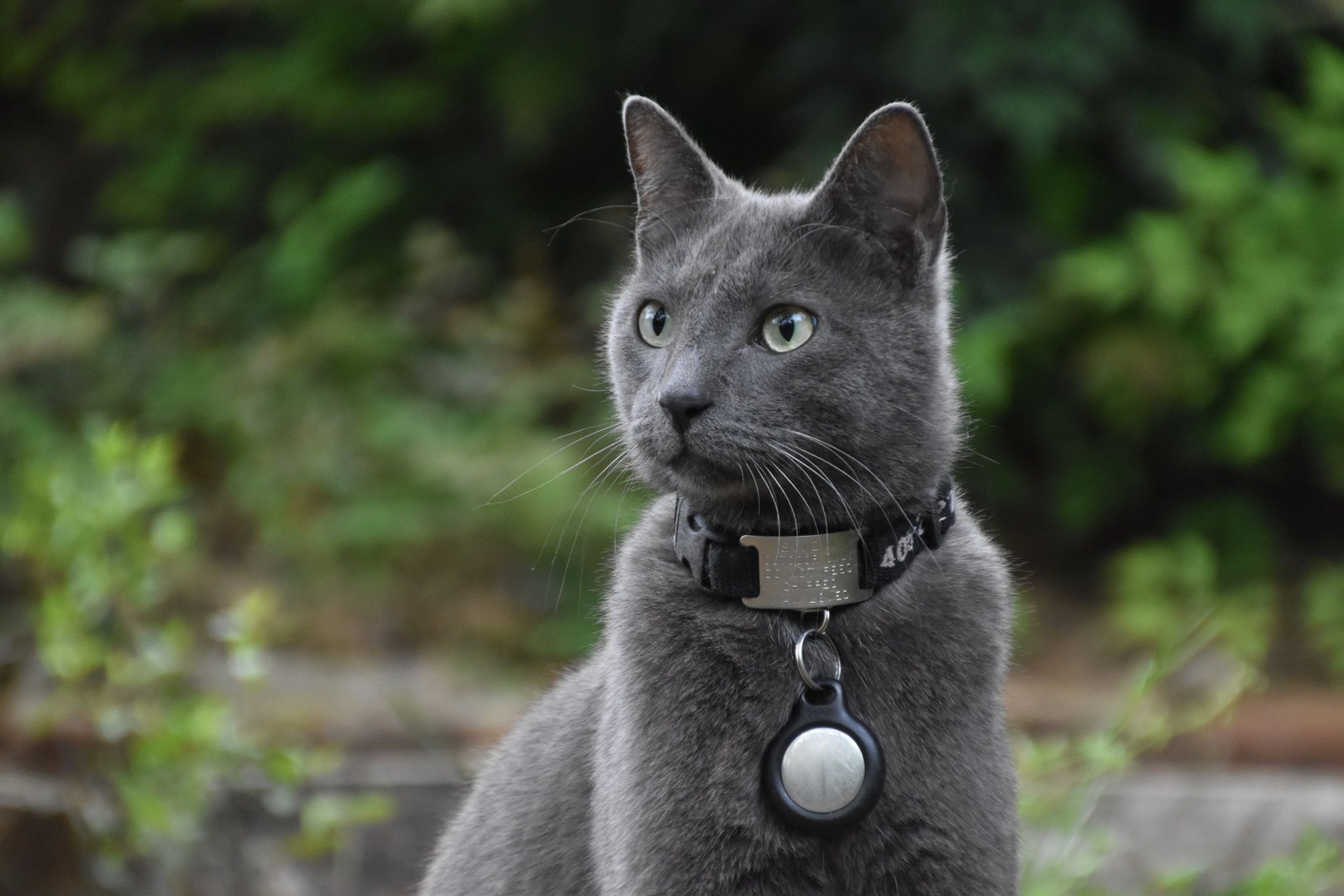
Your cat should wear a breakaway collar because it is designed to pop open under pressure — if the collar catches on a fence picket, a tree branch, a crate door, or another cat's jaw during play, it releases instead of tightening around your cat's neck. For an animal that climbs, squeezes, and explores headfirst, that safety release is the difference between a scare and a tragedy.
The Real Risk of a Fixed Collar
Cats do not walk through the world like dogs. They slip under fences, thread through railing bars, climb bookshelves, and wedge into gaps barely wider than their whiskers. A buckle or elastic collar that snags in any of those places can trap a cat in a panic: hanging from a branch, caught on a fence, or strangling as she twists to get free. Injuries from fixed collars are a well-known reason cats end up at emergency vets, and indoor cats are not exempt — collars catch on heating vents, drawer handles, and furniture springs inside the home too.
How a Breakaway Clasp Works
A breakaway clasp is engineered with a specific release point. Under normal wear it stays closed, but a firm tug — roughly the force of a cat's own weight pulling against a snag — pops it apart. That design does mean a breakaway collar can sometimes come off during rough play or a determined scratching session, which is why many owners keep a spare. Losing a collar occasionally is an acceptable trade for a collar that can never strangle.
Fit matters as much as the clasp. You should be able to slip two fingers snugly between the collar and your cat's neck. Looser, and a cat can get her lower jaw or a front leg trapped under it; tighter, and it rubs and irritates. Check the fit monthly — kittens outgrow collars fast, and adult cats gain and lose weight too.
Pair the Collar With Identification
A breakaway collar only protects if it also identifies. Add a lightweight ID tag with your phone number, and consider what happens on the day the collar does its job and pops off: a microchip is the permanent backup that stays with your cat no matter what. Collar, tag, and chip together form layers — if one fails, the others still point home.
Some cats resist collars at first. Introduce one for short supervised sessions, reward with treats, and gradually extend wearing time. Most cats adjust within a few days. If your cat loses breakaways constantly, check the fit and the clasp quality before giving up on collars entirely.
How KinsLe's QR ID Fits In
KinsLe gives every pet profile a unique QR ID, which you can put on your cat's collar tag. Anyone who finds her — a neighbor, a shelter worker, a vet tech — can scan the code and reach her profile and your contact details without needing an app or a chip reader. It turns the breakaway collar she already wears into a direct line home. If she slips out wearing that collar, a finder who scans the code on her tag will open her profile through the Verified QR ID Pet Profiles on KinsLe and find the contact details listed there for reaching you.