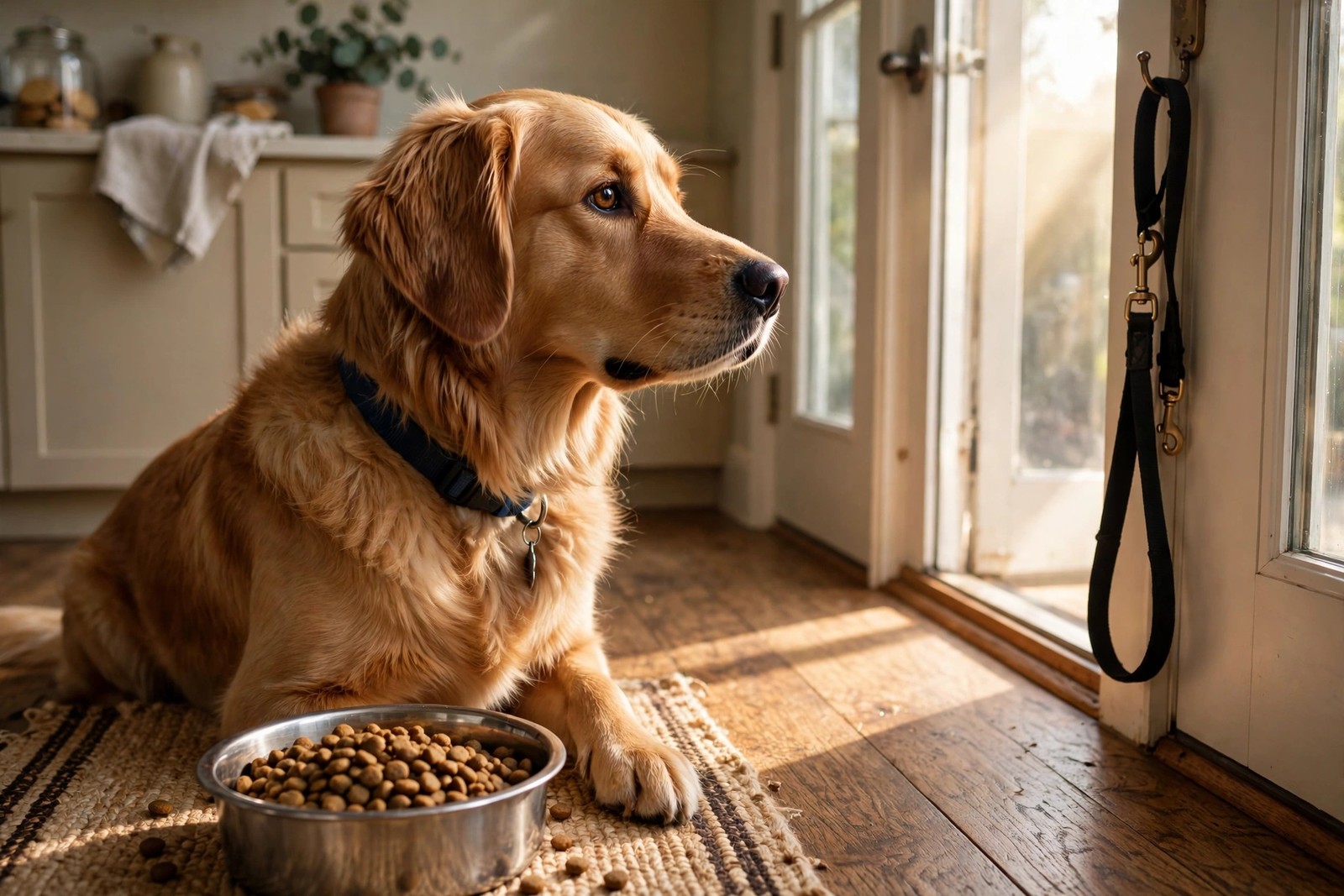
A dog who turns away from breakfast and then eats dinner with enthusiasm is common enough that experienced owners barely blink — but the reasons behind it range from harmless habit to a stomach that needs attention, and telling them apart depends on details the bowl alone does not show. Look at the whole twenty-four hours: what your dog ate last night, what holding out has earned in the past, and how your dog seems in every other way.
Still Full, or an Evening Eater by Nature
Start with arithmetic. A dog fed a generous dinner, plus a long-lasting chew, a stuffed toy, training treats at an evening class, and scraps from the family's own meal, may simply have eaten a large share of the day's food late in the evening. By morning there is little hunger left, and the dog who supposedly will not eat is really a dog whose calories arrive on a shifted schedule. Some healthy dogs are also naturally light morning eaters: they wake slowly, prefer a walk and a drink first, and do their serious eating later in the day, just as some people do. If weight is steady, energy is normal, droppings are normal, and the evening meal is eaten eagerly, a light breakfast by itself is a pattern to accommodate — often by moving more of the ration to the evening meal — rather than a fault to fix.
The Two Traps: Empty-Stomach Nausea and Reinforced Fussiness
One group of morning refusers feels worse, not better, for the empty stomach. After the long overnight gap, some dogs become nauseous on a completely empty stomach and bring up yellow bile early in the morning, then refuse breakfast until the queasiness fades. The counterintuitive fix is to shorten the gap: many owners, guided by their veterinarian, split the existing ration so a small portion is fed as a late-evening snack, which settles the early-morning sickness for this type of dog. If your dog vomits bile regularly, raise it with your veterinarian rather than just feeding around it, because repeated vomiting deserves a proper look.
The second trap is learned. A dog who leaves plain food and is then offered chicken, a topper, or a hand-fed upgrade has been taught a profitable lesson: refusal pays. The giveaway is selectivity — breakfast is refused but treats, chews, and the evening meal vanish instantly, and the dog is bright and active throughout. Break the cycle kindly and consistently: offer the morning meal, leave it down for twenty to thirty minutes, then lift what is left without ceremony or substitutes, and let the next meal be the next food. A morning walk before breakfast helps many dogs, since exercise and a toilet break genuinely build appetite.
When Skipping Breakfast Is a Red Flag
Treat a changed appetite as a symptom when it arrives with company. See a veterinarian promptly if your dog stops eating altogether, loses weight, vomits repeatedly or vomits bile on most mornings, has diarrhoea, drools and licks its lips, seems sore in the belly, or becomes lethargic alongside the refusal. Act faster for a puppy, a toy breed, or a diabetic dog, in whom missed meals carry more risk, and for a senior dog whose refusal is new — in an older dog, mouth pain from dental disease is a common hidden reason a meal gets walked away from, and only an examination finds it. Puppies who will not eat and are quiet or vomiting should be seen the same day.
For the ordinary case, keep notes for a fortnight — dinner time and size, evening extras, whether breakfast was eaten, and any bile — because that record turns a vague worry into a pattern your veterinarian can read at a glance. KinsLe's Family Sharing makes that record a household one: everyone who feeds your dog can see the same feeding times and amounts on the shared profile, so the person offering breakfast knows exactly how large last night's dinner and chew really were.