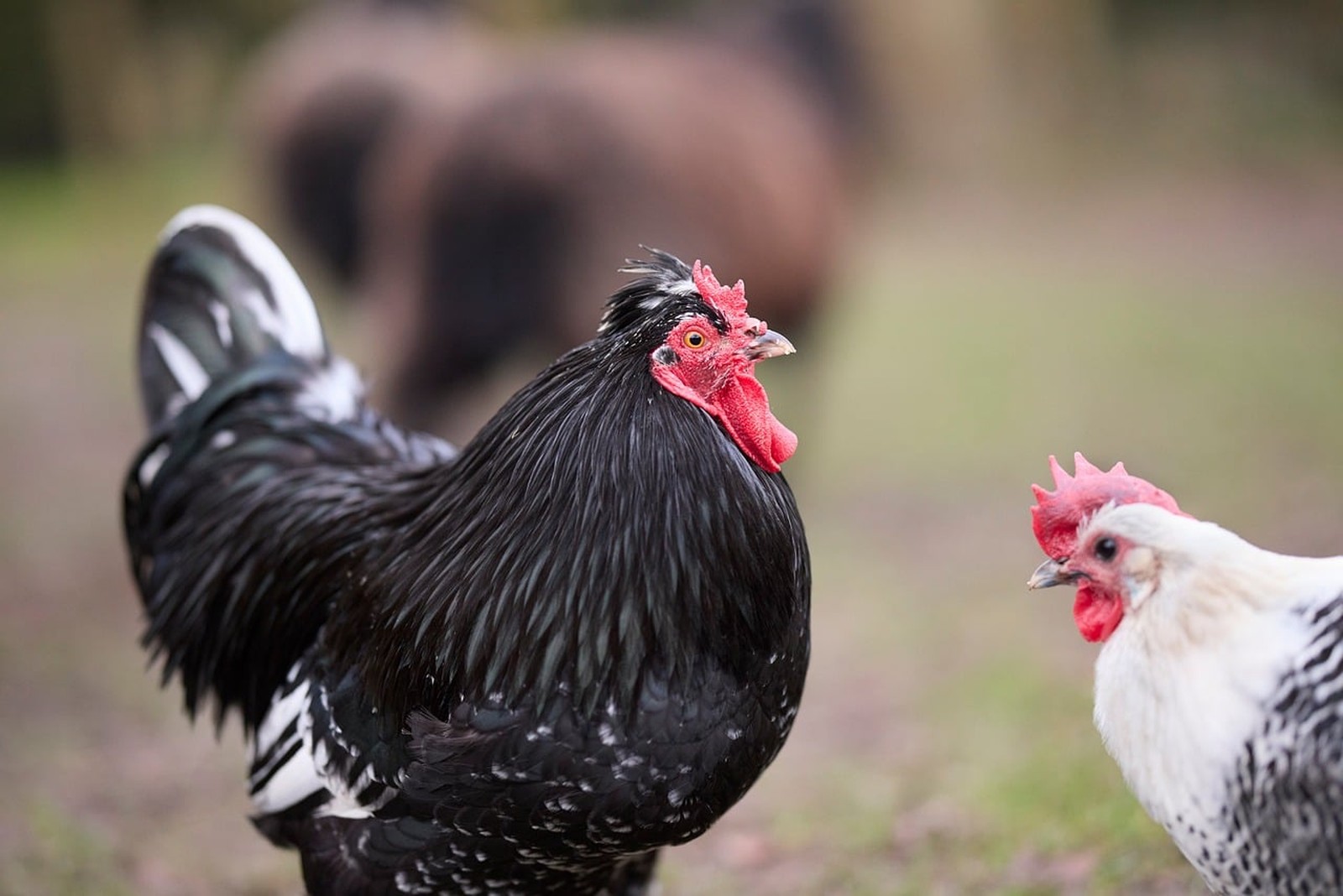
Keepers who add a rooster often report a flock that feels different within weeks: less squabbling at the feeder, quicker settling after a scare, a more organised feel to the day. That calm is real when it happens, but it is a by-product of what a rooster actually does all day, and he brings costs alongside it. Whether he is a good trade depends on your hens, your neighbours, and your local rules — so look at his job description before you hire him for it.
What a Rooster Does for a Flock
A settled rooster works as lookout, caller, and referee. Hens feed most relaxed with their heads down when someone else is watching the sky, and that is his post: he scans while the flock scratches, and he has different alarm calls — a sharp warning for a threat overhead sends hens running for cover, while a ground-level warning gathers them and puts him between the flock and the danger. He calls hens to food with a rapid tidbitting call, dropping and picking up a choice morsel to show them where to eat, which spreads the flock across the feed instead of bunching them into arguments over one spot. He also intervenes in hen disputes and holds the flock together as a group, so the jostling for rank that a hen-only flock conducts among itself often quietens. A side effect many keepers want anyway: only a flock with a rooster produces fertile eggs, if hatching your own chicks is ever part of the plan.
What He Costs the Flock, and You
None of that is free. A rooster crows — at dawn, and usually at intervals through the day, in answer to other roosters, vehicles, and his own opinions — and no training reliably stops it. Temperament is a gamble that only settles as a young male matures: a cockerel who was handleable at four months can become a bird who challenges people, rushes children, or fights through fencing, and an aggressive rooster is a genuine safety problem, not a character quirk. His attentions also land on the hens. A rooster mates frequently, and favourite hens in a small flock can end up with bare, scratched backs and damaged head feathers from his feet and beak. Keepers reduce that wear by keeping enough hens per rooster — roughly eight to twelve hens is the range commonly advised — and by checking backs regularly and separating a bird who is being worn down. Finally, the law may decide for you: many towns and suburbs that permit hens prohibit roosters outright on noise grounds, and housing covenants can do the same, so check the rules before you fall for a particular bird.
Getting the Calm Without Regrets
If you go ahead, introduce him like any new bird: a period of separation where the flock can see but not reach him protects your hens from anything he might carry and lets the drama happen through wire. Choose, where you can, a mature bird whose temperament is already known, or a cockerel from calm stock, and handle the flock's routine so he learns people are not rivals — calm movements around hens, no chasing, and feed scattered widely so he can perform his calling role. If your only goal is calmer hens and crowing is impossible where you live, work on the causes of flock stress first: more space, at least two feeding and watering stations, perches and dust-bathing spots, and removing a persistent bullying hen for a few days to reset the order solves many hen-only squabbles without a rooster at all.
A rooster adds daily jobs as well as daily order: backs and saddles to check, eggs to collect promptly, behaviour toward visitors to watch as he matures. KinsLe's Care Teams helps you cover those jobs properly — assign the morning flock check, the egg collection, and the evening shut-in to the people who share your flock, with each task timestamped, so the hen-wear and behaviour changes that decide whether he stays are noticed early, not at the point they have become a problem.