
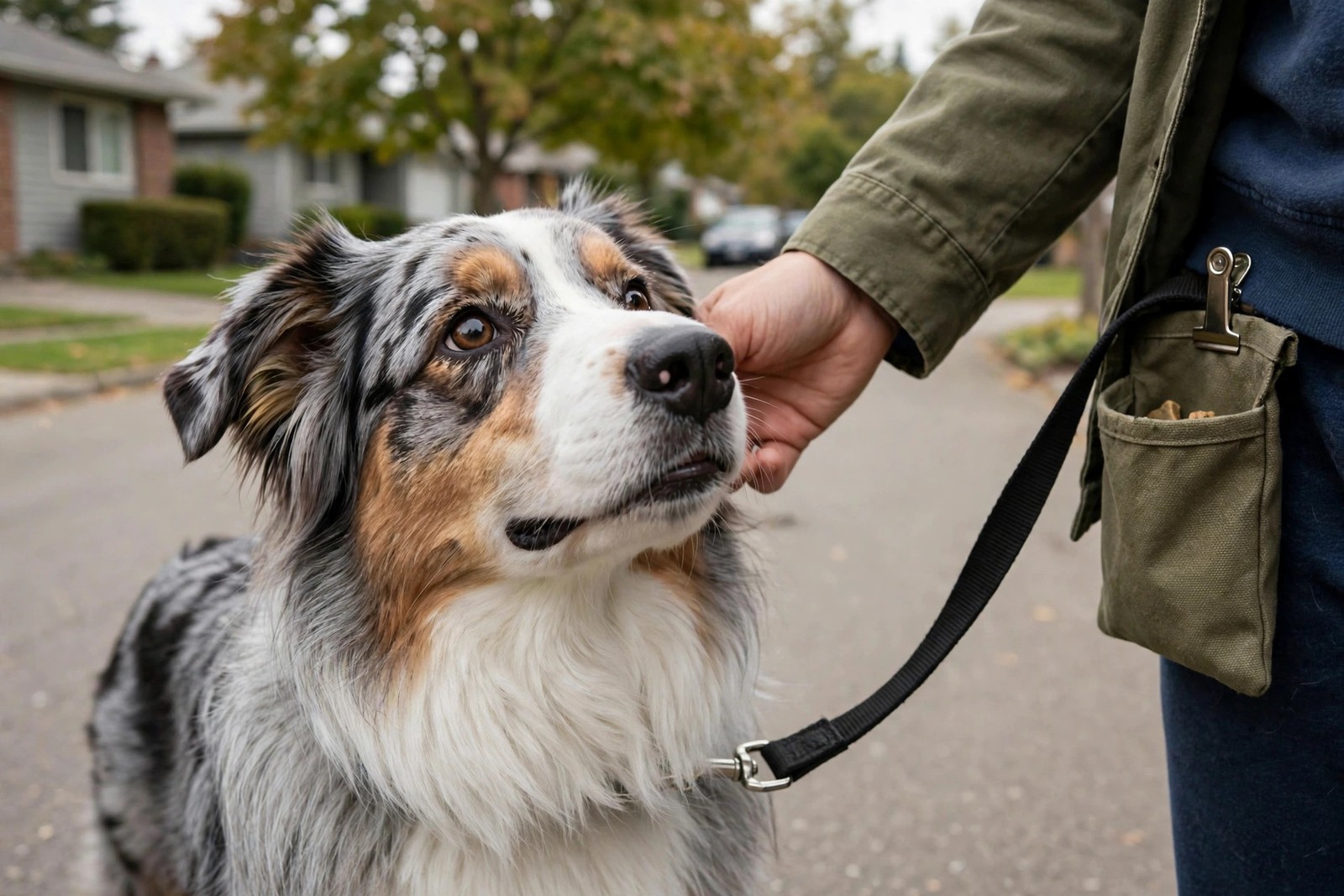
The short answer most first-time owners need is no — not because Australian Shepherds are hard to teach, but because they are almost too easy to teach the wrong things. This is a herding breed bred to think independently, work all day and read tiny shifts in movement. In a pet home, that brilliance needs direction every single day, and providing it is a skill beginners are still building.
Fast Learner, Unforgiving Teacher
An Aussie may understand sit, down and a recall within a few short sessions — far faster than most breeds. The difficulty is everything around the cues. They notice patterns you did not intend: reward a bark once and it is installed; let the puppy nip heels during play and the herding sequence is being rehearsed. They are also sensitive to tone and pressure, so a frustrated, repetitive beginner can produce a dog that shuts down or becomes anxious rather than one that tries harder.
Adolescence, roughly six to eighteen months, is where first-timers most often come unstuck. Energy peaks, the dog tests every boundary it learned as a puppy, and training that looked finished unravels unless the routine holds.
The Workload Behind the Word Trainable
Before choosing one, price in the real day an Aussie needs:
- Around 1.5 to 2 hours of combined exercise and active engagement for a healthy adult, not just a walk around the block
- Training broken into several five-to-ten-minute sessions, every day, using rewards
- A job substitute: herding-style games, scent work, trick training or dog sports, several times a week
- Early, structured socialisation so that natural wariness of strangers settles into neutrality rather than reactivity
Under-exercised and under-employed, this breed redecorates: digging, barking, herding children and chasing cars are not spite, they are an unemployed work dog self-assigning tasks.
Who the First-Time Exception Is
Some beginners do thrive with an Aussie: the runner or hiker who wanted a training hobby, has researched the breed soberly, budgets for group classes from the first month, and has a household that will all use the same cues and rules. Choosing a calmer individual from a breeder who matches puppies to homes, rather than the boldest puppy in the litter, also shifts the odds considerably.
If that description is not honestly you, a more forgiving breed will teach you dog ownership with far less collateral damage — and there is no shame in working up to an Aussie as a second dog. For those who do take one on, KinsLe's Care Teams keeps the whole household delivering the same training cues, exercise turns and feeding routine with assignments and completion timestamps, which is exactly the consistency this quick-learning breed exploits when it is absent.