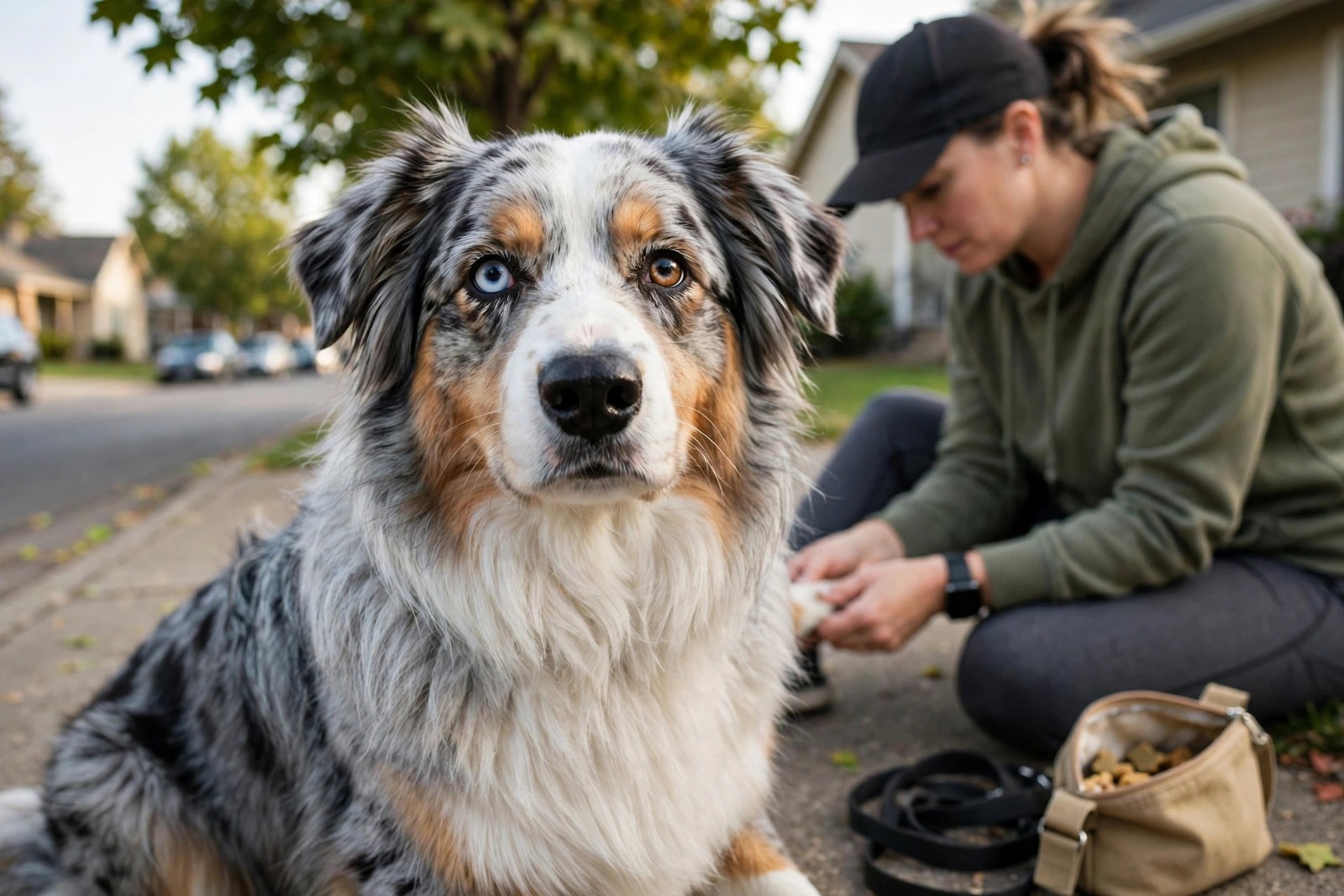
Yes, an Australian Shepherd can be a loyal, playful companion for children, and many families would not trade the breed for anything. The honest condition sits in the dog's original work. This breed was built to move livestock, and that wiring does not switch off in a backyard. A family that understands the herding instinct, plans for the energy behind it, and supervises early play honestly can judge whether this dog fits their home.
The Herding Instinct Around Children
Running, shouting, and scattering are exactly the movements that wake up a herding dog. An Australian Shepherd watching children race across a yard may start circling them, cutting in front, and bunching them together the way it would gather stock. Young dogs sometimes add a nip at heels or clothing when excitement rises, not from meanness but from an old job surfacing at the wrong moment. Games that involve chasing, fleeing, and squealing feed that instinct fastest, so rough chase play is a poor match for this breed.
That behavior is manageable, and it is not a reason to rule the breed out. Redirecting the dog onto a ball, a tug toy, or a training cue gives those urges a legal outlet. Stopping play the moment heel nipping starts, then resuming calmly once the dog settles, teaches the boundary without drama. Children help most when they learn to stand still, fold their arms, and wait for an adult rather than running from a dog that wants to round them up.
Energy and Mental Work Come First
An Australian Shepherd is not a dog that tires after a stroll around the block. It needs long daily exercise, training that asks it to think, and tasks that feel like work: learning new cues, searching for hidden toys, carrying a pack on a hike, or practicing agility-style obstacles in the yard. Mental effort settles this breed as much as running does, and a dog given neither will invent jobs, which usually means herding children, guarding doorways, or reorganizing the house.
Children can share in that work in ways that build a genuine bond. An older child can run short training sessions with treats, hide toys for the dog to find, or throw a ball in a steady fetch routine. Those structured games teach the dog that children are partners in calm activities, not small livestock to be managed, and they teach children to read the dog's body language in return.
Supervision and Teaching Both Sides
Adult supervision matters most during the first months and whenever play gets loud or fast. Separate the dog when excitement climbs past the point where it can still listen, and give it a quiet place to rest away from the action, because a tired, overstimulated herding dog makes poor choices. Children need their own coaching: no climbing on the dog, no grabbing its face or tail, no waking it from sleep, and no cornering it when it walks away. A dog that can leave a game is a dog that rarely feels the need to end one badly.
Judge the individual in front of you as carefully as the breed. Through KinsLe's Transferrable Profiles, an Australian Shepherd's documented history travels with it: notes on how it has lived with children, whether heel nipping has appeared, what training it knows, and how much exercise keeps it settled. That record turns a general breed question into a specific one about a specific dog. A family that can study one particular dog's heel-nipping history, exercise needs, and child manners inside KinsLe before committing is judging the real animal through the Transferrable Profiles record, not a breed reputation alone.