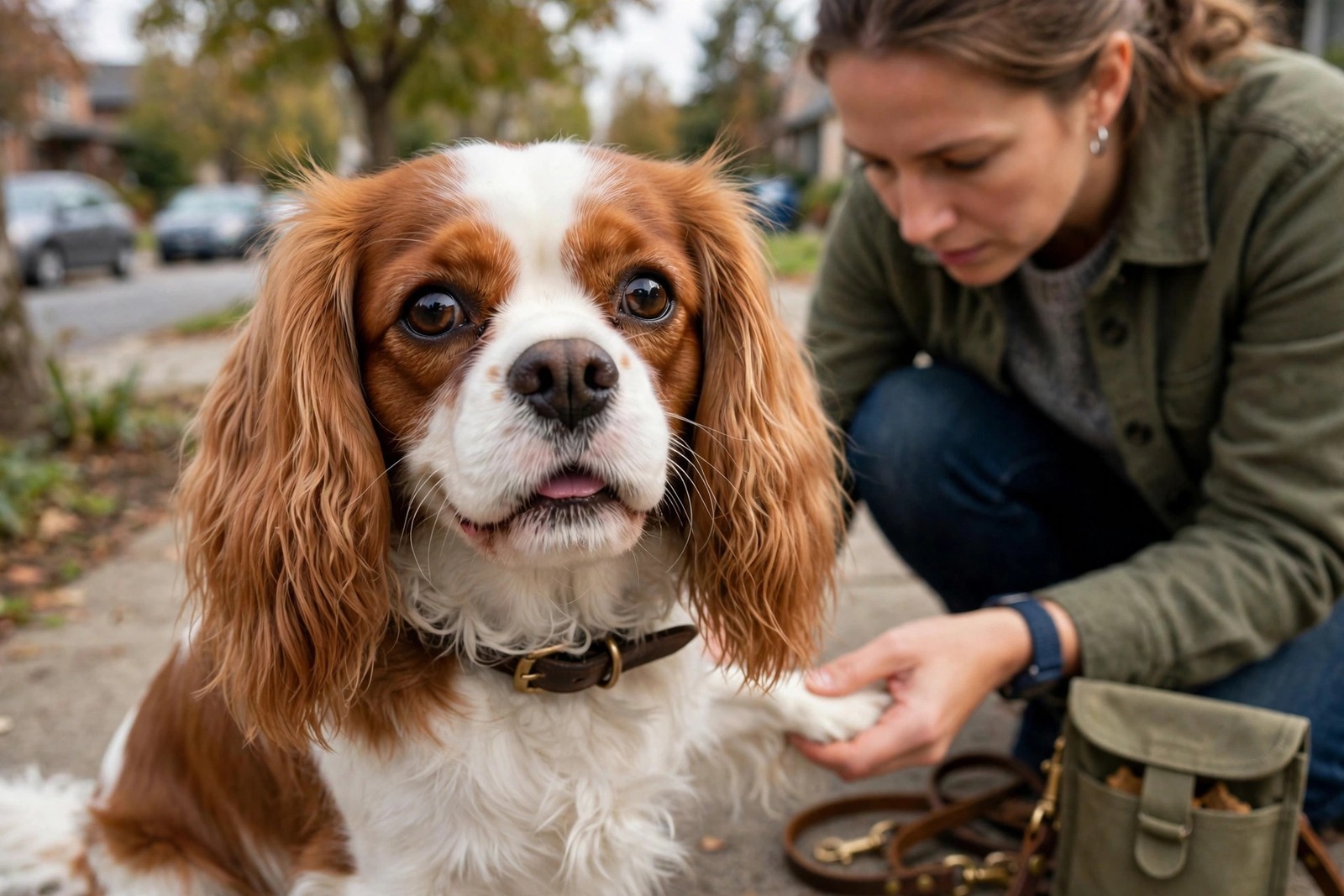
For most families, yes. The Cavalier King Charles Spaniel combines the traits parents actually need: a sweet, steady temperament, a genuine liking for people of all sizes, low guarding instinct, and a moderate energy level that fits family life rather than competing with it. This is not a breed that merely endures children — a well-bred, well-socialised Cavalier typically seeks them out, following them from room to room and settling wherever the family gathers.
Why the Fit Works
Size helps. At roughly 12 to 18 pounds, a Cavalier is big enough to join games, walks, and ball play in the garden without the fragility of a tiny toy breed, and small enough that an excited jump rarely knocks a school-age child flat. Their play style is soft, too: they mouth gently, wrestle lightly, and read disapproval quickly, so games tend to de-escalate instead of spiralling. Because Cavaliers are so people-oriented, children get rewarding feedback — the dog comes when called, leans in for strokes, and chooses their company — which makes kids far more willing to learn careful handling.
Where Care Is Still Needed
Toddlers are the exception to plan around. A two-year-old falls, grabs, and hugs hard, and a Cavalier's long ears, flowing coat, and expressive eyes invite exactly the pulling and squeezing that hurt. The dog is unlikely to react badly the first time — the risk is a patient dog quietly becoming sore or stressed over months. Supervise every interaction with under-fives, teach 'gentle hands, stroke the back, not the head,' and give the dog a child-free retreat it can choose freely. Never let a child carry the dog; a wriggling Cavalier dropped from waist height can be seriously hurt.
Also watch the other direction: Cavaliers follow their people everywhere, including underfoot. Teach children to look before running through the house, and teach the dog a reliable 'settle' on a mat during homework, meals, and the chaotic after-school hour.
Matching Ages to Jobs
Children from about six upward usually do brilliantly with this breed and can take real responsibility: measuring food, refilling water, brushing the coat in short sessions, and practising sit and recall with treats. That involvement is part of the breed's appeal — few dogs reward a child's training efforts as quickly or as sweetly. Babies and toddlers can still grow up beautifully with a Cavalier, provided the adults accept that for the first few years the relationship is managed, not spontaneous: gates, supervision, and separate safe spaces do the work until the child is old enough to be predictable.
One honest caveat: Cavaliers dislike being left out and left alone. A busy family that is out all day may suit the dog less than the children's ages suggest, so judge your household's presence as carefully as its gentleness.
KinsLe's Family Sharing helps families keep those ground rules consistent, with the Cavalier's feeding, exercise, and handling notes in one shared place that parents, older children, and grandparents all follow the same way.