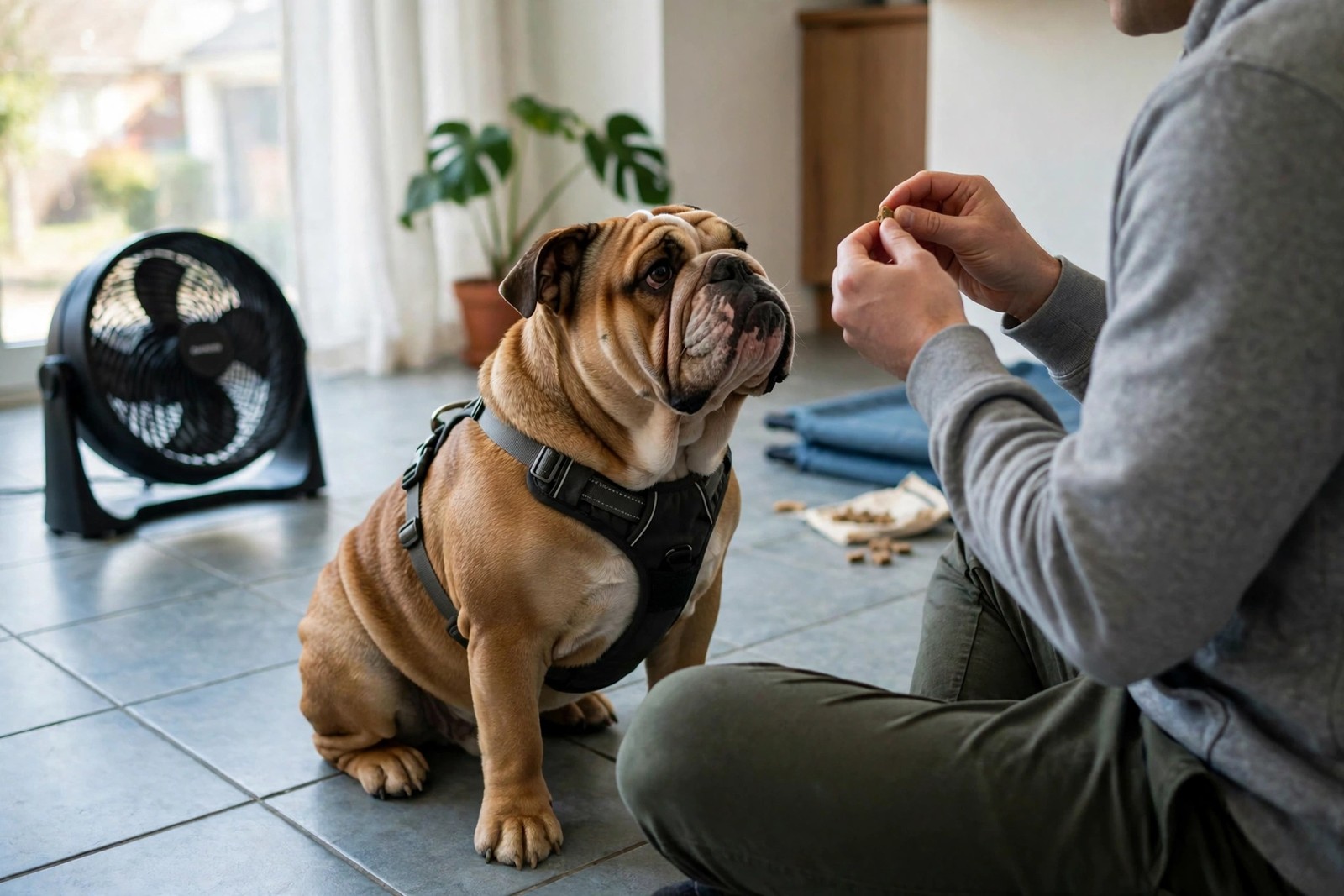
An English Bulldog can be a good first dog, but nobody should choose one expecting fast, eager obedience. The honest picture is a calm, affectionate, low-energy companion that is also stubborn, slow to see the point of repetition, and physically limited in ways that shape every training session. First-time owners who are patient, consistent, and amused rather than frustrated by that personality usually do very well with the breed.
How Bulldog Learning Actually Works
A Bulldog learns perfectly well; it simply negotiates. Sessions of two to five minutes, several times a day, using a genuinely tasty reward, will teach sit, stay, come, and lead manners steadily over weeks. Long drilling sessions switch a Bulldog off completely, and a dog that has parked itself and refused is not being spiteful — it is telling you the session is too long, too hot, or not worth it. Raise the reward, shorten the step, or try again later. Punishment and pushing achieve nothing with this breed except a dog that avoids you.
Heat and Breathing Set the Training Clock
English Bulldogs are a flat-faced breed and cannot cool themselves or breathe as efficiently as longer-nosed dogs. Train in the cool of the morning or evening, or indoors, keep active play brief, and stop well before breathing becomes loud and laboured. Use a harness for lead training rather than pulling on a collar, choose short, flat walking routes while skills build, and never schedule training after a meal in a warm room. These are not optional refinements; they are how this breed can exercise safely at all.
House-Training and Household Manners
House-training a Bulldog puppy follows the standard pattern — out after waking, eating, and playing, with praise on the spot — but progress is often steady rather than speedy, and a crate and a small, easy-clean area make the months manageable. Bulldogs also chew enthusiastically as youngsters, drool, and snore; none of that is trainable away, so decide before you commit that you find it charming. Early, gentle socialization with friendly people and calm dogs matters just as much here as in livelier breeds.
The Costs a Beginner Should Weigh
Training is not the hard part of Bulldog ownership; upkeep is. This breed commonly needs skin-fold cleaning, careful weight control — extra weight makes breathing and joints worse — and a close relationship with a veterinarian. A first-time owner who budgets for that care and keeps sessions short, kind, and consistent will find the training itself the most enjoyable part of the package.
Consistency is what turns a stubborn breed trainable, and that patience has to survive handovers between the people at home. KinsLe's Family Sharing lets chosen relatives open the dog's profile for themselves, rather than relying on a passed-along description of the dog.