
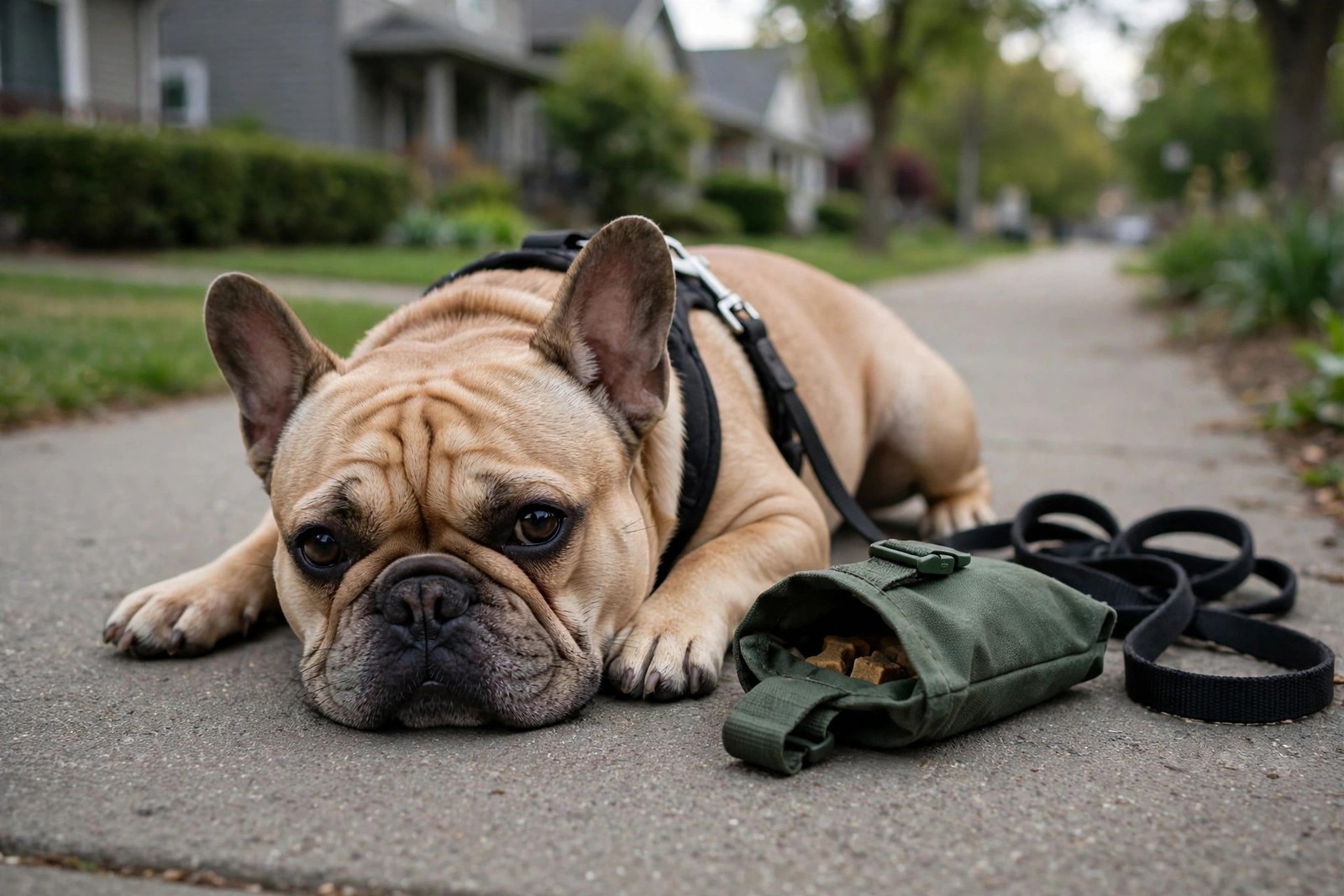
French Bulldogs give first-time owners a split report. The dog in front of you is clever, tuned in to people, and would sell its dignity for a pea-sized piece of chicken — all of which makes early training feel easy. The same dog may then decline to repeat a cue it knows perfectly, and take the better part of a year to become fully house-trained. Knowing both halves in advance is what makes a Frenchie a manageable first dog rather than a frustrating one.
What Comes Easily
Sit, down, hand-targeting, name recognition, and settling on a mat usually arrive quickly, because the breed's motivation is simple and powerful: food and praise from its person. Keep rewards tiny and frequent, sessions to three to five minutes, and difficulty low, and a Frenchie puppy progresses at a pace that flatters a beginner. They are also not a high-energy breed, so trained behaviour is not constantly being shredded by a dog who needs two hours of running — a calm household routine genuinely suits them.
The Stubborn Streak Is Real
French Bulldogs were not bred to take instructions from a distance or persist at a task; they were bred to be companions, and many have a distinctly transactional outlook. A Frenchie repeats what pays and quietly drops what does not, and may plant its feet on a walk, ignore a recall in the garden, or perform a cue beautifully at home and not at all in the park. The beginner's mistake is escalation — repeating the cue louder, or physically positioning the dog — which produces a dog that switches off entirely. The working approach is negotiation: better rewards, easier setups, shorter asks, and ending games while the dog still wants more. If you find that mindset funny rather than maddening, you have the temperament this breed requires.
House-Training: Budget Months, Not Weeks
This is the breed's best-known training difficulty. Frenchie puppies commonly take six months or longer to be fully reliable, with small bladders, a dislike of cold and wet weather, and a talent for quiet indoor accidents behind furniture. A strict routine — out on waking, after every meal, play session, and nap, plus last thing at night — with immediate outdoor rewards and thorough cleaning of accident spots is what eventually wins. Punishing accidents slows the process measurably; the puppy learns to hide them, not to hold on.
The Breathing Limit on Every Session
A flat face restricts airflow, so French Bulldogs overheat and exhaust quickly, especially in warm or humid weather. Training must happen in short bursts in cool conditions, with water available, and any session should stop at the first sign of heavy panting or noisy, laboured breathing. That limit also rules out long group classes in hot halls — tell any instructor your breed's needs before enrolling.
KinsLe's Pet Services Directory helps first-time Frenchie owners find reward-based puppy classes and trainers nearby, so professional eyes shape that food motivation and stubborn streak before small habits become an adult-sized negotiation.