
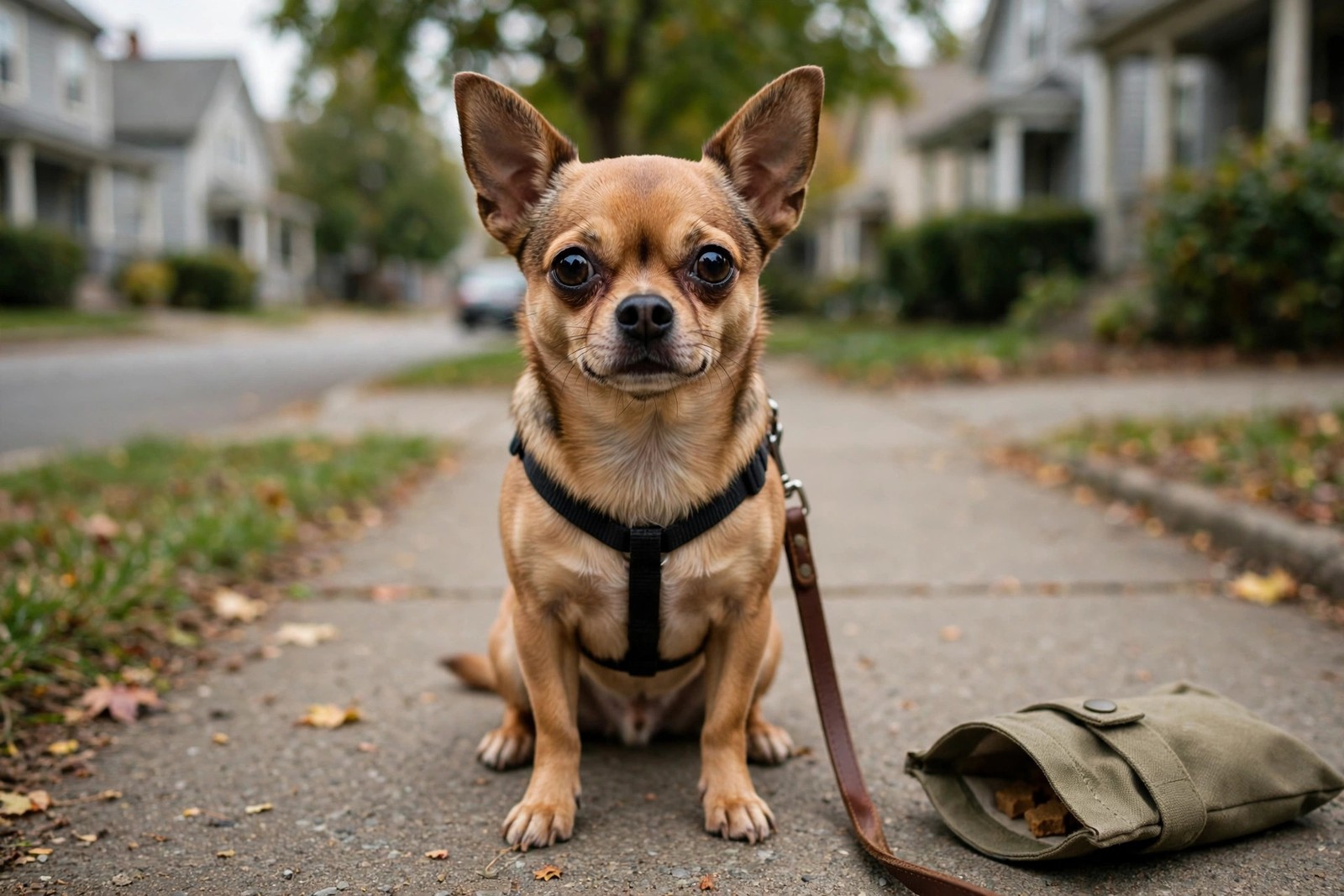
Yes — in size and exercise, few breeds fit an apartment better than a Chihuahua. The dog needs little floor space, modest walks, and no garden. Whether your Chihuahua is happy, and whether your neighbours are, comes down to the breed's two famous weak spots: barking and house-training.
Barking at a World Outside the Door
Apartments concentrate the sounds Chihuahuas react to: footsteps in the corridor, neighbours' doors, voices, the lift, deliveries. A Chihuahua who alerts at every one can bark dozens of times a day, and a small dog's yap carries through walls surprisingly well. This is manageable, but it is trained, not automatic.
Start with socialisation and confidence. A Chihuahua who has calmly met many people, dogs, and sounds as a puppy barks less as an adult, because fewer things startle it. Teach a quiet cue by rewarding the pause after an alert bark rather than shouting over the dog, which the dog reads as joining in. Give the barking something to compete with: a dog who has had its walks, a sniff game, and a chew settles faster than one who has been bored all day listening at the door. Keep the dog's bed away from the front door if corridor noise is constant.
House-Training Takes Longer — Plan For It
Be honest about this one: small breeds often take longer to housetrain, and Chihuahuas have a reputation for it. A tiny bladder needs frequent trips, a tiny dog can slip away and toilet unnoticed behind furniture, and many dislike going out in cold or rain. On a high floor, every trip means the lift and several minutes, so owners delay — and delays undo training.
The fix is structure: out first thing, after meals, after play, after naps, and last thing at night, to the same spot, with praise on the spot. Use a pen or one puppy-proofed room rather than free run of the flat until the dog is reliable. An indoor toilet area — a litter tray or grass pad on a balcony — is a legitimate long-term solution for high-rise Chihuahuas, provided it is cleaned daily and introduced deliberately rather than appearing by accident on your rug.
Exercise, Cold, and Being Treated Like a Dog
Chihuahuas need less exercise than big breeds, not none: most adults do well with around 30 to 60 minutes across the day, including play, and they are brighter and quieter for it. They feel cold quickly, so a coat in winter and shorter outings in bitter weather are sensible. Carry the dog past genuine hazards, but let it walk and meet the world on its own feet whenever safe — a Chihuahua carried everywhere and never allowed to greet other dogs calmly often becomes the snappy, barking dog people stereotype, because it never learned the world is safe.
Watch weight, too: on a tiny frame, a few extra treats a day is a large percentage of the ration, and an overweight Chihuahua strains its knees and trachea.
In a shared flat, consistency is everything — everyone must take the dog out on the same schedule and reward quiet the same way. KinsLe's Care Teams assigns and timestamps toilet trips, training minutes, and meals for each person, so the frequent, predictable routine that makes apartment life work for a Chihuahua actually holds.