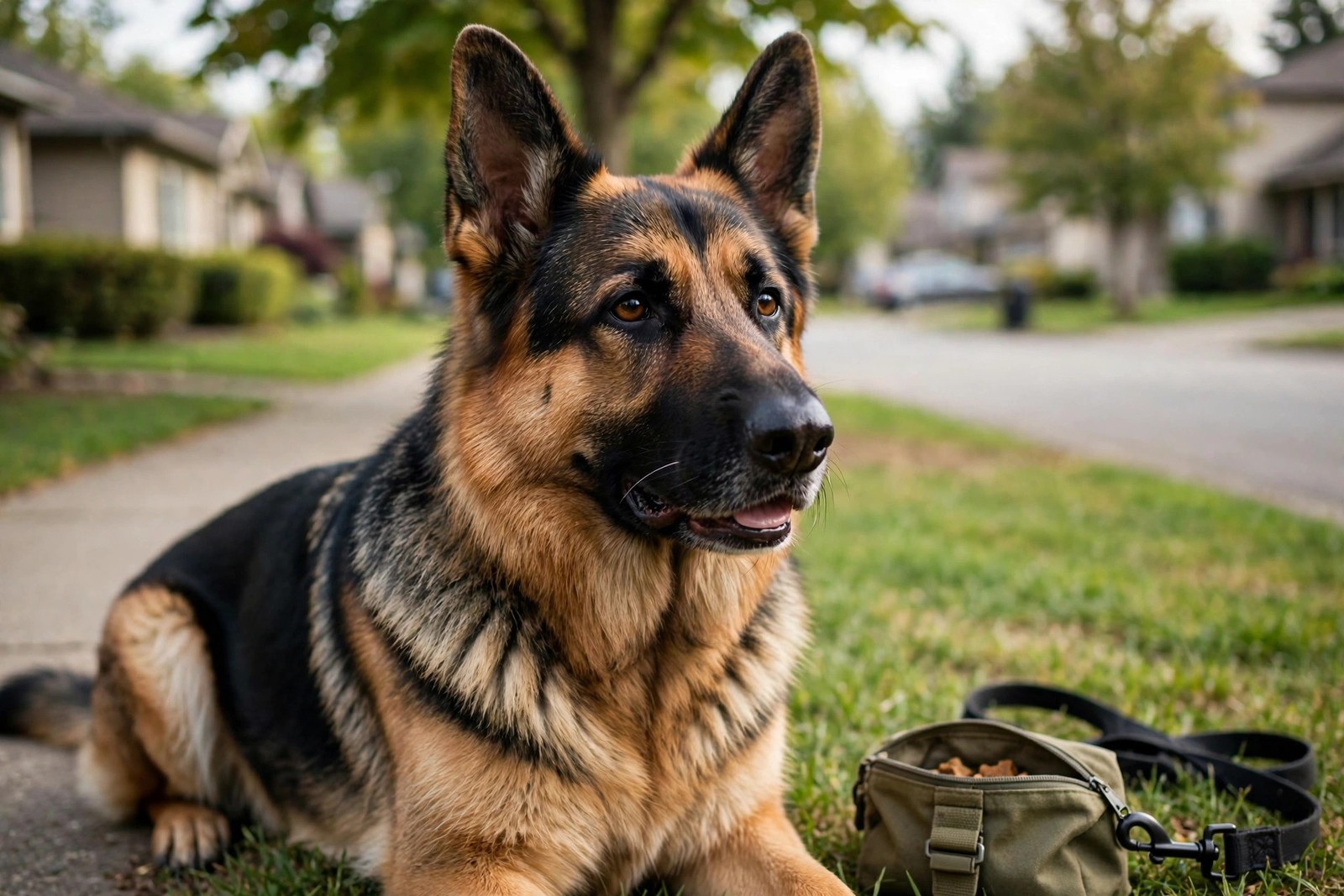
Yes — with the right owner. A German Shepherd does not need a big house; it needs a big commitment. Plenty of Shepherds live contentedly in city apartments with owners who run their lives around training and activity. Just as many end up frustrated, noisy, and destructive in flats where the breed's needs were underestimated.
The Workload Is the Housing Requirement
Most adult German Shepherds need around one and a half to two hours a day of combined exercise and mental work. This breed was built to patrol, think, and respond to a handler all day, and a stroll around the block leaves almost all of that capacity unused. What works is a structured day: a proper morning walk with training woven in — heelwork, recalls, settle practice — a midday outing, and an evening block of play, scent games, or sport such as tracking or obedience training. Mental work genuinely tires a Shepherd; twenty minutes of problem-solving can settle one more than an extra twenty minutes of pavement.
Under-exercised Shepherds in flats chew door frames, pace, whine, and react to every sound. It is not spite; it is an unemployed guard dog inventing duties.
Guarding, Barking, and Corridor Life
The breed's protective instinct is amplified by apartment living, where strangers pass your door all day. Without training, that becomes barking and lunging at corridor noises, tension in the lift, and over-guarding visitors. Start socialisation early and broadly — calm exposure to many people, dogs, sounds, and places — and train a clear routine for the door: a place to go, a cue to settle, rewards for quiet. A well-socialised Shepherd is watchful and discriminating; an under-socialised one is stressed by a building full of strangers it cannot assess, and that stress is a welfare problem for the dog, not just a noise problem for neighbours.
Size, Shedding, and the Physical Flat
A Shepherd is a large dog who takes up real space turning, stretching out, and shaking — and they shed heavily, with a thick undercoat that blows out seasonally and drifts into every corner of a small home. Budget grooming time several times a week and accept hair on everything. Check your lease for size or breed restrictions, which are common for this breed, before you fall for a puppy. Consider stairs and lifts honestly too: Shepherds are prone to hip and elbow problems, and a dog who one day cannot climb four flights needs the lift to exist. Puppies should not be hammering stairs repeatedly while they grow.
This breed also bonds intensely and does poorly with long daily isolation; full workdays away need a real midday plan, not a quick toilet break.
The Honest Test
If you already train, walk in all weathers, and want a dog as a serious hobby, an apartment is no barrier. If your plan is hoping the dog adapts to your current routine, choose a different breed — the dog will not shrink its needs to fit the flat. KinsLe's Care Teams helps Shepherd households split the load — morning training walk, midday outing, evening work, grooming sessions — with timestamps for each person, so the standard this breed needs is met every day, not just on weekends.