
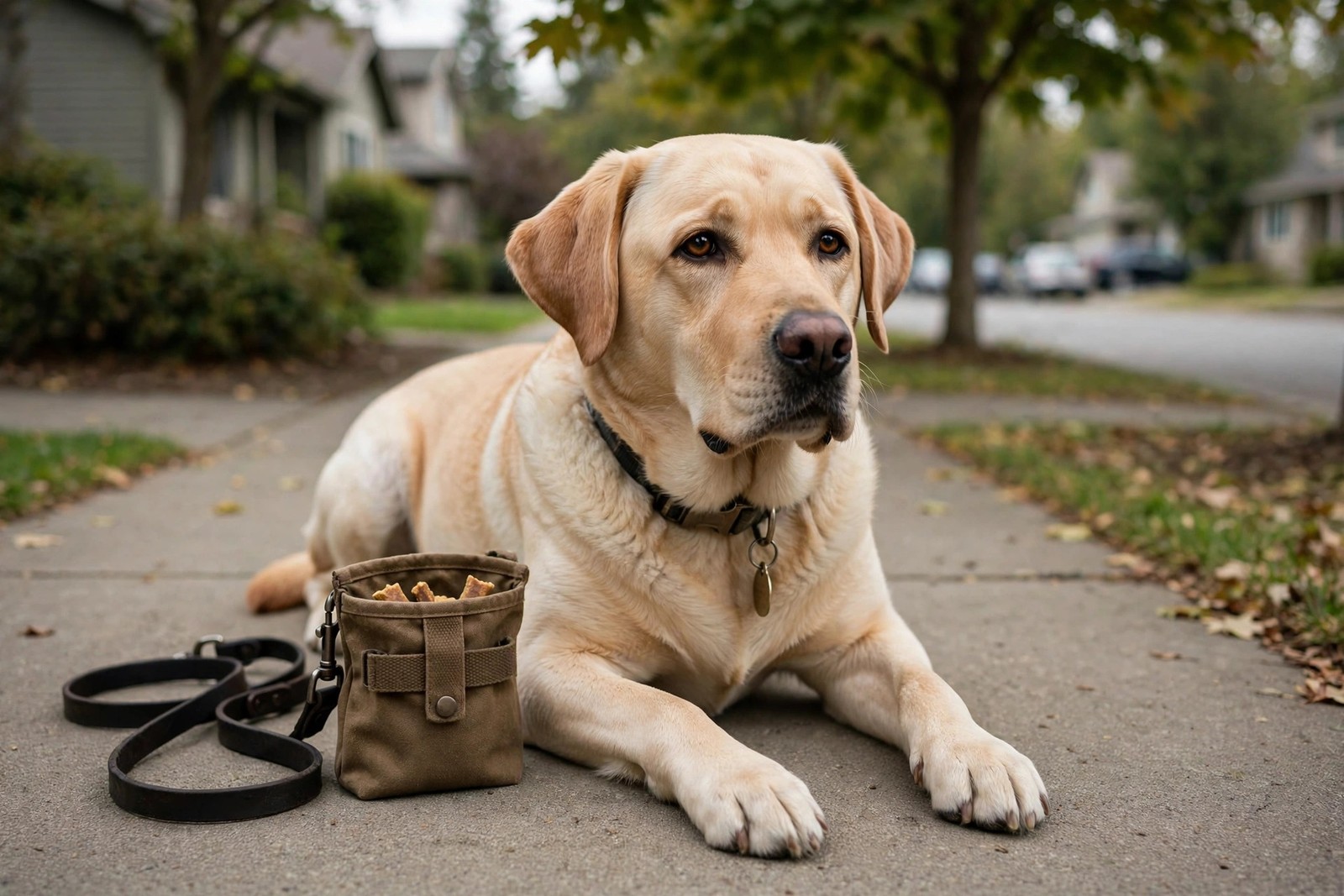
Yes — Labradors are adaptable, sociable, and generally welcomed by neighbours, and plenty live contentedly in apartments. But do not mistake friendly for low-effort. The Labrador is a large working gundog in a family-dog reputation, and apartment success depends on exercise, adolescence management, and food discipline.
One to Two Hours, and Make Some of It Interesting
Most adult Labradors need one to two hours of activity a day. Walking alone rarely satisfies this breed; they were built to retrieve, swim, and work alongside people, so mix the week: proper walks, free running in secure spaces, fetch with rules, swimming where water is safe, and training games that make the dog think. A Labrador whose body and brain have worked will settle indoors for hours. One carried only around the block will not — and in a flat, everyone hears and sees the difference.
Scale exercise sensibly for puppies, building up gradually to protect growing joints, and expect the adolescent months to need the most structure, not the least.
Adolescence in a Small Space
From roughly six months to two years, many Labradors are large, strong, excitable, and relentlessly mouthy. They jump up, grab clothing, body-slam furniture, surf counters, and chew — skirting, chair legs, anything wooden is a classic. In a house this is a phase; in a small flat it can feel like living with weather. Survive it with supervision and management rather than hope: baby gates, a clear settle mat, legal chews always available, valuables and shoes behind doors, and short daily training on calm greetings, loose-lead walking in stairwells, and leaving dropped items. The dog you get at two and a half is famously worth it, but you have to live through the dog you have at one.
Shedding, Mud, and the Food Drive
Labradors shed heavily year-round, with seasonal surges, and their water-loving coats bring mud and pond smell straight into a home with no back door or utility space. Keep a towel station at the entrance and brush the dog through a couple of times a week.
Food is the other discipline. Labradors are famously greedy, and some carry a gene variant that makes them feel hungrier than other dogs; an apartment life with less incidental exercise tips them into weight gain quickly. Measure meals, count treats in the ration, lock bins and low cupboards, and keep counter food out of reach of a tall, motivated dog. Extra weight loads joints and raises health risks in a breed already prone to hip and elbow problems.
Building Practicalities
Check lease rules on large dogs, confirm lift access — an elderly or post-surgery Labrador cannot manage four flights — and plan for full workdays, because this sociable breed does poorly left alone for long stretches without a midday break. Four or more toilet and exercise trips structure every day, in all weathers, for the dog's whole life.
In a shared flat, split the work by name: morning exercise, evening training, who measures food, who brushes. KinsLe's Care Teams assigns and timestamps those Labrador duties for each person, so the heavy daily routine that makes apartment life work for a big, boisterous dog never rests on one person's memory.