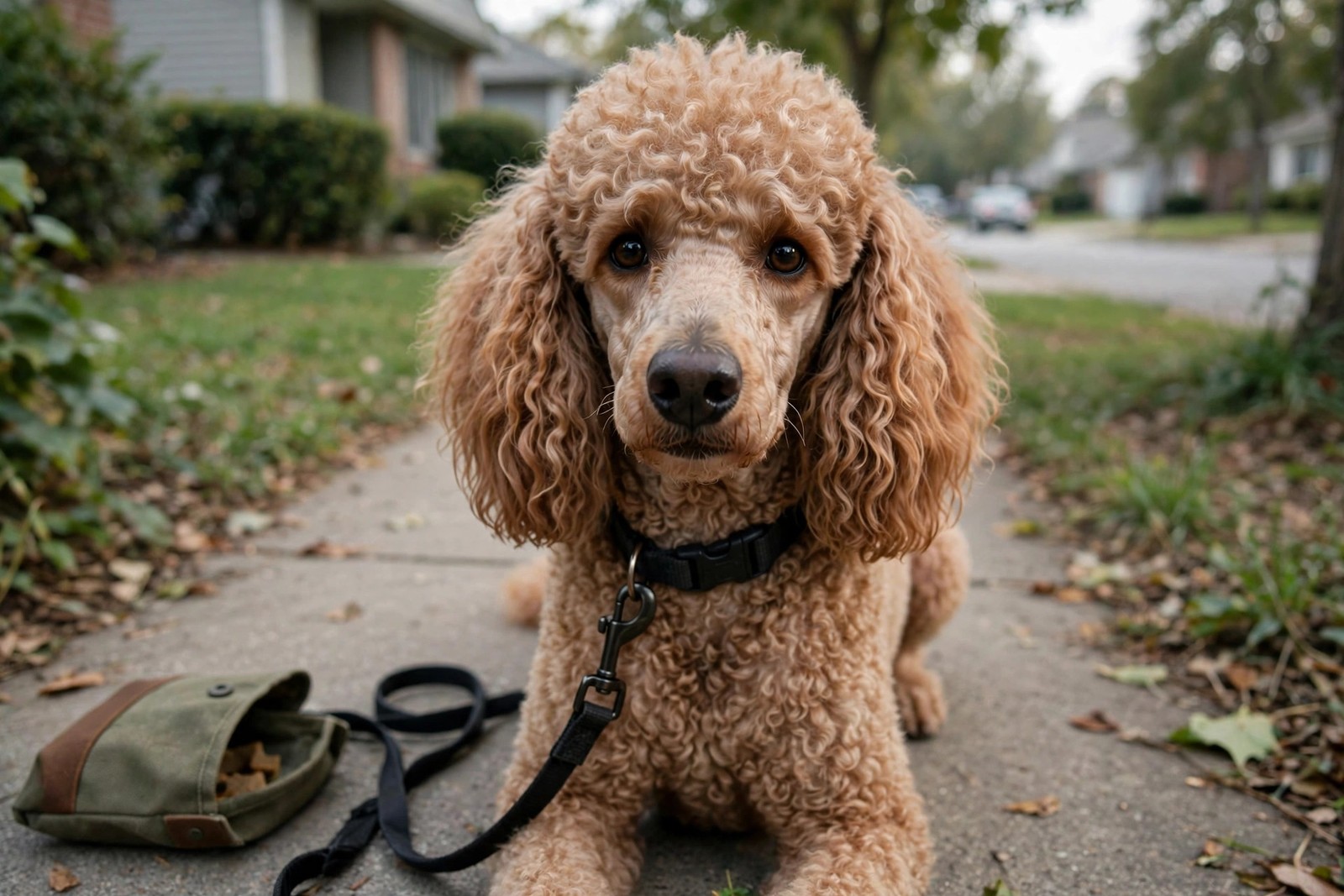
Yes — Poodles are among the better apartment breeds, but 'Poodle' names three quite different dogs. Which variety you choose changes the space, exercise, and noise picture, while the coat commitment stays the same for all of them.
Start With the Size
A Toy Poodle is a genuinely small dog who fits a studio flat, uses lifts and stairs easily, and needs roughly 30 to 45 minutes of walks and play a day. A Miniature needs a little more room and activity, around an hour. A Standard Poodle is a different proposition: a tall, athletic dog, often as big as a retriever, who needs an hour or more of real exercise and mental work daily and takes up retriever-sized space on the sofa. Standards are calm and sensible indoors when properly exercised, but choosing one for a tiny flat on the assumption that Poodles are small is a real and common mistake.
All three varieties are bright, trainable, and people-focused, which helps apartment manners enormously once training starts.
Alert Barking: The Breed's One Noise Issue
Poodles notice everything, and many announce it. Corridor footsteps, the lift arriving, voices outside the door — an untrained Poodle can develop a commentary habit that neighbours hear clearly. The breed's intelligence works in your favour here: teach a quiet cue by rewarding the pause after an alert bark, build a settle routine on a mat, and socialise the dog broadly and early so building sounds stay unremarkable. A bored Poodle barks more, so training games and puzzle-style play are noise control as much as entertainment.
The Coat Is a Standing Appointment
The famous non-shedding coat is a genuine apartment plus — far less hair on furniture and clothes than most breeds — but it is not low-maintenance. The coat grows continuously and mats if neglected, so budget for a professional clip roughly every four to six weeks, or learn to clip at home, plus brushing several times a week down to the skin, especially behind the ears, in the armpits, and where a collar or harness rubs. Mats pull and hurt, and a badly matted Poodle may need to be shaved short at the groomer, so this schedule is welfare, not vanity. Ear hair and tear staining in the smaller varieties need routine attention too.
Factor the grooming cost and time into the apartment decision honestly: it replaces the vacuuming budget of a shedding breed, it does not vanish.
Everyday Fit
Poodles are sensitive to household mood and routine, thrive on company, and can become anxious if left alone all day, so plan a midday break for full workdays and build alone time gradually. They feel cold after a short clip — a coat for winter walks in the smaller varieties is practical, not decorative. Toilet trips are the usual four or more a day; Toy puppies in high-rise flats sometimes suit a deliberately taught indoor toilet spot as a backup for lifts that fail or nights that run late.
In a shared home, put walks, training minutes, and the grooming rota in writing. KinsLe's Care Teams assigns those Poodle duties — including brushing sessions and clip appointments — to each person with timestamps, so the coat care and calm training that make this breed such an easy flatmate never slip between housemates.