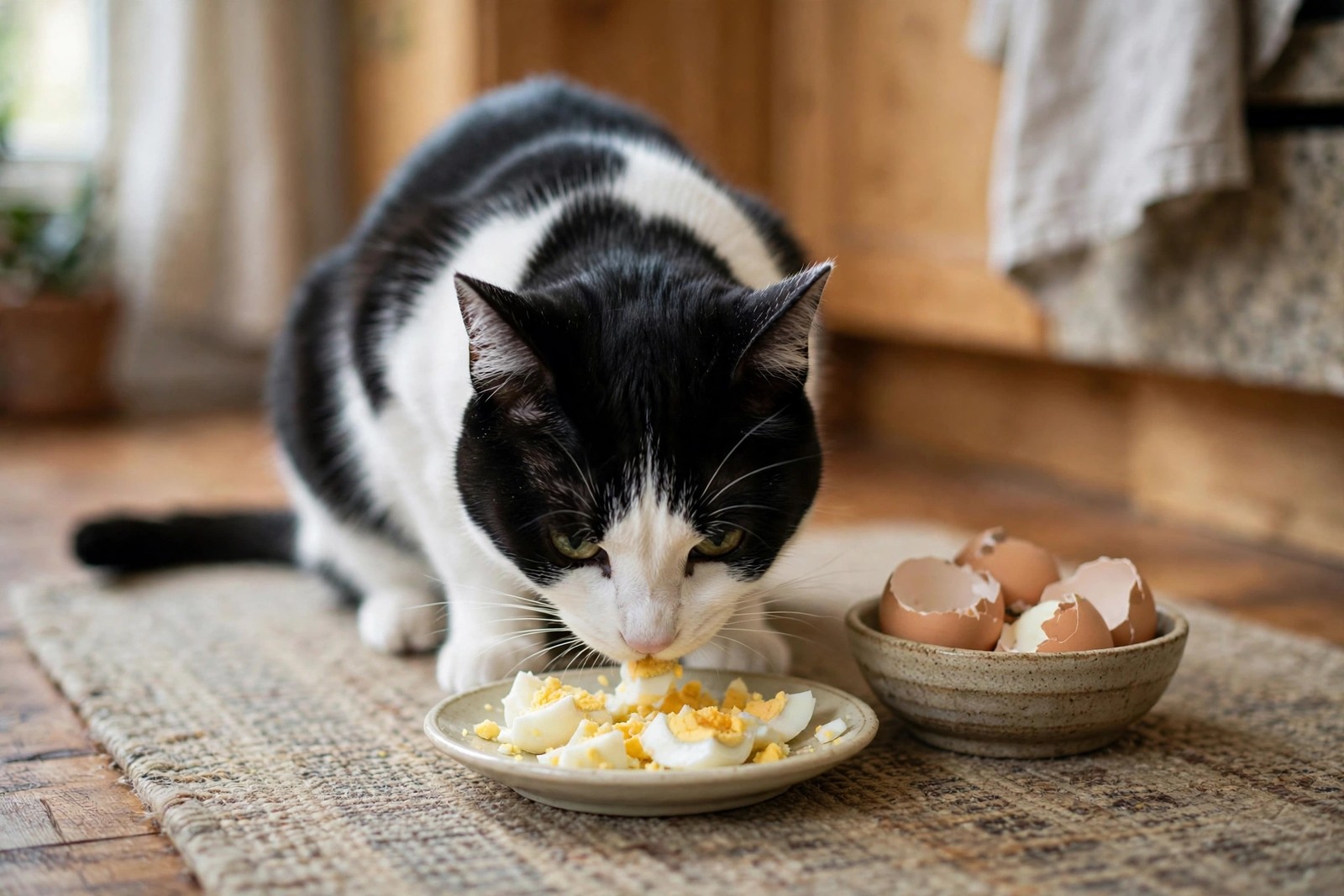
Cats can eat cooked egg in small amounts — plain scrambled or boiled, with no butter, oil, salt or seasoning. Egg is one of the better human-food treats for a cat because it is animal protein in a form most cats digest easily. The cautions are all about preparation and portion, not about egg itself.
Why Raw Egg Is Off the Table
Raw egg carries the same bacterial risks for cats as it does for people, and a cat who scavenges a cracked egg from the worktop should simply be watched for vomiting or diarrhoea rather than offered more. Raw egg white brings a second, quieter problem: it contains a protein that binds biotin, one of the B vitamins, and regular raw feeding can interfere with how much of it the cat can use. Cooking removes both worries — it makes the egg safer and frees the nutrients in the white — which is why the rule is simple: cooked yes, raw no.
White, Yolk, and the Shell Question
Both cooked white and cooked yolk are fine in small pieces, and most cats go for the richer yolk first. There is no need to separate them for an ordinary treat. The shell is different. Crushed shell is sometimes promoted online as a calcium shortcut, but it is an unmeasured mineral dose in a diet that is already balanced, and shell fragments can carry the same surface bacteria as raw egg. Unless your veterinarian has specifically asked you to add calcium for a medical reason, skip the shell and let the cat's normal food do that job.
Cook the egg as plainly as you cook nothing else: scramble it dry in a non-stick pan or with a few drops of water, or boil it and chop it. Omelettes with onion, chives, cheese, ham or salt are human breakfasts, not cat treats, and onion-family seasonings in particular have no place in a cat's bowl.
Portion and Frequency That Make Sense
A spoonful of chopped cooked egg, or roughly a quarter of a large egg, is a sensible treat portion for an average adult cat, offered once or twice a week at most within the day's food. A whole egg is a significant meal-sized chunk of calories for a small animal and crowds out the balanced diet that supplies everything else. Kittens can have a teaspoon-sized taste once they are weaned onto solid food, but their growth diet should stay the main event.
Egg is also a protein some cats react to. As with any new food, start with a few small pieces, then watch over the next day for loose stool, vomiting, face rubbing or new scratching. A cat who reacts clearly should simply not be offered egg again, and ongoing itching or digestive signs are a conversation for your veterinarian, not a reason to rotate through more new foods quickly.
Fitting Egg Into a Shared Feeding Routine
Egg goes wrong at home when it is treated as harmless filler that anyone can add at any meal. In KinsLe, Care Teams lets you set egg as a specific occasional duty on the cat's list — who is offering it, on which day, marked done with a timestamp — so the treat stays occasional even in a house full of generous feeders.