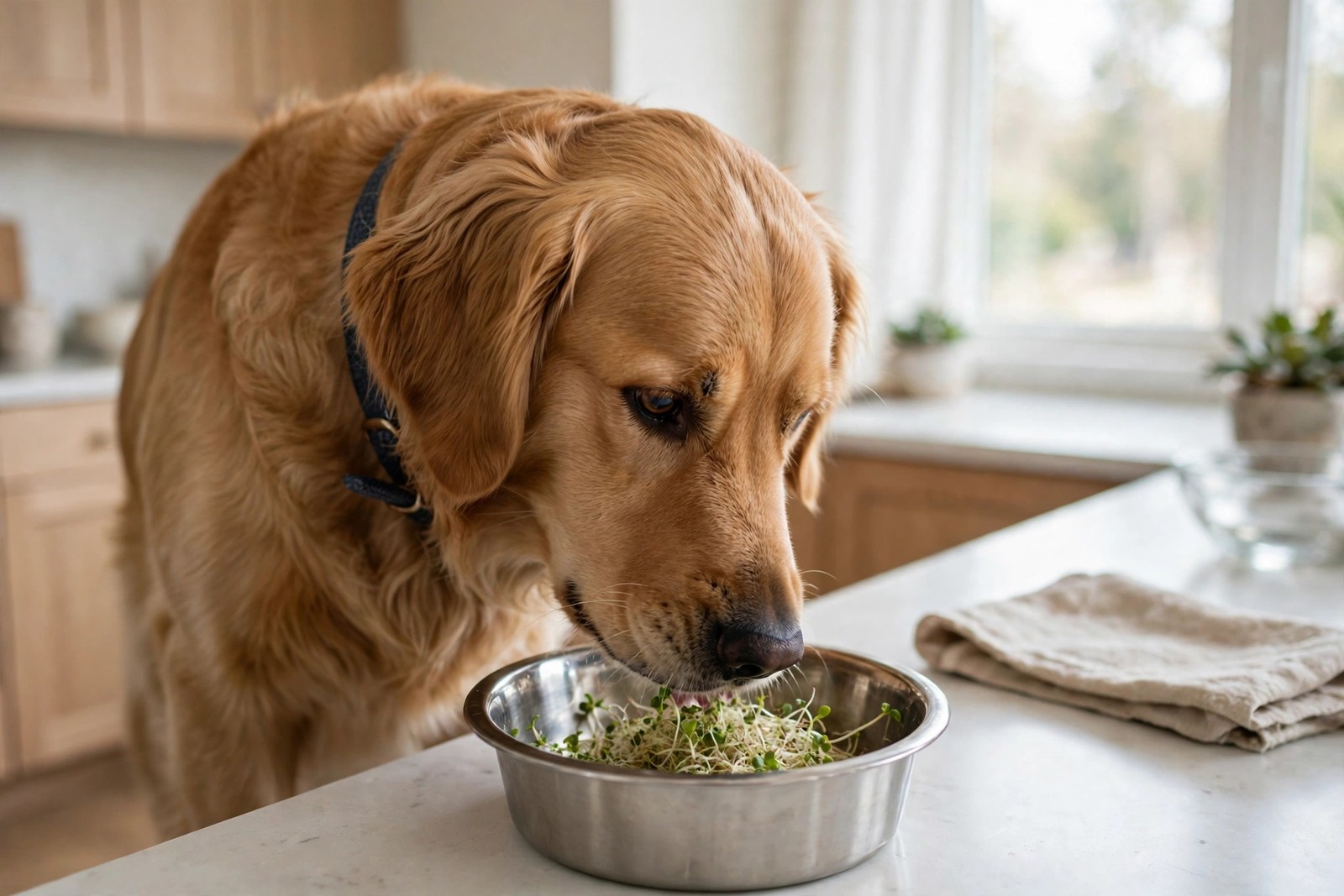
Yes, a healthy adult dog can eat alfalfa sprouts, but this is a garnish measured in pinches, not a vegetable portion measured in handfuls. The sprouts themselves are mild and fibrous, and they carry trace nutrients, yet everything about how they are produced argues for small amounts, careful washing and honest freshness checks. Treat them the way you would treat a raw salad extra for a person with a sensitive stomach: fresh, rinsed, and in modest quantity.
Why the Washing Step Really Matters Here
Alfalfa seeds are sprouted for days in warm, damp trays, and that environment suits bacteria at least as well as it suits the seed. Contamination can sit on the seed before sprouting even begins, which is why rinsing at home reduces risk without removing it completely. Rinse a pinch at a time under running water, shake off the excess, and inspect what you have: good sprouts are pale, crisp and almost odourless, while a batch that feels slick, looks grey or smells sour belongs in the bin, not the bowl. Home-sprouted jars need the same discipline, with clean equipment, regular rinsing during sprouting and prompt refrigeration once the tails grow. If your household cannot keep that routine, bought sprouts used on the day of purchase are the simpler choice.
Portion, Serving and Storage
Start with a pinch, whatever the dog's size, mixed through a normal meal so the sprouts do not become a separate snack to beg for; a small dog stays at that pinch, while a large dog may have up to three pinches once the pinch has gone down well. Introduce them on one day only, then watch the stool and the wind level for the next day before offering more; a dog that produces loose stool or impressive gas after a pinch has told you its personal limit. Keep unopened sprouts refrigerated and use opened packs quickly, because the same dampness that grows them keeps working in the fridge. Never serve sprouts that have sat in a warm kitchen, and wash your hands after handling them, just as you would after handling raw meat.
Dogs Who Should Skip Sprouts
Puppies, whose immune systems are still developing, and dogs whose immunity is lowered by illness or medication should not be given raw sprouts at all, because the bacterial risk that a robust adult shrugs off lands harder on them. Dogs with a history of sensitive digestion are also poor candidates, since the fibre and fermentable content tend to produce gas and loose stool out of proportion to the tiny nutritional return. For those dogs, a small piece of a plain cooked vegetable gives variety with far less risk. If a dog develops vomiting, diarrhoea or unusual tiredness after eating sprouts, stop serving them and call your vet for advice, especially if the dog is young, old or already unwell.
Keeping Track of a New Extra
Small extras cause outsized confusion in shared-care households, because one person adds sprouts at breakfast and another repeats them at dinner, and the dog's gassy evening gets blamed on the wrong thing. Write down the day, the amount and the reaction once, and the question is settled for your dog instead of being retested monthly. KinsLe's Care Teams supports that habit by letting you assign feeding duties to named helpers and mark each completed task with a timestamp, so everyone can see that today's pinch has already been given before a second one lands in the bowl.