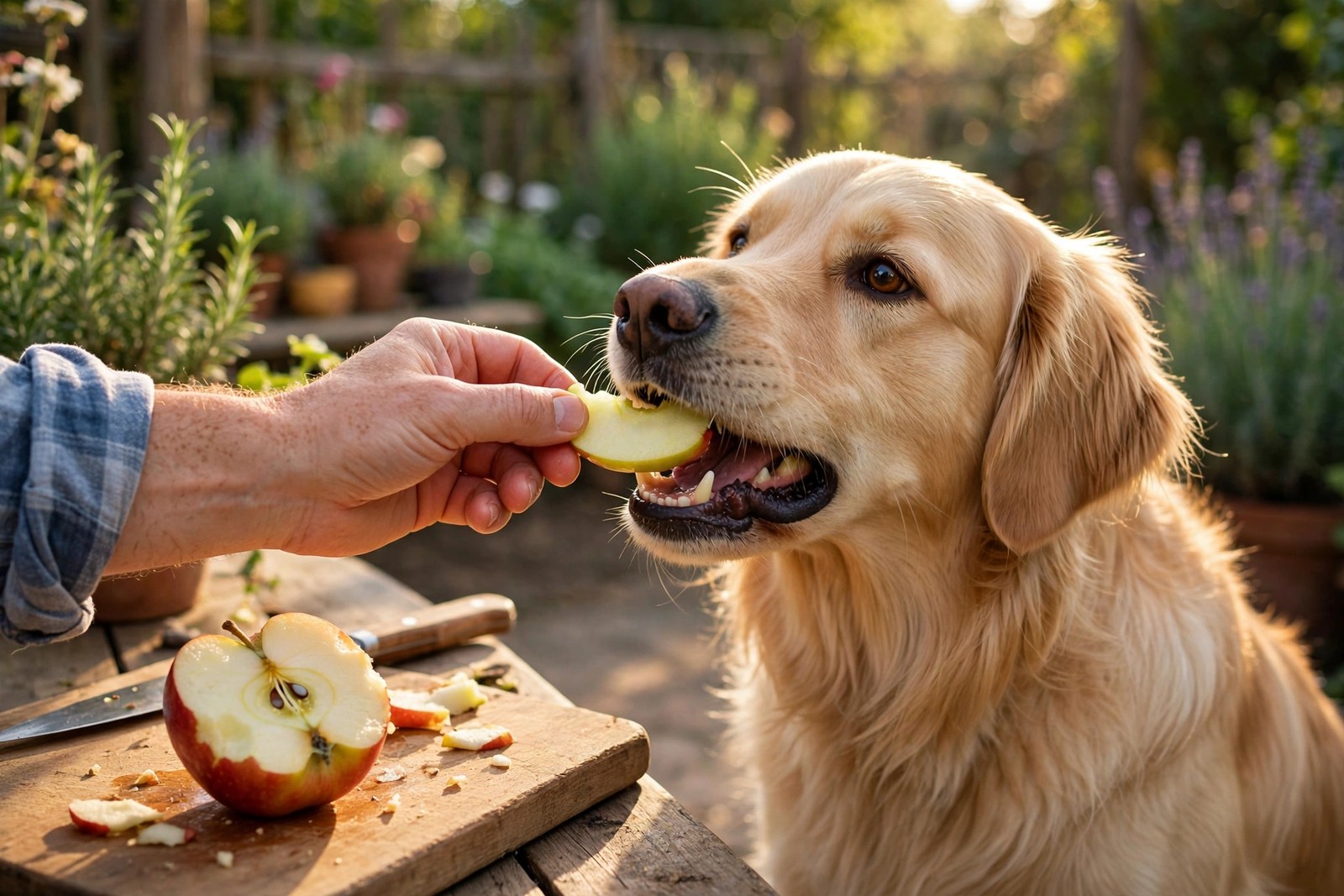
Yes, dogs can eat apple slices, and the crunch, water content and mild sweetness make them one of the more useful fruit treats you can share from your own snack. The preparation is where the safety lives: the flesh is fine, while the core, stem and seeds are the parts to keep out of the bowl. Two minutes with a knife turns a whole apple from a mixed bag into a clean, dog-appropriate treat.
The Seed and Core Question, Properly Scoped
Apple seeds contain amygdalin, which releases a small amount of cyanide as the seed is chewed and digested. A single seed swallowed whole usually passes through undigested, and the dose in a couple of seeds is small, but seeds add up when a dog scavenges fallen fruit or eats cores regularly, and no dog gains anything from them. The core itself is the more immediate problem: it is firm, roughly the width of many dogs' throats, and a gulped core can lodge and choke, while the tough stem is hard to digest. Cut around the core in slabs, check each slab for stray seeds, and bin the core where your dog cannot raid it, because a determined dog will happily fish a core back out of an open kitchen bin.
Cutting and Portion by Dog Size
Slice size should match the dog in front of you. A large dog can manage a quarter-apple slab, while a small dog does better with thin slices cut into bite-sized pieces that invite chewing rather than inhaling. Dogs that gulp treats whole are safer with grated apple stirred through food, which removes the choking geometry entirely. On quantity, two or three slices suit a small dog and half a medium apple is plenty for a large one, offered occasionally rather than daily. Apple is sugary for a fruit, and those sugars count, particularly for dogs watching their weight or managing blood sugar under veterinary guidance.
Variations That Work and Variations to Skip
Plain fresh slices are the benchmark. Unsweetened dried apple, offered in tiny pieces, works as a portable training treat, though drying concentrates the sugar, so the portion shrinks further. Plain unsweetened applesauce can moisten a meal in a spoonful, provided the label shows apple and nothing else. Skip caramel apples, apple pie, sweetened dried apple rings and anything baked with nutmeg-heavy spice mixes or artificial sweeteners, because the additions, not the apple, are the problem. Frozen slices are a reasonable warm-day chew for a dog that crunches rather than gulps, but supervise the first one, since a frozen slab is slippery and easy to swallow whole.
Fitting Apple Into the Treat Budget
Fruit treats feel virtuous, and that feeling is exactly how portions creep. If apple slices appear at breakfast, on the walk and again as an evening reward, a small dog can end the day having eaten a whole apple's sugar on top of full meals. Decide the day's treat plan once and share it with everyone who feeds the dog. KinsLe's Care Teams makes that plan visible by letting you list treat-giving as an assigned duty with a timestamped completion, so the person home at six knows the apple slices already happened at two.