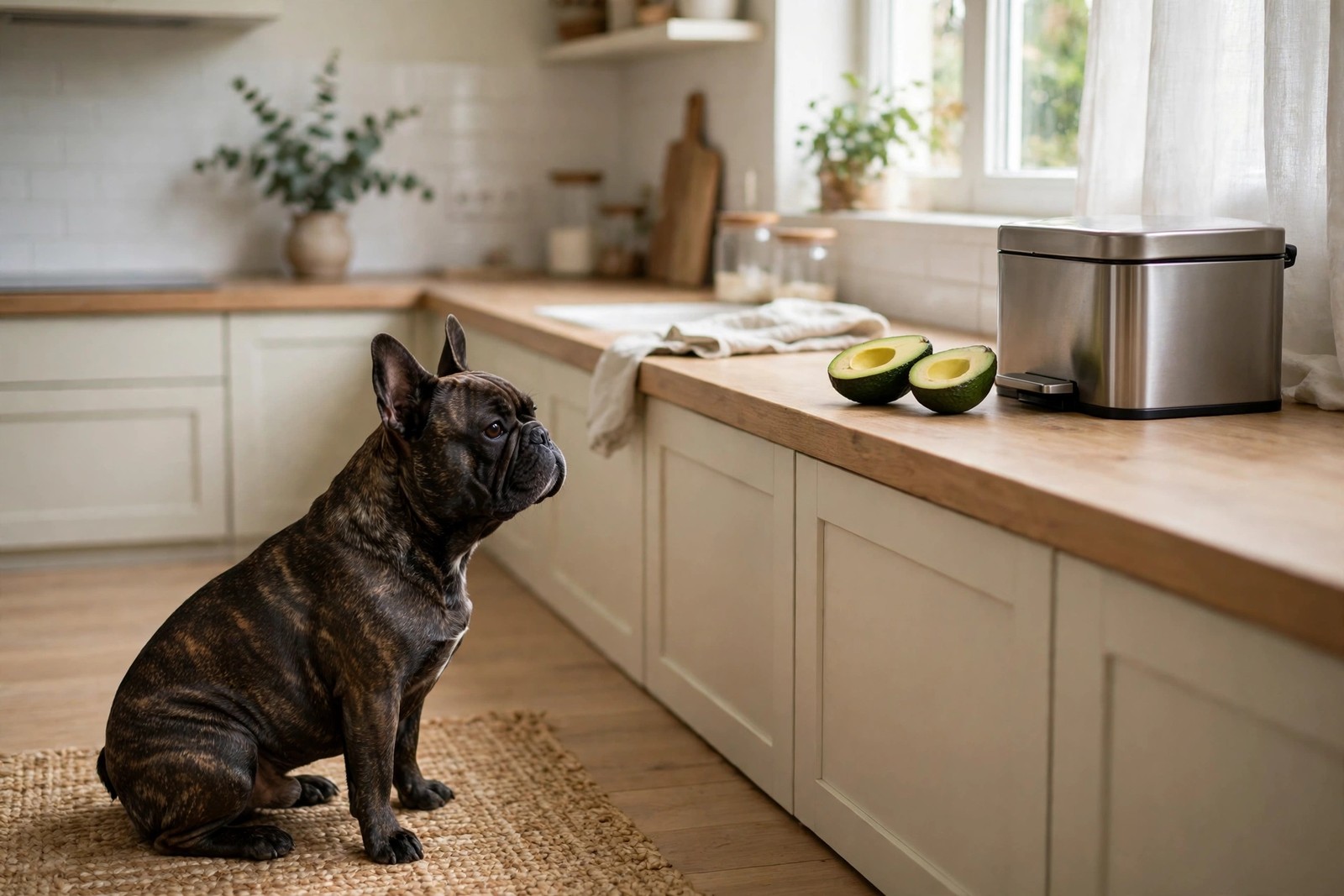
Avocado is best kept away from dogs. It has a reputation as a health food for people, which is exactly why owners offer it, but for a dog the risks sit in three separate places: the pit, the skin and leaves, and the rich flesh itself.
The Pit Is the Emergency
The pit is round, hard, and slippery, and a determined dog can swallow one whole, particularly from a halved fruit left on a counter or dropped in the yard. A pit that passes the throat can still lodge in the intestine, where a blockage can mean vomiting, a painful belly, loss of appetite, and surgery if it does not move. Treat a missing pit as urgent information: if you find a chewed skin with no pit and your dog seems off, call your veterinarian promptly and say a pit may have been swallowed. Keep halved fruit, pits, and skins in a closed bin a dog cannot raid, and pick up fallen fruit under garden trees before a dog finds it.
Persin, Skin, and Leaves
Avocado skin, leaves, and bark contain persin. Dogs tolerate it better than some animals, notably birds and livestock, but it can still cause vomiting and diarrhea, and there is no reason to test your own dog's tolerance. That rules out letting a dog chew fallen leaves, gnaw a houseplant stem, or lick guacamole-style mixes that also tend to contain onion, garlic, lime, and salt, each unwelcome for dogs on its own. The flesh nearest the skin carries more persin than the center, another reason half measures, like scooping a little flesh as a treat, are not worth doing routinely.
The Flesh Itself Is Very Fatty
Even clean flesh, fully pitted and peeled, is calorie-dense and high in fat. A few bites may pass without incident in a large, robust dog, yet the same amount can leave a small or sensitive dog with loose stool, vomiting, or a grumbling stomach. Dogs prone to pancreatitis, dogs on weight-control feeding, and dogs with known fat sensitivity should never be offered it at all, because a rich-food flare is miserable and can need veterinary care. If your dog steals a modest amount of plain flesh, watch for stomach upset over the next day, and call your veterinarian if vomiting repeats, appetite disappears, or your dog seems painful or unusually quiet.
Better Treats That Scratch the Same Itch
If the appeal was a soft, shareable fruit, offer a few blueberries, a slice of banana, or a small piece of cooked sweet potato instead: all are simpler, portion easily, and carry no pit hazard. If the appeal was training value, use small pieces of your dog's regular food or a soft treat made for dogs, delivered one at a time. The point is that avocado brings nothing a dog needs that safer foods do not already provide. Recording avocado plainly as an off-limits food in KinsLe through Care Teams keeps that decision visible to everyone who feeds or walks your dog, including a new sitter meeting your dog for the first time.